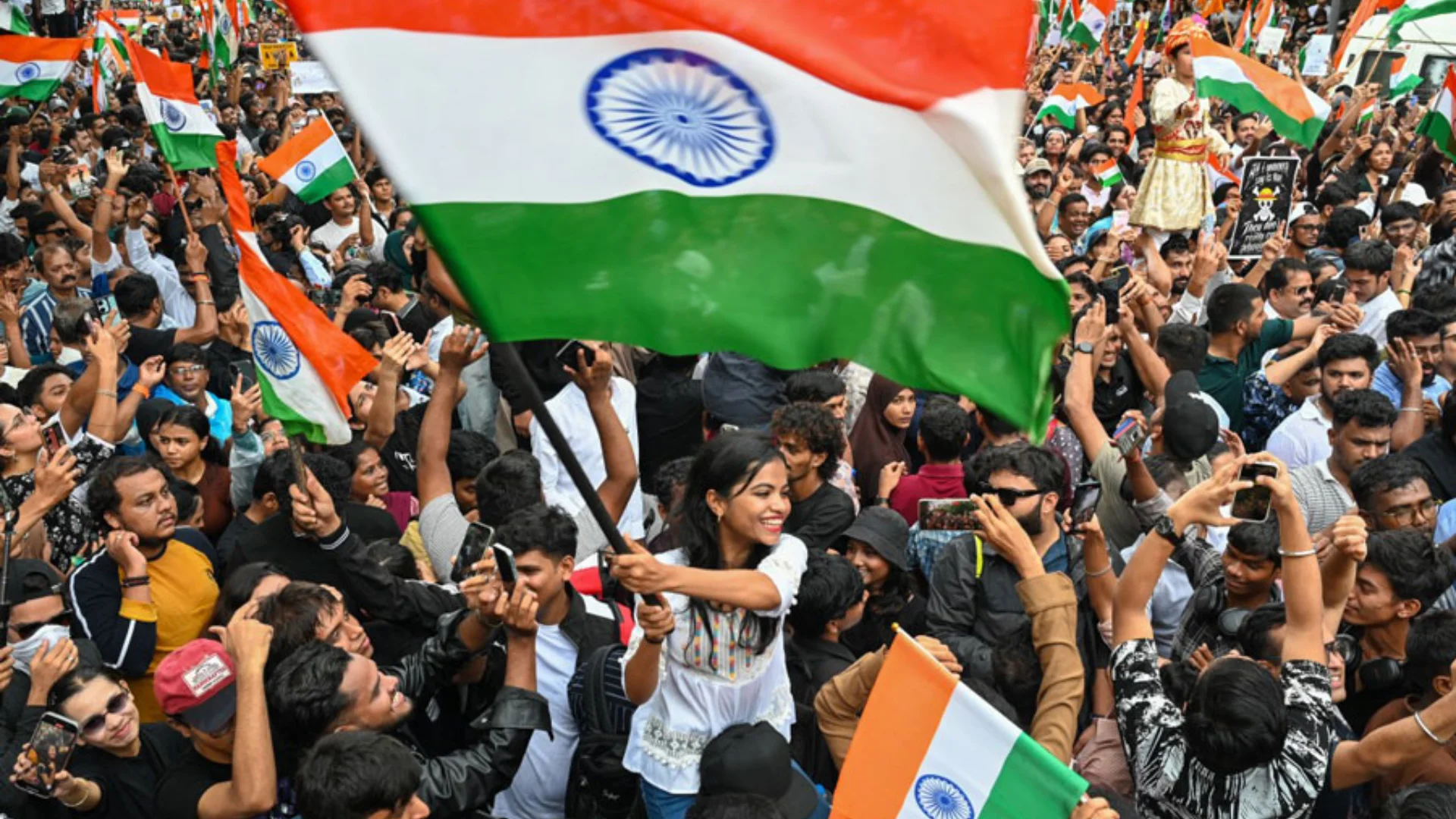
India’s youth protests have intensified over controversial changes to the country’s electoral rolls, bringing thousands of demonstrators into confrontation with police and placing renewed scrutiny on the institutions responsible for conducting elections. What began as opposition to a voter registration exercise has developed into a broader expression of frustration among young Indians concerned about political accountability and their right to participate in democracy.
The demonstrations follow the removal of more than 130 million names from electoral lists since last year under the Election Commission of India’s Special Intensive Revision (SIR) programme. Opposition parties and protesters allege that the exercise has excluded eligible voters and disproportionately affected vulnerable communities.
The Election Commission rejects accusations of political interference. It maintains that the revision is necessary to eliminate duplicate, deceased, and otherwise ineligible entries from the electoral rolls.
The dispute reached a new stage on October 12, when opposition leaders and protesters attempted to march towards the Supreme Court in New Delhi. Police erected barricades and restricted movement around several areas of the capital.
The protests have drawn particular attention because of the growing involvement of students and other young people, some of whom have no formal association with established political parties.
For them, the controversy extends beyond the administration of elections. It raises questions about whether democratic institutions remain accessible, accountable, and responsive to ordinary citizens.
Why Is the Youth Protest Against SIR Intensifying in India?
The immediate dispute concerns the Special Intensive Revision, a nationwide exercise through which election authorities verify voter records and remove entries they consider invalid.
Accurate electoral rolls are essential to credible elections. Duplicate registrations, outdated information,
and records belonging to deceased voters can undermine the reliability of the process.
However, removing an eligible voter creates a different problem. A citizen whose name does not appear on the electoral roll may be unable to cast a ballot until the record is corrected. The scale of the current exercise has intensified concerns.
More than 130 million names have been removed from voter lists, according to reporting by the Associated Press and Indian newspapers. That figure refers to electoral entries removed during the revision, not a verified count of eligible citizens unlawfully denied voting rights.
Opposition parties allege that the process has disproportionately affected Muslims, poorer households and people who may struggle to provide the documents required to establish eligibility.
Election authorities dispute allegations of discrimination and maintain that the exercise follows established procedures.
The disagreement has become particularly contentious because electoral registration determines who can participate in future elections.
Protesters are demanding greater transparency over the grounds for deletion, clearer procedures for challenging decisions and accountability from election officials.
Many have also called for the resignation of Chief Election Commissioner Gyanesh Kumar.
Delhi Protests Bring Young Demonstrators Into Confrontation With Police
The latest demonstrations have transformed parts of New Delhi into heavily monitored protest areas.
Police erected metal barricades, restricted access to gathering points and deployed additional personnel ahead of planned marches.
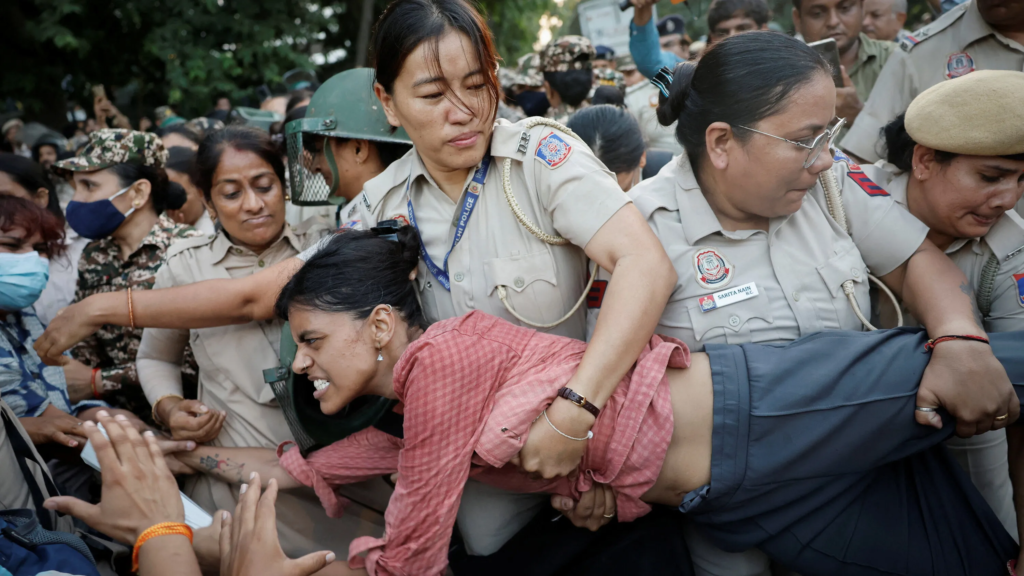
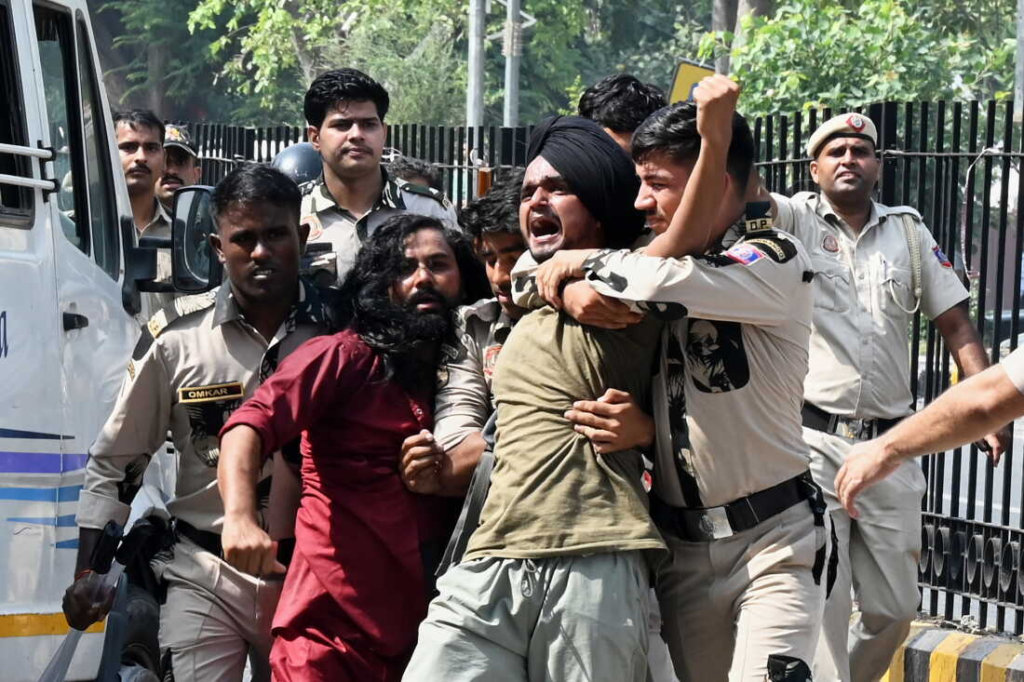
On October 10, young protesters attempted to assemble despite the restrictions. Officers detained demonstrators, while videos circulating online appeared to show confrontations and the use of force.
Associated Press reporters documented officers striking some protesters and moving others into police vehicles.
Several days later, opposition politicians joined demonstrations demanding changes to the electoral revision process.
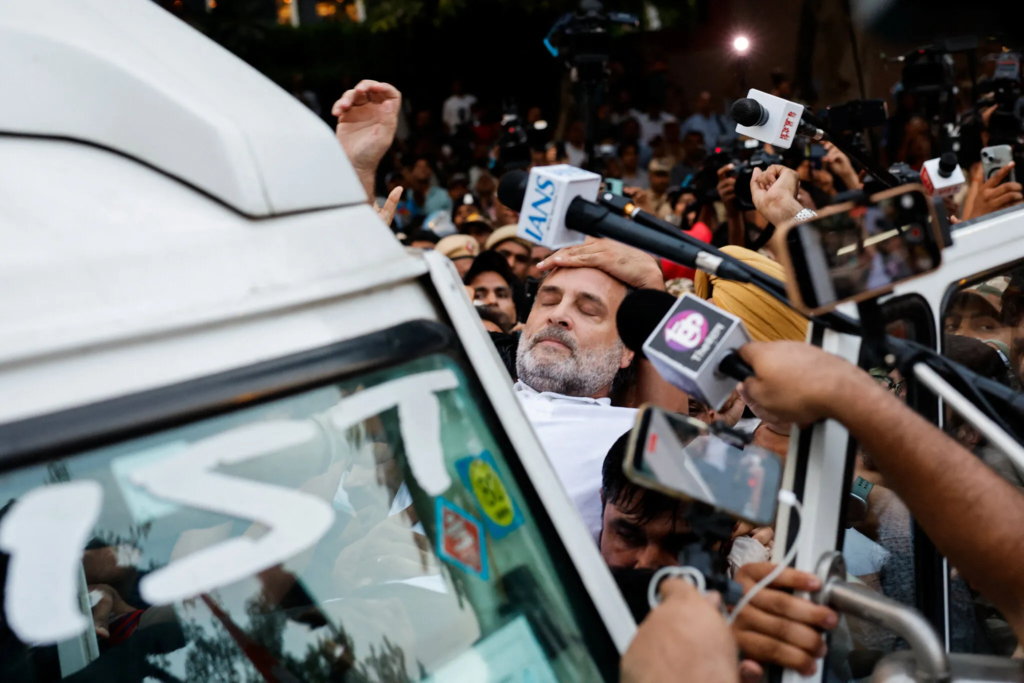
Congress leader Rahul Gandhi and fellow parliamentarian Priyanka Gandhi Vadra participated in the October 12 march towards the Supreme Court, where protesters encountered police barricades.
The confrontations have attracted criticism from civil liberties advocates and press freedom organisations.
Journalists covering the demonstrations have also accused police of detaining reporters and interfering with their work.
Authorities maintain that security measures are necessary to preserve public order, while protesters argue that the restrictions have prevented peaceful political expression.
The treatment of demonstrators has consequently become a second major controversy alongside the electoral roll revisions.
The Rise of the Cockroach Youth Movement
A youth-led movement known as the Cockroach Janta Party has emerged as a prominent organiser of the demonstrations.
Despite its name, the movement operates primarily as a protest platform rather than a conventional electoral party.
Its supporters include university students, young professionals and citizens who express dissatisfaction with India’s political institutions.
The movement has used social media to coordinate demonstrations, circulate information about detentions and draw attention to allegations surrounding the voter revision process.
Its appeal reflects concerns that extend beyond electoral administration.
Some young protesters have expressed frustration over unemployment, economic uncertainty, restrictions on dissent and what they regard as the unwillingness of political institutions to respond to public criticism.
The Associated Press interviewed several students who described growing unease about the state of democratic participation.
Among them was Kashish Rawat, a 22-year-old economics student who travelled to Delhi to join the demonstrations without informing her parents.
Rawat remained at the protest despite police action and expressed her determination to continue questioning elected leaders.
For Maya Ribeiro, a 19-year-old sociology student, the controversy has raised doubts about whether the right to vote can be taken for granted.
These accounts illustrate why the movement has attracted attention beyond established opposition politics.
Some participants view the electoral roll dispute as one example of a wider problem involving accountability and the relationship between citizens and the state.
What Has the Election Commission Said?
The Election Commission has defended the revision as an administrative exercise intended to improve the accuracy of voter records.
Its stated objective is to identify duplicate registrations, remove ineligible entries, and ensure that electoral rolls reflect the eligible voting population.
The commission has also taken steps to address concerns about people excluded from the revised lists.
According to The Indian Express, it instructed election authorities in 20 states and Union Territories where the exercise had concluded to conduct a special enrolment drive for people left out of the rolls.
The instruction followed criticism over the number of deleted entries.
The process allows affected individuals to seek inclusion through the prescribed registration procedures.
However, the availability of a correction mechanism does not resolve every concern raised by protesters.
Questions remain about how authorities identified names for deletion, whether citizens received adequate notification, and how quickly they can challenge errors.
The Supreme Court has also examined disputes involving the revision process.
In a separate matter concerning Bihar, the court clarified that it had neither approved nor rejected a modified voter registration form used during the exercise.
That distinction matters because judicial consideration of a procedure does not automatically amount to an endorsement of its legality or implementation.
Why the Dispute Has Become a Larger Political Crisis
The controversy has developed against a period of increasing political disagreement over the independence and accountability of India’s democratic institutions.
Prime Minister Narendra Modi has governed India since 2014, while his Bharatiya Janata Party remains the country’s dominant political force.
Opposition parties accuse the government of exerting excessive influence over institutions that should operate independently.
The government rejects those allegations and maintains that India’s democratic framework remains strong.
The electoral roll dispute has brought those competing positions into sharper focus.
For the opposition, the removal of voter entries raises concerns about representation and political fairness.
For election authorities, maintaining accurate records is a necessary responsibility that cannot be abandoned because of political criticism.
Both issues are significant, but they are not identical.
The central question is whether authorities can demonstrate that the verification process operates fairly and provides effective remedies when errors occur.
Public confidence depends on more than the number of records examined. It also requires transparent decisions and meaningful opportunities for affected citizens to challenge them.
The participation of young people has added urgency to that debate.
Many of today’s demonstrators have grown up during Modi’s time in office. Their political experiences differ from those of older generations who witnessed earlier periods of coalition governments and changing national leadership.
The current protests may influence how some young citizens engage with politics, although their longer-term significance remains uncertain.
Press Freedom Concerns Add to the Tensions
The response to the demonstrations has also raised questions about the ability of journalists to report on political unrest.
Reuters reported that journalists and media organisations accused police of detaining reporters, confiscating phones and interfering with coverage.
The Press Club of India and other organisations have condemned the reported incidents and demanded accountability.
The authorities have faced criticism over whether security restrictions were applied appropriately to accredited journalists.
Independent reporting plays an essential role during politically sensitive demonstrations, particularly when rival groups dispute casualty figures, detention numbers or the conduct of police.
Restricting journalists’ access can make it harder for the public to distinguish verified developments from rumours and partisan claims.
The allegations therefore extend the controversy beyond voter registration into questions about transparency and freedom of expression.
What Happens Next?
The immediate future of the protests will depend partly on how election authorities address complaints from citizens whose names have been removed.
The Election Commission’s special enrolment drive offers a route for correcting some exclusions, but its effectiveness will depend on implementation, public awareness and accessibility.
Opposition parties are continuing to demand greater scrutiny of the revision process, while youth organisers have indicated that demonstrations will continue.
The Supreme Court’s consideration of related cases could also influence how authorities conduct revisions and handle appeals.
For India’s government, the challenge is to maintain public order without deepening concerns about restrictions on democratic expression.
For election officials, it is to demonstrate that protecting the accuracy of voter lists does not come at the expense of eligible citizens.
The protests have already moved beyond a dispute over administrative procedures.
They have brought young Indians into public debate about who controls democratic institutions, how those institutions answer criticism and whether citizens can confidently exercise their political rights.
The outcome remains uncertain. What is clear is that the controversy has exposed a significant loss of trust among some young voters, and restoring that trust will require credible explanations, accessible remedies, and a transparent electoral process.
Don’t forget to follow us on Facebook | Instagram | Twitter | LinkedIn to get the latest updates from Cape Town Tribune