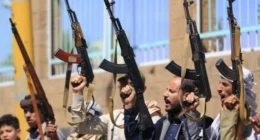
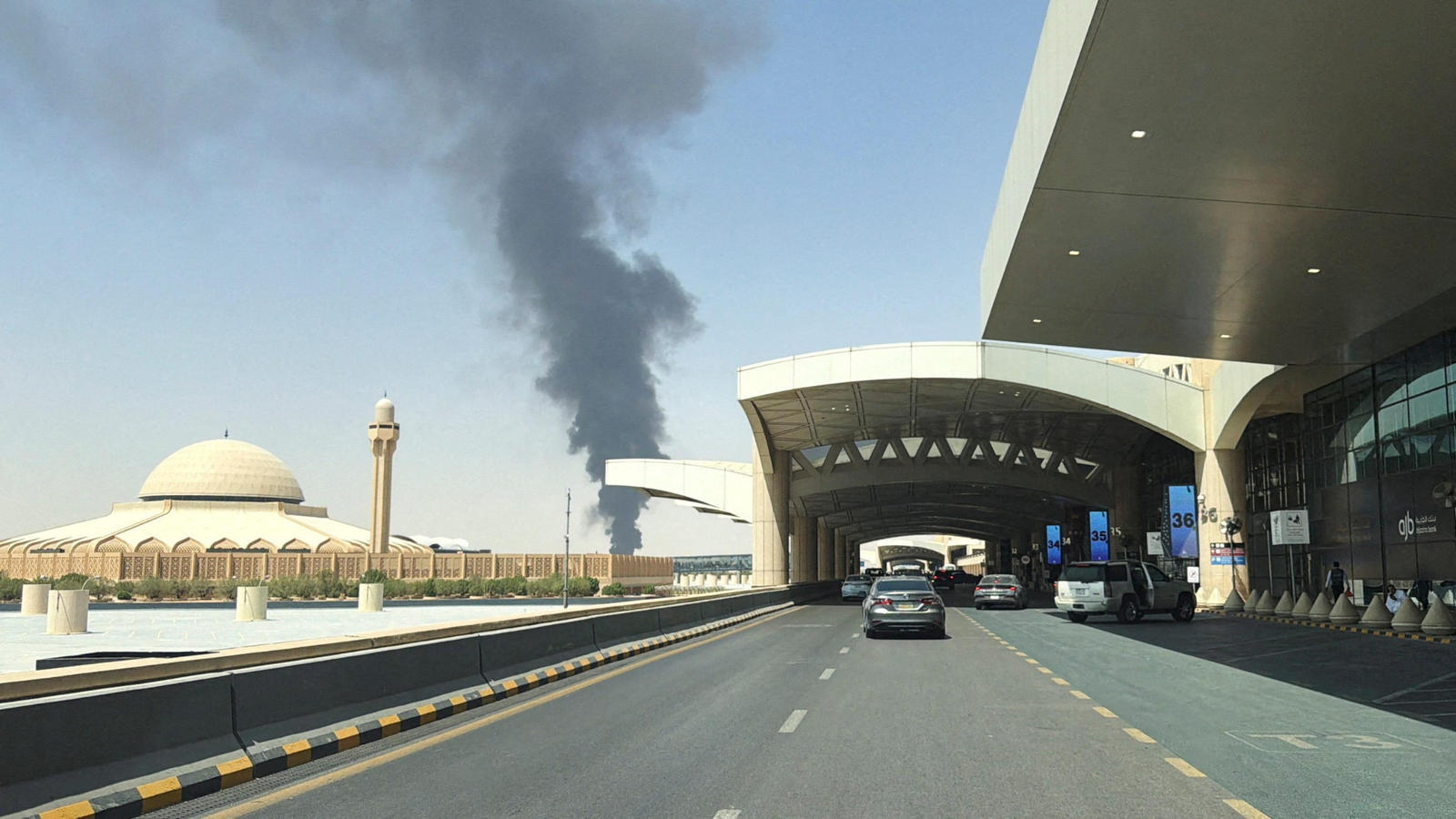
The Riyadh airport attack has prompted Saudi Arabia to investigate how its military failed to intercept a barrage of missiles and drones that struck King Khalid International Airport, killing at least 13 people and injuring more than 300. The investigation comes as the kingdom faces renewed attacks from Yemen’s Houthi movement and growing pressure to strengthen its defences.
Two regional officials familiar with the inquiry told the Associated Press on Monday, October 12, that preliminary findings suggest the Houthis launched multiple drones before sending cruise and ballistic missiles towards the Saudi capital. The sequence may have complicated efforts to detect and intercept the incoming weapons.
Investigators are also examining why the defence network failed to provide sufficient advance warning. According to one official, the weapons travelled more than 1,000 kilometres before reaching Riyadh.
Saudi authorities have not publicly established the precise cause of the failure. The officials spoke anonymously because they were not authorised to discuss the investigation.
The findings could have consequences beyond Saudi Arabia. Governments across the Middle East have invested heavily in air defence systems, yet the latest attack demonstrates the difficulty of protecting large civilian facilities against coordinated aerial threats.
What Happened During the Riyadh Airport Attack?
The October 10 assault struck a departure terminal complex at King Khalid International Airport, one of Saudi Arabia’s busiest aviation hubs.
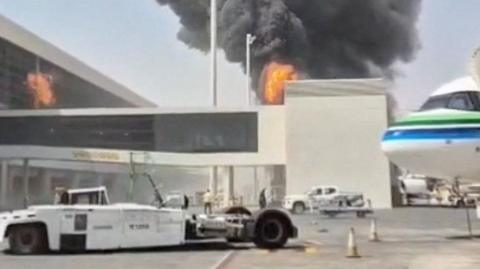
Saudi officials initially reported 12 deaths and more than 300 injuries. Subsequent reporting placed the toll at at least 13 dead. The victims included Saudi citizens and foreign nationals, while several injured passengers remained in critical condition.
The strike followed several attacks on the airport earlier in the week, during which Houthi forces claimed responsibility for targeting Saudi aviation infrastructure.
Another attack on Sunday killed one person and injured 11 others, according to Reuters, extending the disruption and forcing authorities to maintain restrictions on airport operations.
By Monday, Riyadh’s airport remained closed as officials assessed the damage and the risk of additional attacks. The impact on international aviation was substantial.
Aviation analytics company Cirium reported that approximately 82% of scheduled flights at Riyadh airport had been cancelled by midday GMT on October 12. Across Saudi Arabia, cancellations affected 46.4% of scheduled flights.
Lufthansa suspended services to Riyadh until October 16, while Air France-KLM extended its suspension until the end of the month. Other airlines also adjusted their operations.
For passengers, the consequences have been immediate. Flight cancellations have interrupted business travel, family visits and international connections through one of the region’s important transport centres.
How Could Saudi Arabia’s Air Defences Be Overwhelmed?
Saudi Arabia operates an extensive air defence network that includes American-made Patriot missile systems.
These weapons are designed to identify, track and intercept certain airborne threats, including ballistic missiles and aircraft.
However, modern aerial attacks can involve several different weapons approaching a target in quick succession.
Drones, cruise missiles and ballistic missiles present different challenges.
Drones may fly relatively slowly and at low altitudes. Cruise missiles can follow routes that complicate detection, while ballistic missiles travel at considerably higher speeds during parts of their flight.
Defence operators must identify each incoming threat, determine its likely target and decide how to respond.
A coordinated attack can place considerable pressure on that process. According to the preliminary investigation described by AP, the Houthis may have used drones to complicate Saudi defences before launching more powerful missiles towards Riyadh.
The inquiry has not established whether the failure resulted from inadequate warning, gaps in surveillance, operational coordination or the limitations of available interceptors.
Those possibilities require separate examination. The fact that an attack reached its target does not, by itself, establish that every component of a defensive system malfunctioned. Nor does it prove that the entire network lacks effectiveness.
What the incident demonstrates is that sophisticated military equipment cannot guarantee complete protection, particularly when attackers combine different weapons and exploit the demands placed on defensive operations.
Why the Houthis Remain a Serious Threat
The Houthis control substantial territory in Yemen, including the capital, Sanaa. Their relationship with Iran has helped make the movement an important participant in the region’s wider security confrontation.
Saudi Arabia entered Yemen’s civil war in 2015, leading a military coalition supporting the internationally recognised Yemeni government.
The intervention followed the Houthis’ takeover of Sanaa and their expansion into other parts of the country.
Years of fighting devastated Yemen’s economy, damaged public services and forced millions of people to depend on humanitarian assistance.
A United Nations-brokered truce in 2022 reduced major hostilities, although it did not produce a permanent settlement. Fighting has since intensified again.
Saudi-backed forces have attempted to regain territory along Yemen’s Red Sea coastline, including areas near the strategically important Bab el-Mandeb Strait.
The Houthis have responded with attacks on Saudi territory, threatening airports and other critical infrastructure.
Their ability to strike distant targets presents a difficult challenge for Riyadh. Military operations inside Yemen cannot necessarily prevent missile and drone launches against Saudi cities.
The latest attacks have also increased the danger to civilians on both sides of the border.
Saudi Arabia Seeks Greater US Military Support
The Riyadh investigation comes as Saudi Arabia seeks more active American assistance against Houthi attacks.
The United States has already supported Saudi-led operations through intelligence sharing, target identification, and military planning.
Washington has not, however, directly joined the latest Saudi strikes against the Houthis.
President Donald Trump said on October 10 that his administration was considering military action against the movement.
Such an intervention would carry considerable risks.
American involvement could strengthen Saudi Arabia’s ability to respond militarily, but it could also widen the conflict and expose US interests to retaliation.
The decision comes during an already difficult period for Washington, which faces domestic concerns about inflation and the economic consequences of the war involving Iran.
Further military commitments could place additional pressure on American resources while complicating attempts to reduce regional hostilities.
Saudi Arabia must also consider whether retaliatory strikes would reduce the immediate threat or encourage another round of attacks.
Why the Crisis Matters for Global Trade
The consequences of the airport strikes extend beyond military security.
Saudi Arabia is a major energy producer and has made international investment, tourism and aviation central to its economic development plans.
Continued attacks on civilian infrastructure threaten those ambitions.
The disruption has already affected events taking place in Riyadh, including the World Petroleum Congress, which attracts senior energy executives, government representatives and international organisations.
The security of international shipping presents another concern.
The Bab el-Mandeb Strait connects the Red Sea with the Gulf of Aden and provides access to the Suez Canal, an important route for trade between Asia and Europe.
Further Houthi attacks near the strait could interrupt commercial shipping and increase transport costs.
The situation is especially sensitive because conflict involving Iran has already complicated shipping through the Strait of Hormuz, another vital passage for international energy supplies.
Sustained disruption in both areas would create additional difficulties for shipping companies, energy importers and governments attempting to manage inflation.
Can Diplomacy Prevent Another Attack?
Despite the military escalation, regional governments continue to discuss diplomatic options.
Iran’s Foreign Ministry said Monday that Tehran was concerned about the renewed fighting and remained willing to facilitate discussions between Saudi Arabia and the Houthis.
Iranian officials also confirmed that the foreign ministers of Saudi Arabia and Iran had discussed the situation by telephone on Sunday.
Meanwhile, Anwar Gargash, a senior diplomatic adviser in the United Arab Emirates, called for greater cooperation among Gulf countries in responding to shared security threats.
These statements indicate growing concern about the conflict’s regional consequences, but they do not establish that a negotiated settlement is close.
Saudi Arabia faces two immediate responsibilities: protecting civilian infrastructure and determining why its defences failed to prevent such a deadly attack.
The investigation may identify shortcomings that authorities can address through changes in equipment, surveillance or military coordination.
Yet technical improvements will not resolve the political conflict sustaining the attacks.
The deaths at Riyadh airport illustrate the civilian cost of that unresolved confrontation. An international terminal became the scene of mass casualties, while thousands of travellers faced disruption and uncertainty.
Saudi Arabia’s investigation will establish whether the immediate failure arose from technology, intelligence or operational decisions. Preventing another attack will require more than determining how the missiles reached their target.
Don’t forget to follow us on Facebook | Instagram | Twitter | LinkedIn to get the latest updates from Cape Town Tribune