
The IMF global economic outlook for 2026 presents an increasingly divided picture of the world economy. Growth has held up better than expected despite the war in the Middle East and sharply higher energy prices, but the International Monetary Fund warns that countries are running out of room to absorb further shocks.
In its latest World Economic Outlook, released Tuesday, October 13, the IMF raised its global growth forecast for 2026 to 3.1%, from the 3% it projected in July. It expects growth to reach 3.4% in 2027, supported partly by continued investment in artificial intelligence.
The improvement offers some reassurance after months of economic uncertainty. Yet the figures conceal considerable differences between countries benefiting from the technology boom and those struggling with expensive energy, weaker domestic demand and rising borrowing costs.
The IMF now expects global inflation to reach 4.7% this year before easing to 4.1% in 2027. That would leave consumers and businesses facing persistent pressure even as economic activity continues to expand.
The findings arrive as finance ministers and central bank governors gather in Bangkok for the annual meetings of the IMF and World Bank.
Why the Global Economy Is Still Growing Despite War
The most striking feature of the IMF’s assessment is that the global economy has continued expanding despite a prolonged conflict that has disrupted energy markets.
Oil prices have remained above $100 a barrel, increasing costs for transport, manufacturing and international trade.
Ordinarily, a disruption of this scale would be expected to slow economic activity more sharply.
Several factors have softened the impact.
Countries have drawn on strategic petroleum reserves, diversified their energy suppliers and reduced consumption where possible. Businesses have adjusted purchasing arrangements and transport routes to limit disruption.
These responses have helped contain the immediate economic damage.
Petya Koeva Brooks, the IMF’s deputy research director, told Reuters that global growth could have fallen to 2.5% in 2026 without such adjustments.
However, those measures cannot provide unlimited protection. Energy reserves diminish as countries use them, alternative suppliers may be unable to meet additional demand, and prolonged disruption raises costs throughout the economy.
The IMF’s warning therefore concerns the sustainability of the response as much as the immediate impact of the war.
The world has managed to absorb substantial economic pressure, but the capacity to withstand another major disruption is becoming increasingly uncertain.
Artificial Intelligence Is Supporting Growth, but Not Everywhere
Investment in artificial intelligence has emerged as one of the main reasons the IMF raised its global growth forecast.
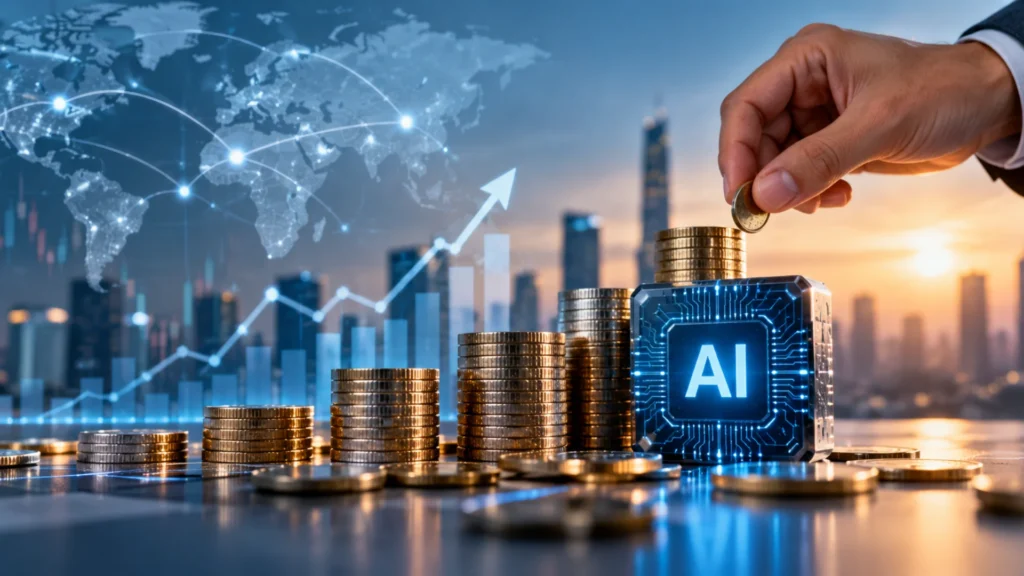
Technology companies are spending heavily on data centres, computing equipment, advanced semiconductors and the infrastructure required to develop and operate AI systems.
That spending supports construction, manufacturing, electricity infrastructure and employment across several industries.
The benefits extend beyond the United States, where many leading AI companies operate.
South Korea, Malaysia, Mexico and Thailand have benefited from demand for technology hardware and other components used in AI infrastructure.
China also plays a significant role in technology manufacturing and international supply chains.
But the advantages are concentrated in a relatively small number of economies.
According to the IMF, just 32 countries now account for 95% of global growth, compared with 54 countries in April.
The fund has lowered its growth forecasts for 47% of economies since its April projections.
Countries outside the AI supply chain face a different economic reality. Many must contend with higher fuel bills without receiving comparable investment in technology, manufacturing or infrastructure.
This divergence has become one of the central concerns in the latest forecast.
Global growth may appear relatively stable, but that stability increasingly depends on industries and economies that represent only part of the international economic system.
India Leads Major Economies as China Faces Slower Growth
India remains the fastest-growing major economy in the IMF’s assessment.
The fund expects India’s economy to expand by 7% in both 2026 and 2027, raising its forecasts from July.
Strong domestic consumption, services activity and investment have helped sustain growth despite elevated international energy prices.
India’s economic performance also reflects the importance of its large domestic market, which provides support when international demand becomes less reliable.
However, the country remains exposed to global oil prices because of its dependence on imported energy.
Sustained increases in fuel costs could affect inflation, transport expenses and business profitability.
China faces a more subdued outlook.
The IMF expects Chinese growth of 4.5% in 2026 and 4% in 2027, slightly below its previous projections.
Higher energy prices have added to existing concerns about weak domestic demand, although exports remain an important source of support.
In the United States, the IMF expects growth of 2.3% in both years, supported by consumer spending, tax measures and technology investment.
The eurozone is projected to grow by 1.1% in 2026, benefiting partly from increased defence spending and participation in technology supply chains.
These differences underline why a single global growth figure cannot adequately describe economic conditions across countries.
The Middle East War Has Created Deep Economic Divisions
The Middle East remains the most immediate geopolitical threat to the IMF’s outlook.
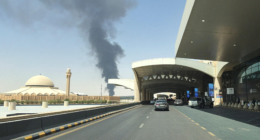
The war has disrupted energy supplies, damaged infrastructure and complicated shipping through strategically important maritime routes.
Countries directly affected by the fighting face particularly severe economic consequences.
The IMF now expects Saudi Arabia’s economy to contract by 3.3% in 2026, reversing its July projection of 1.7% growth.
It also forecasts substantial contractions in Iran, Iraq, Kuwait, Qatar and the United Arab Emirates.
For economies dependent on energy production and exports, disruptions to facilities and shipping can rapidly affect national income.
The consequences extend to countries that import oil and gas.
Higher energy costs increase expenses for businesses and households. They can also force governments to spend more on subsidies or financial assistance at a time when public budgets are already under pressure.
The IMF’s baseline forecast assumes that the Strait of Hormuz will reopen in March 2027, with shipping conditions gradually returning to pre-war levels by October that year.
That assumption is important because a longer disruption could substantially weaken the outlook.
In one adverse scenario, the IMF examined the consequences of oil prices reaching $130 a barrel through the first quarter of 2027.
Such a development would reduce global growth and push inflation higher than currently projected.
The forecast is therefore conditional on developments that remain outside the control of economic policymakers.
Rising Public Debt Leaves Governments With Fewer Options
The IMF has also warned that growing public debt is limiting governments’ ability to respond to further crises.
Many countries borrowed extensively during previous economic disruptions and now face higher interest payments.
When borrowing costs increase, governments must allocate more revenue to servicing existing debt.
That can reduce the resources available for healthcare, education, infrastructure and measures to protect households from rising prices.
The problem is particularly serious for countries with weak public finances or limited access to international capital markets.
Even advanced economies face increasing pressure as government bond yields rise.
The IMF is urging governments to develop credible plans for managing debt and rebuilding financial reserves.
These recommendations do not necessarily require identical policies everywhere. Countries differ in their economic conditions, spending needs and capacity to raise revenue.
However, the underlying concern is shared: governments with limited financial flexibility may struggle to respond effectively when the next crisis arrives.
Could the AI Boom Become Another Economic Risk?
Artificial intelligence is supporting current growth, but the IMF cautions against assuming that heavy investment will produce equally large economic returns.
Technology companies are committing substantial resources to infrastructure based on expectations of future demand and productivity improvements.
If those expectations prove too optimistic, businesses could reduce investment, financial markets could reassess company valuations and investors could experience significant losses.
The IMF examined a scenario in which disappointing AI productivity gains trigger a sharp decline in technology investment.
Combined with tighter financial conditions and higher borrowing costs, such a reversal could reduce global economic output by 1.1% by 2028 relative to the baseline forecast.
The United States would face particularly substantial exposure because of its concentration of leading AI companies and related investment.
The fund also recognises the potential benefits.
If businesses adopt AI more rapidly and achieve meaningful productivity improvements, global economic output could rise above current expectations.
The difference will depend on whether technological development produces lasting efficiency gains across the economy rather than primarily supporting investment in a limited number of companies.
What the IMF Warning Means for the World Economy
The IMF’s latest assessment does not suggest that a global recession is inevitable.
It describes an economy that continues growing but has become increasingly dependent on favourable conditions.
AI investment is providing momentum. Governments and businesses have adapted to higher energy costs. Consumer spending remains resilient in several major economies.
Yet persistent inflation, growing public debt and widening differences between countries leave the outlook vulnerable.
For households, economic resilience means little if wages fail to keep pace with living expenses. For governments, growth provides limited comfort when debt payments consume an increasing share of public resources.
The discussions in Bangkok will therefore extend beyond this year’s growth figures.
Policymakers must consider how to protect economies from prolonged conflict, strengthen public finances and ensure that the benefits of technological development reach beyond a relatively small group of countries.
The IMF’s central message is that the global economy has demonstrated an ability to withstand serious disruption. Maintaining that resilience will require more than continued spending on artificial intelligence or temporary adjustments to energy shortages.
The more difficult task is preparing for future shocks before another crisis tests the limits of the world’s remaining economic safeguards.
Don’t forget to follow us on Facebook | Instagram | Twitter | LinkedIn to get the latest updates from Cape Town Tribune