
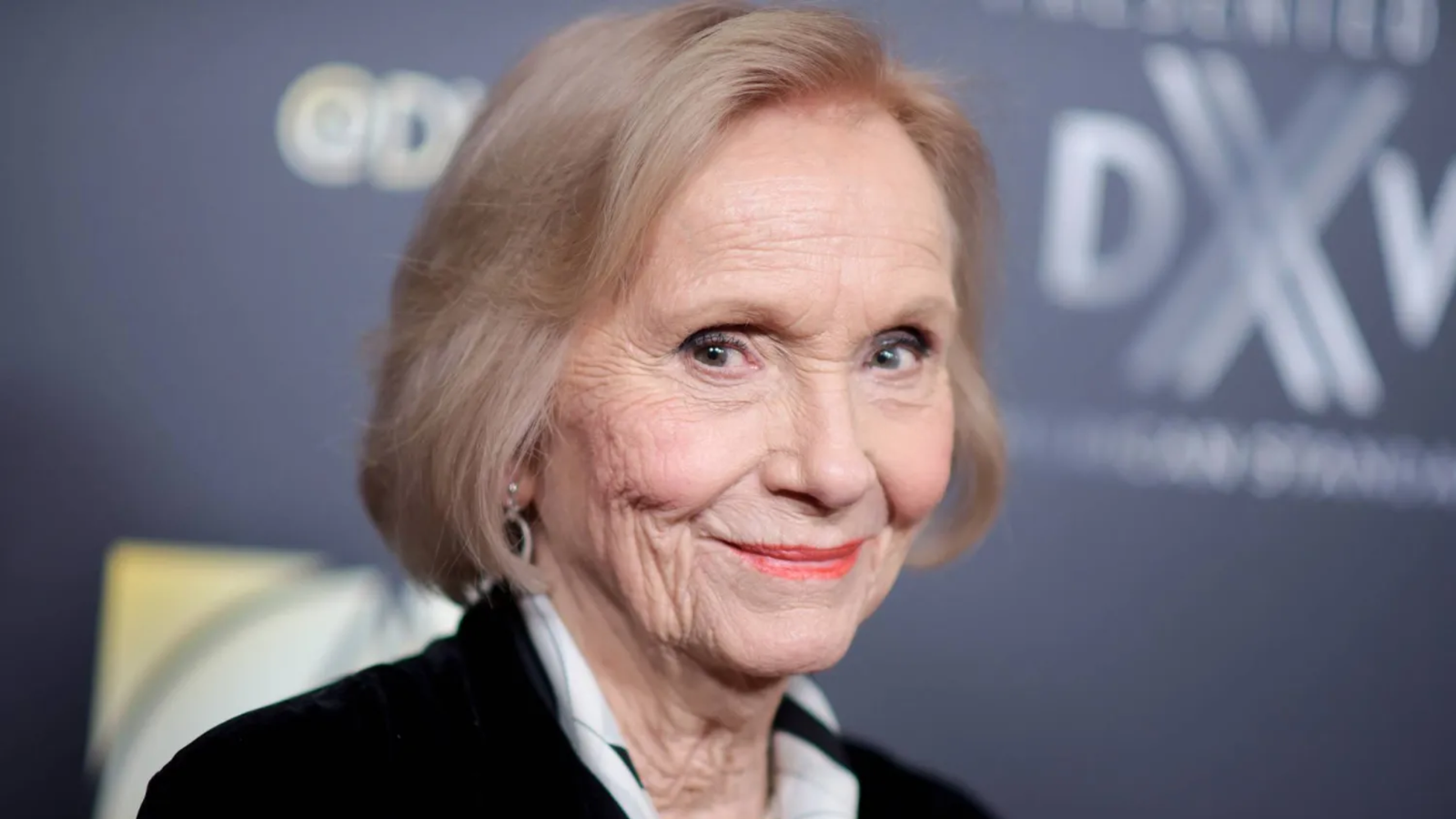
The Oscar-winning actor, whose first film role in On the Waterfront immediately established her as a major screen presence before Alfred Hitchcock transformed her image in North by Northwest, died at her Los Angeles home after a career that stretched from live television to 21st-century cinema.
Eva Marie Saint, one of the last surviving stars closely associated with Hollywood’s postwar generation, has died at the age of 102.
Saint died Tuesday at her home in Los Angeles, according to family representative Jeff Sanderson. Her acting career continued well into her later years, but the two performances most closely associated with her remain separated by only five years: Edie Doyle opposite Marlon Brando in On the Waterfront and the elegant, elusive Eve Kendall opposite Cary Grant in Alfred Hitchcock’s North by Northwest.
Those films presented strikingly different versions of Saint. In one, she was emotionally direct and almost painfully sincere, playing a woman trying to understand the corruption surrounding her brother’s death. In the other, she was sophisticated, guarded and difficult to read, moving through Hitchcock’s thriller with the composure of someone who knows more than she is prepared to say.
The distance between those two performances helps explain why Saint’s career has lasted so well in the public memory. She was never simply the ingénue beside a famous leading man. Her best roles depended on restraint, intelligence, and an ability to suggest that something important was happening beneath dialogue that often appeared deceptively simple.
Eva Marie Saint Won An Oscar With Her First Film
Few actors have entered cinema with a debut as consequential as Saint’s. Before On the Waterfront, she had already spent years working in radio, theatre and the rapidly developing world of live American television.
She studied at the Actors Studio and appeared on Broadway in The Trip to Bountiful, work that eventually brought her to the attention of director Elia Kazan. Turner Classic Movies notes that Saint had begun her professional television career in the late 1940s before making her feature-film debut in 1954.
Kazan cast her as Edie Doyle in On the Waterfront, the sister of a murdered dockworker whose relationship with Brando’s Terry Malloy gradually becomes central to his moral reckoning.
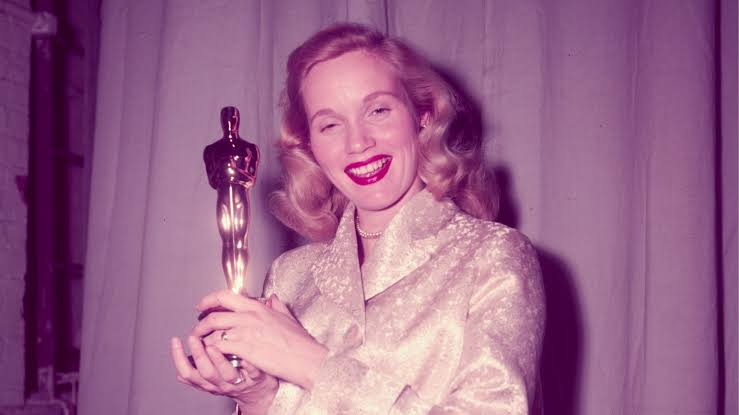
The film received 12 Academy Award nominations and won eight, including Best Picture, Best Director for Kazan and Best Actor for Brando. Saint won Best Supporting Actress for her performance, making her first movie one of the rare debuts to result immediately in an Academy Award.
She was pregnant when she attended the 1955 ceremony and gave birth to her son only two days later. The circumstances have long been part of the mythology surrounding her arrival in Hollywood, but the more significant fact was what followed. Saint did not respond to instant success by accepting every major role offered to her.
She worked selectively, sometimes turning down prominent films and resisting the kind of long-term studio arrangements that could have made her career far more prolific. TCM estimates that she appeared in only 21 feature films across nearly eight decades of professional work.
That relatively small filmography makes the quality and variety of several of those choices more conspicuous.
Eva Marie Saint Refused To Build Her Career Around Constant Visibility
Hollywood in the 1950s could be particularly aggressive in converting a successful newcomer into a studio property. Saint took a different approach.
After winning the Oscar, she did not rush immediately from production to production. Her career developed at a measured pace, and she continued moving between film, theatre and television rather than treating cinema as the only serious destination for an actor.
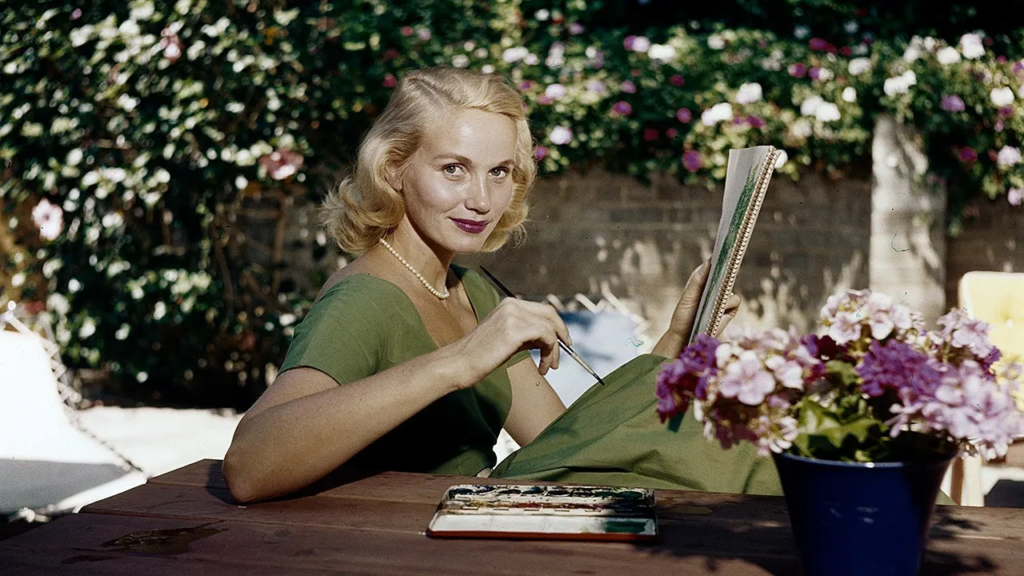
That selectivity was unusual enough to become part of her professional identity. It also meant that when she accepted a role, the choice often carried more weight.
Her early film work included Raintree County, A Hatful of Rain, Exodus and All Fall Down, placing her alongside performers including Elizabeth Taylor, Montgomery Clift, Paul Newman and Warren Beatty. Yet Saint never seemed interested in constructing the kind of star persona that required audiences to encounter the same version of her repeatedly.
Her background in live television may have contributed to that flexibility. Television in the early 1950s demanded actors who could rehearse intensively and perform with the pressure of theatre but the intimacy of a camera. Saint later recalled that the unpredictable nature of live broadcasting taught performers to understand their own responsibilities on a production rather than simply depend on everyone around them.
That professional discipline remained visible throughout her career.
North By Northwest Gave Eva Marie Saint A Completely Different Screen Identity
If On the Waterfront established Saint as a serious dramatic actor, North by Northwest showed how easily that image could be dismantled.
Hitchcock cast her as Eve Kendall opposite Cary Grant in his 1959 thriller, one of the director’s most enduring films. The role required a type of cool glamour that was far removed from Edie Doyle’s emotional openness.
At the time, the casting was not obvious. TCM notes that Saint had developed a screen image associated with relatively unadorned dramatic characters, while Hitchcock wanted Eve Kendall to possess the polished ambiguity associated with his most carefully constructed female leads. He became closely involved in her appearance and wardrobe for the film.
The transformation worked because Saint did not simply imitate the established idea of a Hitchcock heroine. Her performance retained a degree of emotional reserve that made Eve’s motives difficult to determine without turning the character into a caricature of mystery.
Her scenes with Grant move easily between flirtation, suspicion and genuine attachment. The film depends on the audience repeatedly reconsidering what Eve knows and where her loyalties lie, and Saint maintains that uncertainty without drawing unnecessary attention to it.
More than six decades later, the performance remains one of the principal reasons she is remembered internationally. The image of Saint opposite Grant belongs to a different Hollywood visual language from the stark black-and-white world of On the Waterfront, yet both films demonstrate the same underlying control.
Eva Marie Saint Continued Working Across Television And Film
Saint’s career did not end with the period that produced her most famous movies.
She returned frequently to television, taking roles in miniseries, dramas and established series at a time when some major film actors still regarded television as a lesser medium. For Saint, who had built her career there before Hollywood called, the distinction was never quite so rigid.
Her television work eventually brought her another major award. She won the 1990 Emmy for Outstanding Supporting Actress in a Miniseries or Special for People Like Us. The Television Academy records five Primetime Emmy nominations across her career, beginning in the 1950s and continuing through 1990.
She also reached new generations of viewers through appearances in Moonlighting and films including Nothing in Common, in which she played Tom Hanks’ mother.
Her later work included Because of Winn-Dixie, Superman Returns and Winter’s Tale, while animation audiences heard her as the voice of Katara in The Legend of Korra. The Television Academy described her career as one that moved comfortably among film, television, theatre and radio rather than belonging exclusively to one medium.
That range is especially notable given how dramatically the entertainment industry changed during her lifetime. Saint began working when live television was still a new technology and remained active into an era dominated by streaming, digital production and franchise filmmaking.
Eva Marie Saint Came From Television Before Hollywood Made Her Famous
Saint was born in Newark, New Jersey, on July 4, 1924, and grew up in New York State. Acting was not initially her intended profession.
She attended Bowling Green State University in Ohio with plans connected to education before discovering theatre and changing direction. After college, she moved into professional performance through radio and early television, eventually studying at the Actors Studio under Lee Strasberg.
That period placed her inside an important generation of American actors who emerged from theatre and Method-influenced training rather than the traditional studio grooming system.
The connection with Kazan and Brando on On the Waterfront was therefore not accidental. Saint belonged to the same broader movement toward more naturalistic performance that was changing American stage and screen acting during the 1950s.
Yet she never became known for the conspicuous intensity sometimes associated with that generation. Her acting was usually quieter. She could register fear, attraction, or disappointment without enlarging the emotion simply because the camera was watching.
That quality gave directors considerable freedom in how they used her. Kazan could place her inside social realism, Hitchcock could recast her as an enigmatic blonde, and later filmmakers could use the authority she accumulated with age without reducing her appearances to nostalgia.
Eva Marie Saint Leaves Behind A Career Defined By Judgment Rather Than Volume
Saint was married to director and producer Jeffrey Hayden for 65 years, until his death in 2016. Their long marriage unfolded alongside a career in which she repeatedly appeared willing to place personal life and artistic choice ahead of the pressure to remain constantly visible.
That decision makes her filmography look unusual by contemporary standards. There are no dozens of interchangeable leading roles and relatively few periods in which Saint seemed interested in maintaining celebrity simply for its own sake.
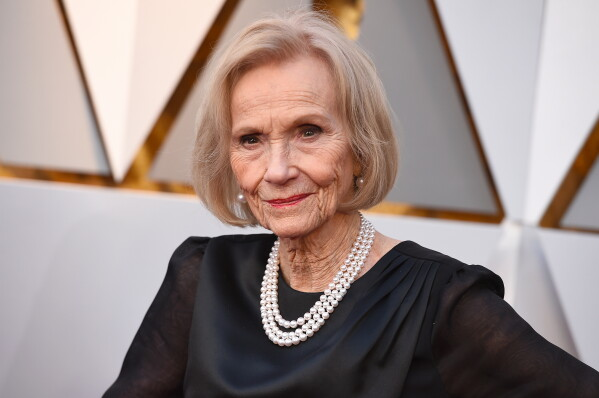
What remains instead is a collection of performances that continued to be discussed long after the industries that produced them had changed.
On the Waterfront remains one of the central American films of the 1950s, and the Academy continues to recognise Saint’s Edie Doyle as the performance that earned her the supporting-actress Oscar at the 27th Academy Awards. North by Northwest, meanwhile, remains among Hitchcock’s most widely seen films and gave Saint a second screen identity that could hardly have been further removed from her first.
Her death at 102 inevitably places those films at the centre of the immediate remembrance. They deserve that position, but they account for only part of a professional life that began before television had settled into American homes and continued into the 21st century.
Eva Marie Saint belonged to a generation whose working methods, studio structures, and forms of celebrity now feel distant from contemporary Hollywood. What makes her career enduring is not merely that she survived long enough to represent that period. It is that the performances themselves have remained accessible, precise, and recognisably human long after the world in which they were made disappeared.
Don’t forget to follow us on Facebook | Instagram | Twitter | LinkedIn to get the latest updates from Cape Town Tribune