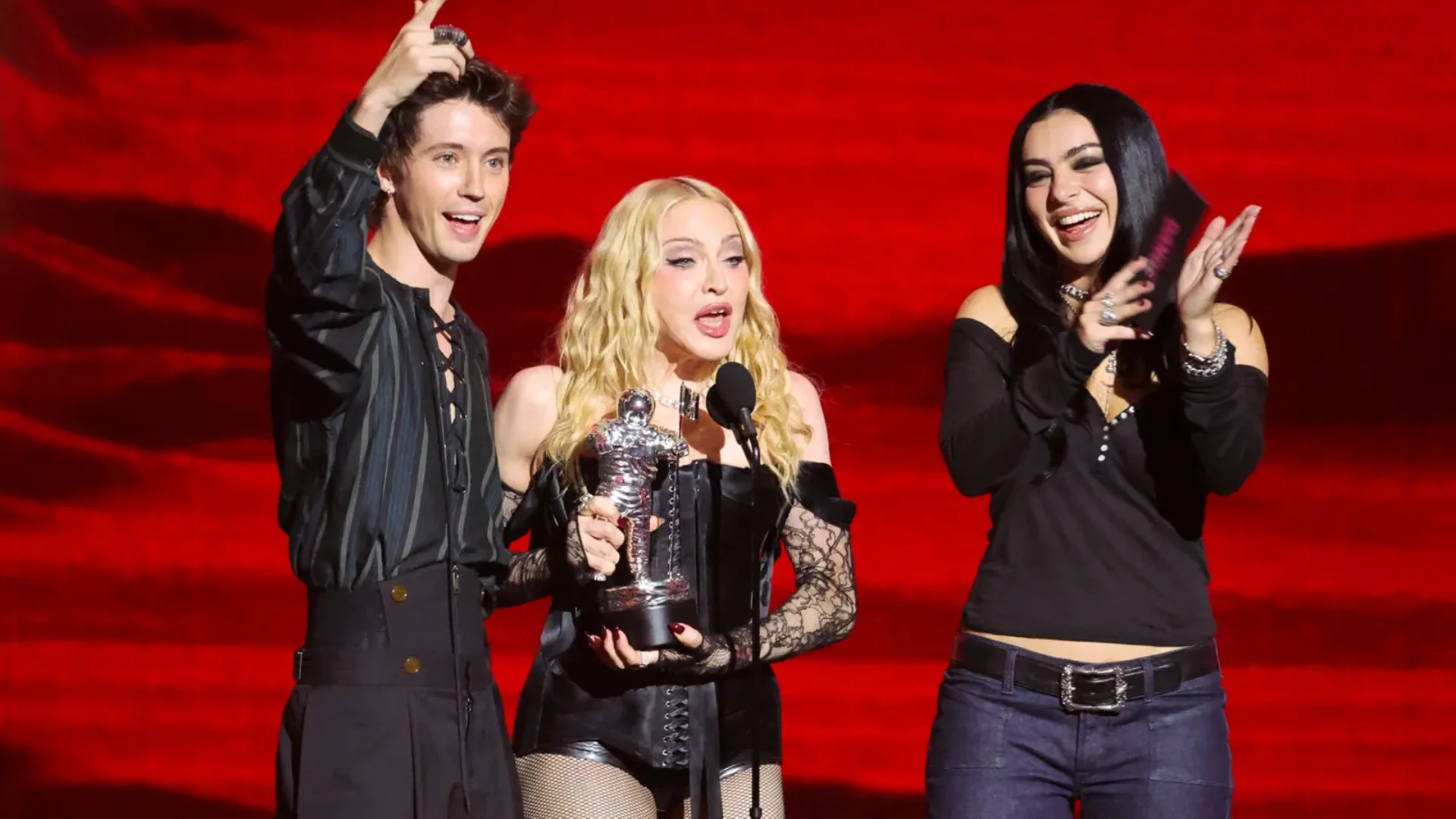

Madonna returned to the MTV Video Music Awards stage for the first time in 23 years, opening the ceremony alongside Sabrina Carpenter and Charli xcx before ending the night as its biggest winner. Madonna did not return to the MTV Video Music Awards simply to revisit the past.
At Sunday night’s ceremony in Los Angeles, the 68-year-old opened the show with Sabrina Carpenter and Charli xcx, performed material from her latest album Confessions II and left the Peacock Theater with seven awards, more than any other artist at the 2026 VMAs.
It was her first performance at the awards in 23 years, and the staging made clear that the return was intended to connect different periods of pop rather than recreate one of her earlier VMA appearances.
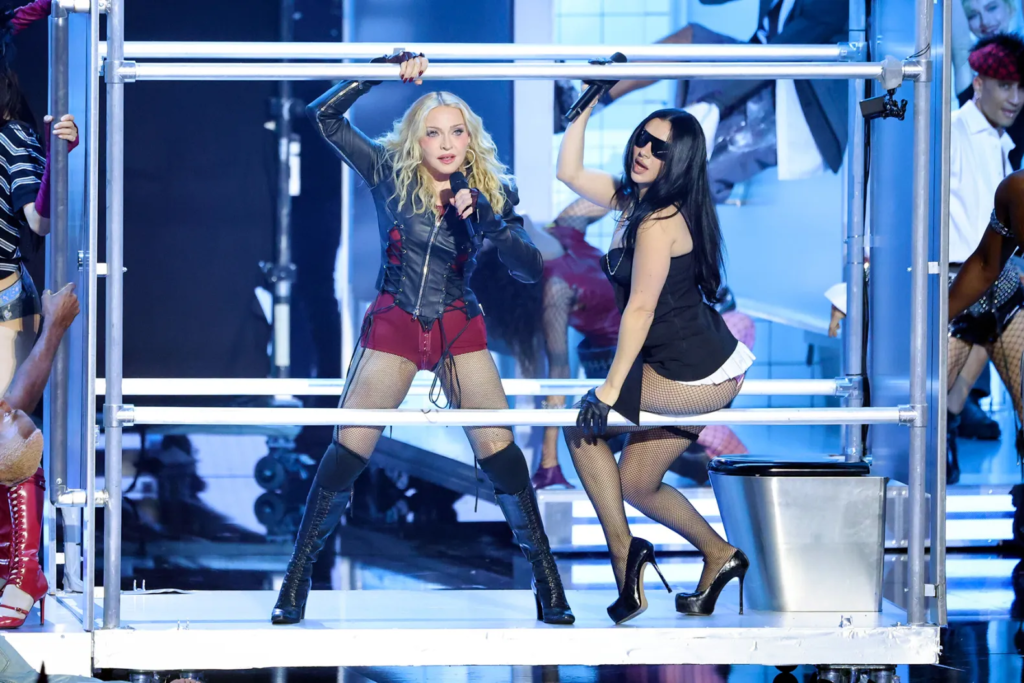
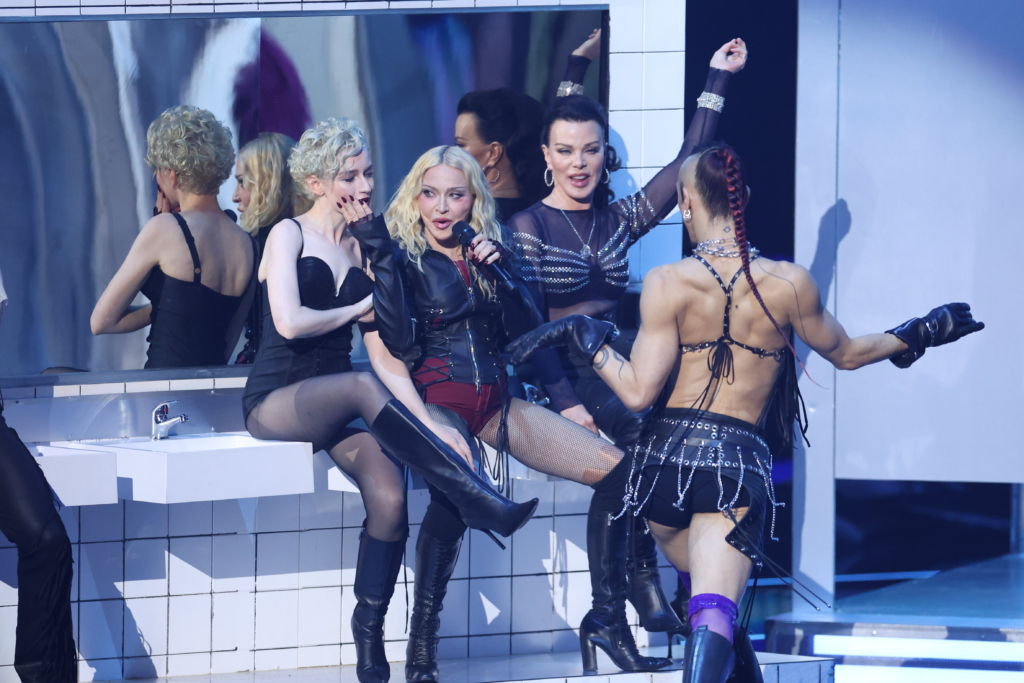
The performance began with Carpenter at the piano as Madonna joined her for “Bring Your Love,” their collaboration released earlier this year. Charli xcx later appeared for “Danceteria Afterhours,” a new version of Madonna’s song that arrived shortly before the ceremony.
The guest list extended well beyond those two singers. Julia Garner, Debi Mazar, Seth Rogen, producer Andrew Watt and others appeared during the performance, which moved between references to Madonna’s New York club years and the polished scale of a modern awards show.
For an artist whose history is closely tied to MTV, the choice of collaborators mattered almost as much as the songs.
Madonna’s Return Was Built Around Pop’s Present
Madonna’s relationship with the VMAs stretches back to the inaugural ceremony in 1984, when her performance of “Like a Virgin” became one of the defining images of early MTV.
She returned over the following decades with performances of “Express Yourself,” “Vogue” and “Ray of Light,” before her last full VMA performance in 2003 alongside Britney Spears and Christina Aguilera.
Sunday’s appearance therefore carried obvious historical weight.
But Carpenter and Charli xcx prevented it from becoming an exercise in nostalgia.
Carpenter has emerged as one of the dominant pop figures of the current generation, while Charli has spent much of her career pushing electronic and club music further into the mainstream. Placing both alongside Madonna created a useful contrast: an artist who helped define MTV-era pop sharing the stage with performers working in a much more fragmented, streaming-driven industry.
The connection was not invented for the ceremony.
Madonna and Carpenter released “Bring Your Love” earlier this year after first performing the song together at Coachella. Charli, meanwhile, collaborated with Madonna on “Danceteria Afterhours,” part of the wider Confessions II campaign.
That continuity gave the performance more substance than a conventional awards-show cameo.
Seven Wins Made Madonna The Night’s Biggest Winner
The opening performance was followed by an unusually strong night in the awards themselves.
Madonna won Artist of the Year, defeating a field that included Taylor Swift, Sabrina Carpenter, Ariana Grande, Bruno Mars and Morgan Wallen. She also shared Best Collaboration with Carpenter for “Bring Your Love.”
Her Confessions II – The Film collected several technical and genre awards, including Best Dance, Best Choreography, Best Cinematography and Best Long-Form Video, while Confessions II also won Best Album. The seven trophies represented the largest total for any artist at this year’s ceremony.
The result was notable partly because Madonna entered the ceremony with the most nominations of any artist. It also reflected the scale of her latest album campaign.
Released in July, Confessions II reunited her with producer Stuart Price and returned explicitly to the dance-music territory associated with 2005’s Confessions on a Dance Floor. The project has been promoted through collaborations, club-focused performances and visual work that draws heavily on Madonna’s early relationship with New York nightlife.
The VMAs effectively became the most visible culmination of that campaign so far.
The Awards Also Belonged To A New Generation
Madonna may have collected the largest number of trophies, but she did not dominate every major category.
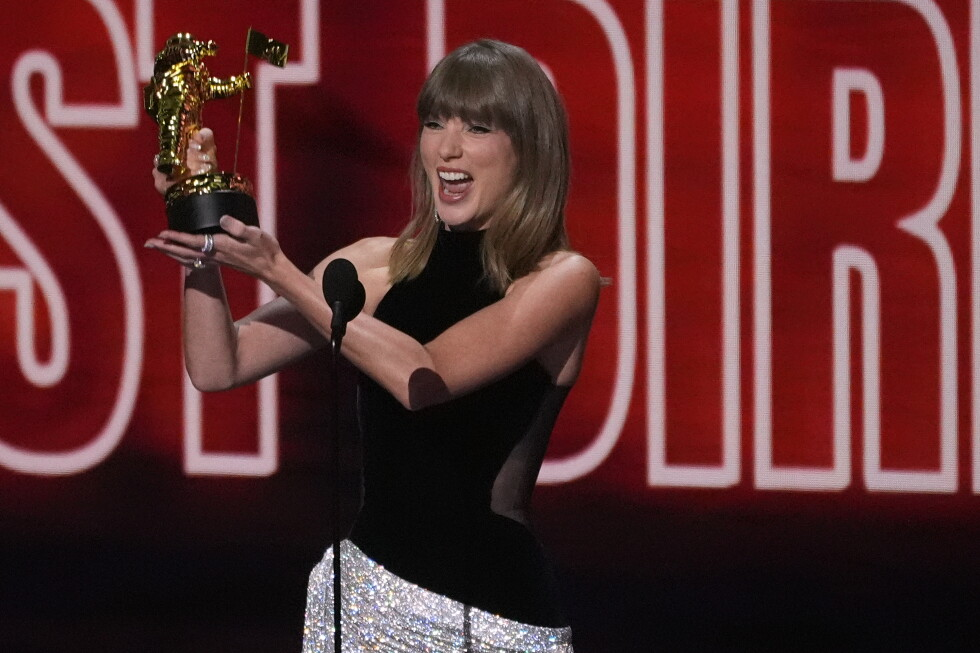
Taylor Swift won Video of the Year for “The Fate of Ophelia” and received the inaugural Artist Director Honors, adding another chapter to her own VMA history. LISA won Best Pop, while Sienna Spiro was named Best New Artist.
That distribution of awards made Madonna’s presence more interesting. She was not being honoured in isolation from contemporary pop. She was competing directly with artists who now command the audiences, streaming numbers and cultural attention that MTV itself once concentrated in a single place.
Her Artist of the Year victory therefore carried a different meaning from a lifetime-achievement award. It recognised current work.
During her acceptance speech, Madonna reflected on her earliest VMA appearance and on the period leading to Confessions II, telling the audience that she had spent the previous year and a half rediscovering what she wanted to make.
The speech avoided treating longevity as the achievement in itself. Instead, it placed the emphasis on continuing to produce work that can survive comparison with much younger artists.
Why The 2026 VMAs Mattered For Madonna
Awards ceremonies frequently rely on legacy performers to supply history, while newer artists provide the sense of momentum.
The 2026 VMAs complicated that arrangement. Madonna supplied the history, but she also arrived with new music, current collaborators, the most nominations of the year, and ultimately the most wins.
Carpenter and Charli xcx were not presented as heirs assembled to pay tribute to her. They were collaborators sharing material created for the same album era.
Forty-two years after Madonna first performed at the VMAs, the ceremony returned to an artist who helped establish much of its visual language. But this time, she was standing beside performers shaped by a completely different music economy.
The evening did not suggest that pop had circled back to where it began. It showed something more interesting: Madonna remains part of the conversation because she is still willing to enter the version of pop that exists now
Don’t forget to follow us on Facebook | Instagram | Twitter | LinkedIn to get the latest updates from Cape Town Tribune