
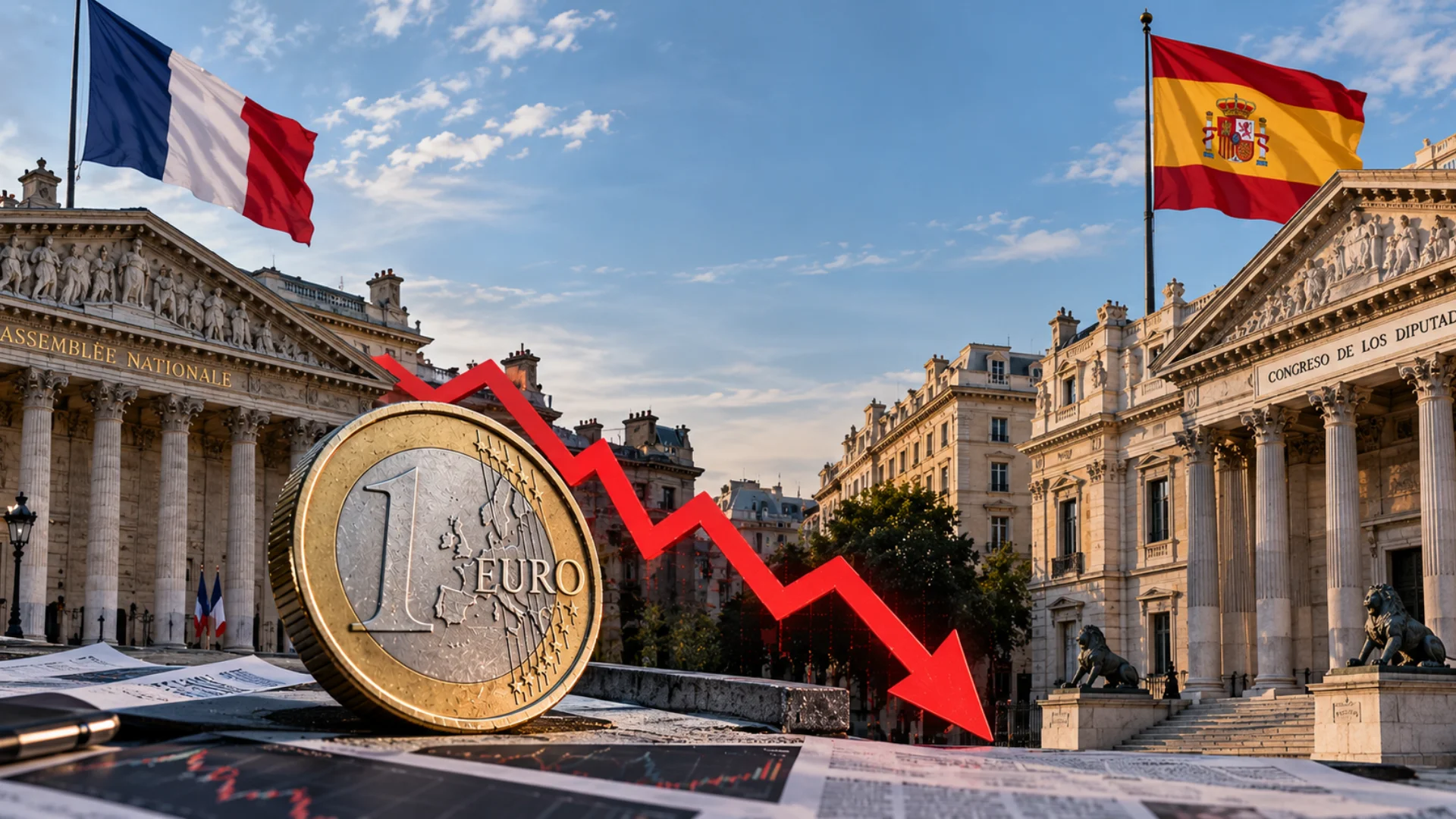
The euro has fallen to its weakest level since May 2025 as investors confront a difficult combination of rising French borrowing costs, political uncertainty in Spain and stubborn inflation pressures across the currency bloc.
The euro remained close to a 17-month low on Tuesday as political and fiscal concerns in two of the currency bloc’s largest economies began to exert more visible pressure on European markets.
The common currency traded around $1.1220 in early Asian trading after falling below $1.12 on Monday, its weakest level against the US dollar since May 2025. It has lost more than 1% over the past week and has also weakened against sterling, the Swiss franc and the Japanese yen.
France is at the centre of the current anxiety. Investors have become increasingly uneasy about the government’s ability to reduce a large budget deficit while navigating a deeply divided parliament and an approaching presidential election. Those concerns have pushed up French government borrowing costs and widened the gap between French and German bond yields to levels not seen since the euro-area sovereign debt crisis more than a decade ago.
Spain has added another source of uncertainty after Prime Minister Pedro Sánchez called an early general election for November 29, following the rejection of housing measures in parliament and mounting pressure over the country’s housing crisis.
Taken separately, neither development would necessarily be enough to destabilise the currency. Together, they are raising a more uncomfortable question for investors: whether political difficulty is beginning to interfere with the euro area’s ability to manage rising debt, inflation and borrowing costs at the same time.
Euro Weakness Is Increasingly Linked To France’s Debt Problem
France’s public finances have become a focal point because investors are no longer treating the country’s fiscal difficulties as a distant political argument.
The government is attempting to pass a 2027 budget designed to reduce the deficit and stabilise a debt burden that has reached record levels. The political arithmetic is difficult. Parliament remains fragmented, opposition parties are positioning themselves ahead of the 2027 presidential election, and significant spending reductions are likely to face resistance from both the left and the right.
Bond markets have responded by demanding more compensation to hold French debt.
The yield spread between French 10-year government bonds and comparable German Bunds widened to nearly 160 basis points last week before narrowing somewhat. That was the largest gap since the euro-zone debt crisis in 2011.
Germany is generally treated as the euro area’s safest large sovereign borrower, so the spread between French and German yields has become an important measure of investor confidence.
The wider that gap becomes, the more markets are signalling concern about France’s fiscal outlook.
Bank of America strategists estimate that every additional 10-basis-point widening in the French-German spread could be associated with roughly a 0.4% decline in the euro against the dollar. That relationship is not mechanical, but it illustrates how quickly a bond-market concern can become a currency problem.
France Is No Longer Being Viewed As An Isolated Case
The larger concern is that stress in French bonds may begin to affect other euro-area markets.
Italian bond spreads have also widened, with the gap between Italian and German 10-year yields approaching 130 basis points during the latest selloff. Reuters reported that the weekly move was the largest since the early period of the COVID-19 crisis.
That does not mean Europe is returning to the sovereign debt crisis of 2010 to 2012.
The financial system is different; the European Central Bank has developed more powerful tools, and banks across the region are generally better capitalised than they were during the earlier crisis.
However, the current market behaviour shows that investors are once again differentiating more sharply between governments according to debt, political stability and their ability to control public spending.
France matters particularly because it is the euro area’s second-largest economy. A sustained rise in its borrowing costs would have implications far beyond Paris, especially if the repricing spreads to other highly indebted governments.
Spain’s Snap Election Adds Political Uncertainty To The Euro
Spain presents a different problem. Its economy has performed relatively strongly compared with much of Europe, but Prime Minister Pedro Sánchez’s decision to call an early election has introduced political uncertainty at a moment when markets are already sensitive to developments in France.
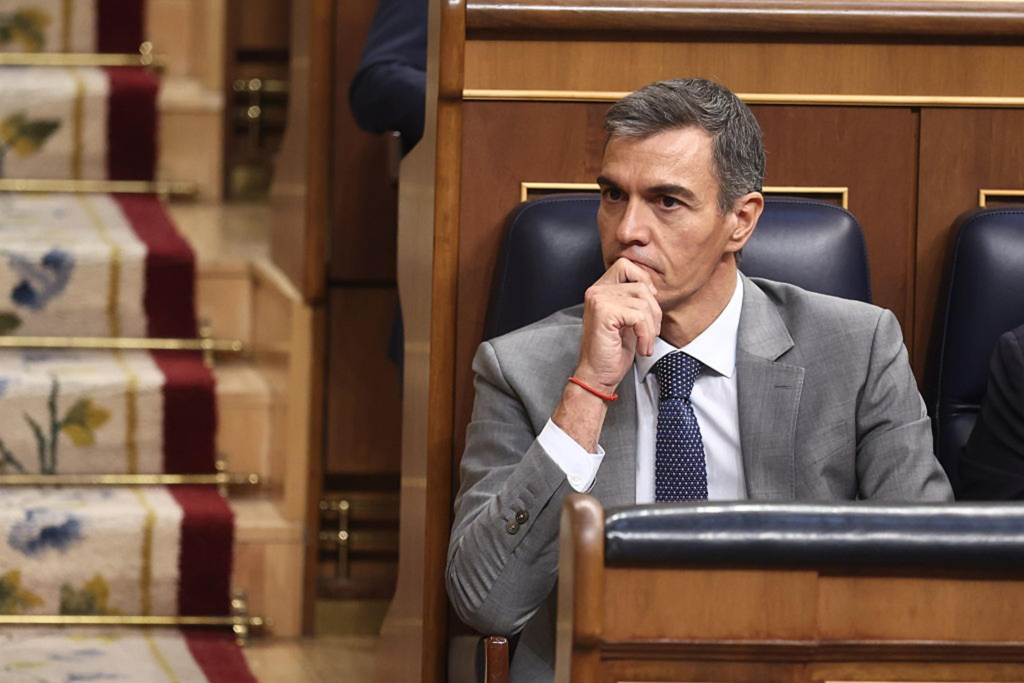
The election will take place on November 29 after Sánchez dissolved parliament following the defeat of housing proposals intended to address rapidly rising rents and affordability pressures. Housing is expected to become one of the central campaign issues, alongside immigration, corruption allegations and regional politics.
Spain’s fragmented parliament has made legislation increasingly difficult, while smaller parties have frequently held enough seats to determine whether government measures survive.
For currency markets, the concern is less about which party eventually forms the government than about another major euro-area economy entering a period of political uncertainty while fiscal and monetary pressures are already elevated.
France and Spain are two of the four largest economies using the euro. Political instability occurring simultaneously in both naturally receives greater attention than similar difficulties in smaller member states.
The Euro Is Also Being Pressured By A Stronger Dollar
Europe’s problems explain only part of the currency move.
The other side of the euro-dollar exchange rate is the dollar, and the US currency has been strengthening as Treasury yields remain at exceptionally high levels.
The dollar index rose above 102 and reached an 18-month high, while long-dated US government borrowing costs climbed to multi-decade highs.
Expectations for an immediate Federal Reserve rate increase have eased following softer employment data, but investors still believe persistent inflation may require further monetary tightening.
That creates an unfavourable interest-rate backdrop for the euro.
If investors expect US rates to remain high while becoming less convinced that the European Central Bank can tighten aggressively, dollar-denominated assets become relatively more attractive.
The result is additional pressure on the European currency even before domestic political concerns are considered.
The ECB Faces A Difficult Inflation And Bond-Market Balance
The European Central Bank now faces an awkward policy environment.
Inflation in the euro area has been pushed higher by energy costs, while political uncertainty and rising sovereign bond yields are increasing borrowing costs for governments, households and companies.
Tighter monetary policy could help contain inflation and support the euro, but higher interest rates would also increase debt-servicing costs for governments already struggling with large deficits.
A weaker euro creates a separate problem because it can make imported goods and energy more expensive, adding to inflation at a time when the ECB is trying to bring price growth back towards its 2% target.
The ECB’s September projections already described the economic outlook as unusually uncertain, citing Middle East tensions, volatile energy prices and the effects of disruptions around the Strait of Hormuz. The central bank expects the euro-area government deficit to rise towards 3.7% of GDP in 2027, while the debt ratio is projected to move towards 90% by 2028.
Those forecasts were prepared before the latest bout of political and bond-market volatility.
Higher Borrowing Costs Could Reach Households And Businesses
Bond-market stress can appear remote from everyday economic activity, but sustained increases in sovereign yields eventually affect private borrowing as well.
Government bonds are used as benchmarks throughout financial markets. When sovereign yields rise, the cost of issuing corporate debt can increase, while banks may also face higher funding costs.
Mortgage rates and business loans can eventually move higher as a result.
For France, the immediate concern is that rising debt-service costs make reducing the budget deficit even harder. More government revenue must be used to pay interest, leaving less room for public spending or requiring deeper fiscal adjustments elsewhere.
The problem can become self-reinforcing if investors demand still higher yields because they believe political resistance will prevent the government from restoring fiscal discipline.
That is why the French bond selloff is receiving more attention than an ordinary period of market volatility.
A Weaker Euro Is Not Entirely Negative For Europe
Currency depreciation also has economic advantages. A cheaper euro can make European exports more competitive abroad and increase the value of foreign earnings when multinational companies convert overseas revenue back into euros.
Export-heavy economies such as Germany can sometimes benefit from that effect. The present situation is less straightforward because Europe is also dealing with elevated energy costs.
A substantial share of global oil and other commodities is priced in dollars. When the euro falls against the US currency, those imports become more expensive for European buyers.
The benefit to exporters can therefore be offset by higher input costs and renewed inflationary pressure.
The ECB’s September analysis showed how sensitive the economy remains to changes in energy prices and exchange rates, particularly while the Middle East conflict continues to affect global supply.
Political Decisions Will Now Matter More To Currency Markets
The euro’s recent decline has brought fiscal policy back into a market conversation that had previously been dominated by inflation and central banks.
France will need to demonstrate that it can pass a credible budget without creating deeper political instability. Spain is entering an election campaign that will determine whether its next government can secure enough parliamentary support to govern effectively.
Neither process will be resolved quickly. At the same time, the ECB must assess whether inflation requires further tightening while watching for signs that rising government borrowing costs are becoming disruptive.
The euro remains well above the lows reached during the 2022 energy crisis, when it fell below parity with the dollar. The present weakness is therefore not comparable in scale.
What has changed is the source of the pressure.
Investors are no longer looking only at energy prices or differences between ECB and Federal Reserve policy. They are increasingly asking whether Europe’s largest governments have the political capacity to manage their debts while maintaining public support.
The euro’s fall towards a 17-month low suggests that, for the moment, markets are not entirely convinced.
Don’t forget to follow us on Facebook | Instagram | Twitter | LinkedIn to get the latest updates from Cape Town Tribune