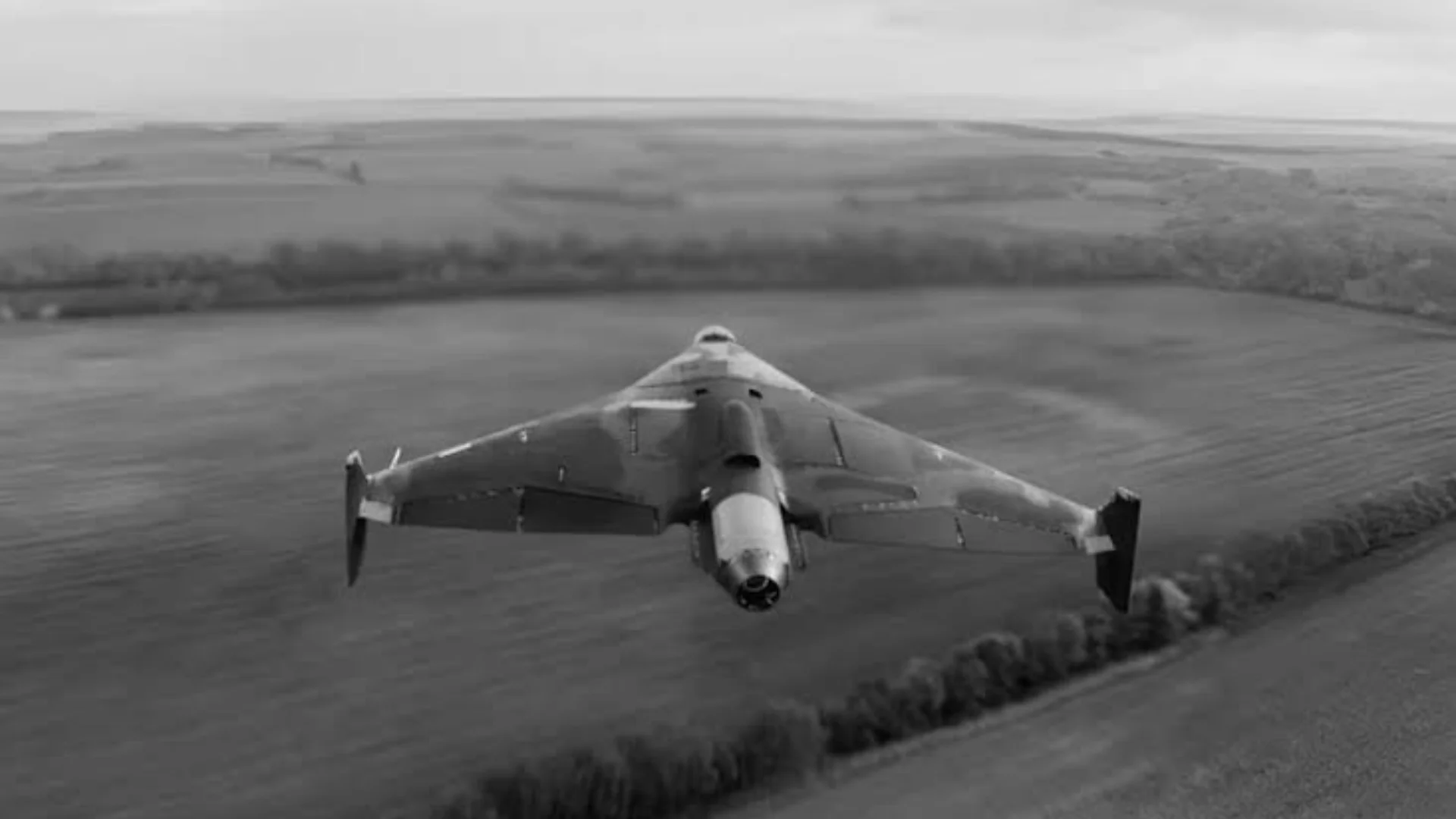

A new wave of Russian attacks on Kyiv has brought renewed attention to a growing problem for Ukraine: faster jet-powered drones that are more difficult to intercept and increasingly capable of penetrating areas protected by some of the country’s strongest air defences.
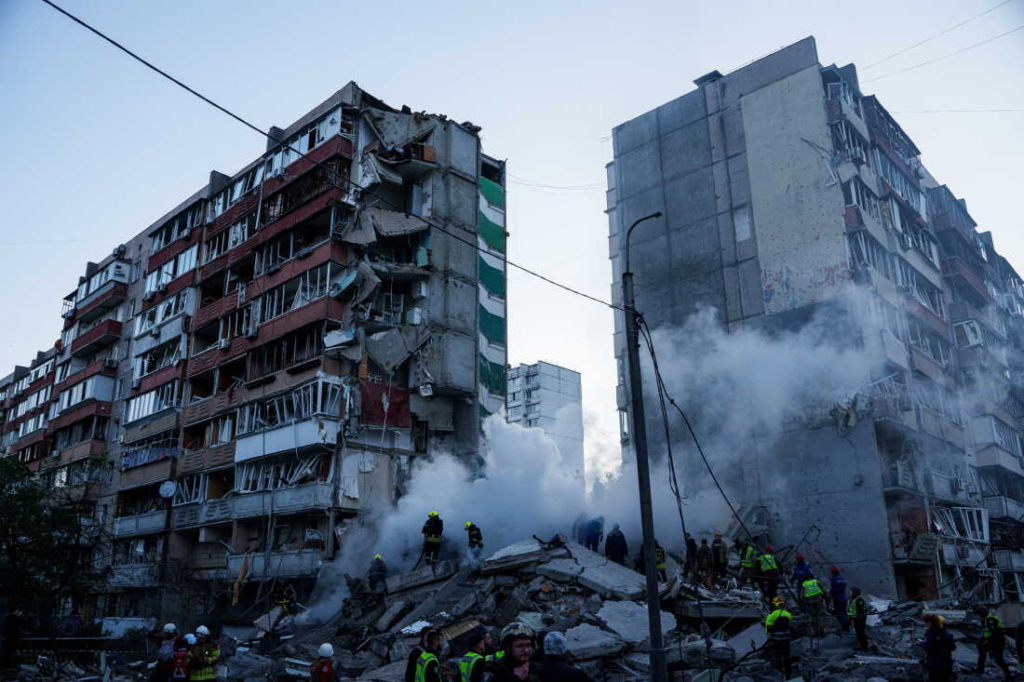
Explosions were heard across Kyiv again early Tuesday as Russia continued its aerial campaign against Ukraine, following a broader wave of drone and missile strikes that caused heavy civilian casualties and damaged sites across the capital.
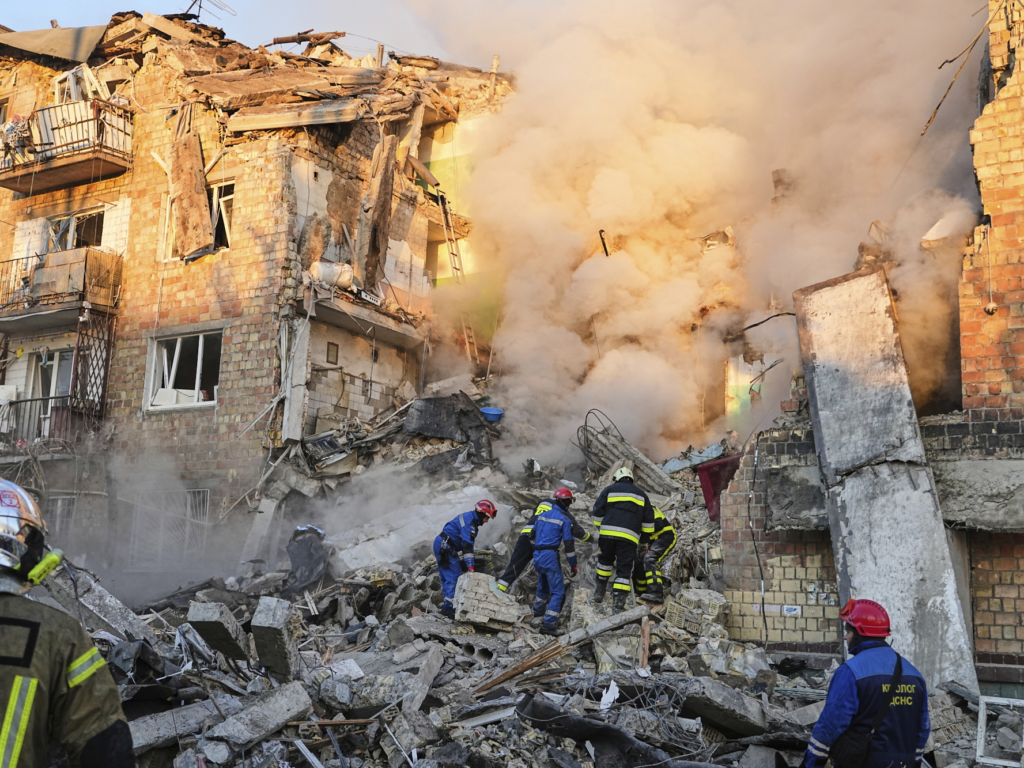
Missile debris fell into the courtyard of a residential building, while a fire broke out at another location, according to Kyiv Mayor Vitali Klitschko. The latest attack came only hours after a large-scale Russian assault that killed at least 10 people across Ukraine and injured dozens more.
Among the most prominent targets was the National Academy of Sciences of Ukraine in central Kyiv, where a jet-powered drone struck the building and caused a major fire. Two people were killed there and 24 were injured, according to Reuters.
The damage itself was significant, but the attack also highlighted a broader change in Russia’s aerial strategy.
Moscow is increasingly using jet-powered versions of its long-range attack drones, weapons that are faster, more agile and more difficult to intercept than the propeller-driven Shahed-type drones that became a familiar feature of the war over the past several years.
Ukraine has spent considerable time and resources building an effective defence against those earlier models. The new generation of drones is beginning to erode some of that progress.
Russia Is Increasing Its Use Of Jet-Powered Drones
President Volodymyr Zelenskyy said more than 120 attack drones were launched against Ukraine on September 28 alone, with roughly 90 of them described as jet-powered. That figure reflects a notable shift in Russia’s use of unmanned weapons.
Earlier Shahed-style drones proved effective because they were relatively inexpensive and could be launched in large numbers. Their slower speed, however, gave Ukrainian forces more options for interception, including mobile gun teams, anti-aircraft weapons, electronic warfare systems and, more recently, interceptor drones.
Jet propulsion changes that balance. Some newer models can reportedly travel at speeds above 400 kilometres per hour and operate at altitudes of roughly four to seven kilometres. Those characteristics reduce the effectiveness of many of the weapons Ukraine has relied on against slower drones.
The problem is not that these aircraft are impossible to shoot down. It is that they narrow the range of defensive options available and force Ukraine to use more capable, and often more expensive, systems.
That places additional strain on an air-defence network that must already contend with cruise missiles, ballistic missiles, decoys and large numbers of conventional drones.
Ukraine’s Interception Rate Has Fallen Against Faster Drones
The growing difficulty is visible in Ukraine’s own interception figures.
Zelenskyy has said Ukrainian forces are currently destroying around 57% of Russian jet-powered drones, compared with an overall drone interception rate of roughly 70%.
Earlier in the war, Ukraine regularly reported interception rates approaching 90% against older Shahed-type drones.
The decline is significant because Russia often launches large numbers of aircraft in a single attack. Even if most are intercepted, those that pass through can still damage power facilities, rail networks, military infrastructure and residential areas.
The challenge becomes more acute when Russia combines several kinds of weapons in the same assault.
Ukrainian commanders must decide which threats require expensive surface-to-air missiles and which can be handled by cheaper weapons. Using a sophisticated interceptor against a relatively inexpensive drone may be necessary in the moment, but it becomes increasingly difficult to sustain if Russia can replace its attacking systems more cheaply than Ukraine and its allies can replace the missiles used to destroy them.
That economic imbalance has become one of the central pressures shaping the air war.
The Kyiv Strike Exposed A Weakness In Dense Air Defences
Monday’s attack on the National Academy of Sciences illustrated why the newer drones are receiving so much attention.
The institution is located in central Kyiv, one of the most heavily defended parts of the country. Ukraine has concentrated some of its strongest air-defence systems around the capital because of its political, military and symbolic importance.
Yet a jet-powered drone still reached the building. The strike destroyed several floors and triggered a major fire. A nearby private medical centre was also damaged.
For Ukrainian officials, the incident raised uncomfortable questions about the ability of even dense defensive networks to stop increasingly fast unmanned aircraft.
If such drones can reach central Kyiv, other cities and infrastructure sites with fewer defensive resources may be considerably more vulnerable.
Russia has consistently said that its long-range attacks target military, industrial and infrastructure facilities. Ukrainian officials, however, have repeatedly documented strikes on homes, hospitals and other civilian sites, and independent reporting from recent attacks has recorded extensive damage to non-military buildings.
Ukraine Is Expanding Its Interceptor-Drone Programme
Kyiv is increasingly looking for an answer that does not depend entirely on expensive Western missiles.
Ukraine has been rapidly developing interceptor drones designed specifically to destroy Russian unmanned aircraft.
Its Defence Ministry has authorised dozens of new interceptor systems this year, while domestic manufacturers are working on faster models capable of reaching higher altitudes.
One of the most prominent examples is the JEDI Shahed Hunter, which Ukrainian officials say can travel at speeds above 350 kilometres per hour and operate at altitudes of up to six kilometres.
Even so, intercepting jet-powered drones presents a much more demanding engineering challenge than engaging slower propeller-driven aircraft.
An interceptor must be fast enough to reach its target, stable enough to manoeuvre at high speed and equipped with guidance systems capable of tracking another aircraft moving rapidly through contested airspace.
Developing those systems at scale is proving difficult.
Ukrainian engineers have been testing new propulsion systems, guidance technologies and artificial-intelligence-assisted targeting methods in an effort to close the gap. Early prototypes have encountered problems with control and reliability, particularly at higher speeds.
The government is also trying to increase domestic production of jet engines, reflecting the extent to which the air war is becoming an industrial competition as much as a military one.
Russia Is Expanding The Pressure Before Ukraine Can Adapt
The increased use of jet-powered drones appears to be part of a broader Russian effort to exploit vulnerabilities in Ukraine’s air-defence system before new countermeasures can be deployed in sufficient numbers.
The Institute for the Study of War has assessed that Moscow is increasingly relying on long-range drone and missile attacks to damage Ukraine’s economy, infrastructure and defence capacity.
That interpretation is not the same as an official Russian statement of strategy, but it is consistent with the pattern of recent strikes and the growing use of systems designed to complicate interception.
The Kremlin, for its part, has described recent attacks as responses to Ukrainian strikes inside Russia. Moscow has also said that operations against Ukrainian military and infrastructure targets will continue.
Ukraine has expanded its own long-range campaign against Russian oil facilities, defence sites and other infrastructure, arguing that such targets support Moscow’s war effort.
The result is an increasingly intense exchange of long-range strikes, even as major changes along much of the ground front remain limited.
Western Missile Supplies Remain Under Pressure
Ukraine’s difficulty is not confined to technology.
Advanced systems such as Patriot and NASAMS remain essential for defending against ballistic missiles, cruise missiles and other high-end threats. Their interceptors, however, are expensive and available only in limited quantities.
That has forced Ukraine to become increasingly selective about how it uses them.
Western governments are trying to increase production, but manufacturing capacity cannot be expanded overnight. The United States and European states are rebuilding stockpiles at the same time that several conflicts and security commitments are increasing global demand for air-defence systems.
For Kyiv, that creates a problem of prioritisation.
A Patriot interceptor may be capable of destroying a threatening drone, but using such a missile against a relatively inexpensive unmanned aircraft is not a sustainable answer if the attacker can continue launching hundreds of them.
The attraction of interceptor drones is therefore straightforward: Ukraine needs a defensive weapon that costs far less than the systems it is trying to protect.
The Air War Is Becoming An Industrial Contest
The evolution of drone warfare in Ukraine has repeatedly followed a cycle of innovation and response.
Russia introduced Shahed-type drones in large numbers. Ukraine gradually improved its ability to detect and destroy them. Mobile firing teams, electronic warfare systems and cheaper interceptors reduced their effectiveness.
Russia then modified the technology.
Jet propulsion has increased speed, changed flight profiles and reduced the effectiveness of some of the defensive systems Ukraine spent years developing.
Kyiv is now trying to adapt again, but the outcome will depend on whether it can move quickly enough.
If Ukraine succeeds in producing large numbers of affordable interceptor drones, it may restore some of the advantage it previously held and preserve expensive missiles for threats that require them.
If it does not, Russia will retain a relatively inexpensive way to stretch Ukraine’s defences while increasing the number of drones that reach their targets.
That is what makes the latest attacks more important than the damage caused on any single night.
The struggle is increasingly being shaped by production capacity, engineering speed and the cost of replacing one weapon with another.
For Ukraine, the immediate task is no longer simply to improve its interception rate. It is to build a defensive system that can cope with faster drones without exhausting the resources needed to confront more dangerous missiles.
The strikes on Kyiv showed how narrow that margin has become.
Don’t forget to follow us on Facebook | Instagram | Twitter | LinkedIn to get the latest updates from Cape Town Tribune