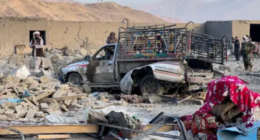


Iran-backed Houthi forces have seized the strategic Yemeni port city of Mokha, marking their biggest territorial gain since the 2022 truce and bringing the group closer to one of the world’s most important shipping routes.
The Houthi capture of Mokha places the rebels about 80 kilometres from the Bab el-Mandeb Strait, the narrow passage connecting the Red Sea with the Gulf of Aden. Around 12% of global goods normally move through the waterway, making developments along Yemen’s western coast a concern far beyond the country’s borders.
The advance comes at an especially sensitive moment. Shipping through the Strait of Hormuz, on the opposite side of the Arabian Peninsula, has already fallen sharply due to the wider conflict involving Iran and the United States. That has increased the importance of the Red Sea as an alternative route for energy exports and international trade.
The capture of Mokha therefore raises two immediate risks: a return to large-scale fighting inside Yemen and a further deterioration in the security of commercial shipping.
What the Houthi capture of Mokha means for the region

Mokha sits on Yemen’s western coastline, south of the Houthi-held port of Hodeidah and north of the Bab el-Mandeb Strait.
Until this week, the city had been controlled by forces aligned with Yemen’s internationally recognised government. Houthi and government officials confirmed the takeover to The Associated Press, while residents reported seeing Houthi vehicles in the streets and shuttered shops across the city.
Some residents have fled south towards Aden, while doctors told AP they left a local hospital after Houthi forces entered it.
The advance follows recent Houthi gains elsewhere in Taiz province. The rebels have also taken control of areas that serve as supply routes for government forces operating farther north along Yemen’s Red Sea coast.
Mokha itself does not give the Houthis control of Bab el-Mandeb. But it significantly improves their position along the coastline.
Reuters reported that the group has been pushing south towards Dhubab, which lies directly on the strait, while control of nearby Perim Island would be particularly important for any attempt to dominate the waterway.
That makes Mokha an important step in a much larger contest over Yemen’s western coast.
Bab el-Mandeb is a critical global trade route
Bab el-Mandeb, sometimes translated as the “Gate of Tears”, separates Yemen from Djibouti and Eritrea.
At its narrowest, the Bab el-Mandeb Strait is only about 29 kilometres wide, yet it carries a major share of trade between Asia and Europe. Vessels heading to or from the Suez Canal pass through the waterway, making it a vital link between the Indian Ocean and the Mediterranean.
The consequences of disruption there are already well understood.
Beginning in late 2023, repeated Houthi attacks on vessels in the Red Sea prompted major shipping companies to divert ships around Africa’s Cape of Good Hope. The longer route increased journey times and freight costs and complicated global supply chains.
Shipping through Bab el-Mandeb has fallen by roughly 60% since those attacks began, according to figures cited by AP. The current situation carries an additional danger because disruption is no longer confined to the Red Sea.
Hormuz disruption makes the Red Sea more important
The Strait of Hormuz normally carries a major share of global oil and liquefied natural gas supplies. But vessel traffic through the waterway has fallen dramatically during the current conflict.
Reuters reported that only seven vessels transited Hormuz on Thursday, compared with an average of around 125 commercial vessels a day before the Iran war began in February.
Saudi Arabia has sought to reduce its exposure to Hormuz by moving more crude across the country to the Red Sea port of Yanbu. Oil can then travel north through the Red Sea towards the Suez Canal and international markets.
That strategy makes security along Yemen’s coast considerably more important.
Saudi crude and condensate loadings from Yanbu had begun recovering in September after falling sharply in August, according to ship-tracking data cited by Reuters. But renewed Houthi attacks around the Red Sea threaten the very route Riyadh has increasingly relied on as an alternative to Hormuz.
About 7% of global oil output passed through Bab el-Mandeb in June, according to Kpler data reported by Reuters.
A sustained deterioration in security could therefore affect not only individual ships but the wider effort to keep energy moving while another major maritime route remains under pressure.
Oil markets are already reacting
The changing security picture is feeding directly into energy markets.
Brent crude settled above $107 a barrel on Thursday after gaining more than 6%, while U.S. crude also moved above $100. Reuters attributed the increase to escalating attacks on tankers, disruption around Hormuz and growing concern over Houthi activity in Yemen.
Higher oil prices have consequences far beyond energy markets. Sustained increases can raise transport and manufacturing costs, increase food prices and complicate efforts by central banks to control inflation.
The risks are particularly significant because the pressure is now affecting two major maritime chokepoints simultaneously.
If companies again choose to avoid the Red Sea, vessels travelling between Asia and Europe may have to make the much longer journey around southern Africa. UN Trade and Development has previously warned that such diversions increase transport costs and put additional pressure on supply chains.
Yemen’s fragile truce is also under threat
The shipping implications are only one part of the crisis.
The Houthi takeover of Mokha is the group’s largest territorial advance since the 2022 truce brought a degree of calm to a civil war that began after the rebels seized Sanaa in 2014.
Saudi Arabia entered the conflict the following year in support of Yemen’s internationally recognised government.
The war killed an estimated 150,000 people and contributed to a severe humanitarian crisis. The 2022 agreement never produced a comprehensive peace settlement, but it sharply reduced major fighting for several years.
That period of relative calm is now under growing pressure.
Recent clashes have included Houthi attacks on Saudi energy infrastructure, Saudi-backed military action and airstrikes across parts of Yemen.
Hans Grundberg, the United Nations special envoy for Yemen, warned at an emergency Security Council meeting that the renewed conflict effectively ends the relative calm Yemen has experienced since the truce and risks opening a more dangerous phase.
Saudi Arabia says it continues to support a political solution but has also warned that it will act to deter attacks on the kingdom.
A wider struggle involving Iran and Saudi Arabia
The conflict in Yemen cannot be separated entirely from the wider regional confrontation.
The Houthis have close ties with Iran, although they also have their own political and military objectives inside Yemen. Tehran denies directly controlling the group.
The rebels have increasingly targeted Saudi interests at a time when Iran is seeking greater leverage in its confrontation with the United States and U.S.-aligned governments in the Gulf.
AP reported earlier this week that Houthi forces had carried out more than a dozen attacks on Saudi oil facilities and tankers since late July.
That makes the battle for Yemen’s western coast strategically important to several countries.
For the Houthis, expanding south strengthens their military position and increases their influence over maritime routes.
For Saudi Arabia, it threatens both national security and a crucial oil-export corridor.
For Iran, greater Houthi leverage near Bab el-Mandeb could increase pressure on Washington and its regional partners while Hormuz remains disrupted.
What the Houthi Advance Could Mean Next
The immediate question is whether Houthi forces can hold Mokha and continue advancing south.
Yemeni government forces have carried out strikes against Houthi reinforcements west of Taiz, while civilians have been warned to avoid roads linking Taiz and Mokha.
Further Houthi advances towards Dhubab or Perim Island would increase concern about the security of Bab el-Mandeb itself.
But even without full control of the strait, the Houthis do not need to close the waterway completely to affect international trade.
The attacks that began in late 2023 showed that the threat of missiles, drones or mines can be enough for shipping companies to change routes and insurers to reassess risk.
That is why the Houthi capture of Mokha matters beyond another shift in Yemen’s front lines.
It comes as the global economy is already absorbing higher oil prices and severe disruption around Hormuz. If instability spreads further along the Red Sea, businesses and governments could face simultaneous pressure on two of the most important shipping corridors connecting the Middle East with global markets.
For Yemen, however, the most serious consequence may be closer to home. After four years of relative calm, the battle for Mokha has increased the possibility that a conflict that never fully ended could again become a nationwide war.
Don’t forget to follow us on Facebook | Instagram | Twitter | LinkedIn to get the latest updates from Cape Town Tribune