Starlink sabotage in Poland has triggered an international security investigation after Polish authorities accused Russian intelligence services of orchestrating an arson attack on a satellite communications facility near Warsaw. The allegations have raised concerns about the security of Europe’s critical infrastructure and the growing threat of suspected covert operations linked to Russia’s war in Ukraine.
The September 23 attack in Wola Krobowska, approximately 40 kilometres south of Warsaw, has led to arrests in Germany and intensified cooperation between European investigators. What began as a fire at a communications installation is now being examined as a possible act of foreign-directed sabotage, with implications extending beyond Poland’s borders.
Two Turkish nationals were arrested in Germany in connection with the fire. Further detentions have since been reported, including that of a woman in Berlin suspected of helping transport those involved.
Polish officials have expressed confidence that the operation was organised by Russian intelligence. Moscow has rejected accusations of involvement in sabotage across Europe.
The allegations remain subject to investigation, and the evidence connecting the suspected perpetrators to Russian intelligence has not been made fully public. Nevertheless, the case has become a significant test of how European governments respond to suspected covert attacks on infrastructure associated with Ukraine’s defence.
The concern extends beyond the damage at one installation. Starlink has become an important part of Ukraine’s wartime communications network, making infrastructure associated with the satellite service a potentially sensitive target.
A Fire Near Warsaw Becomes an International Investigation
Wola Krobowska is not a place ordinarily associated with international confrontation. Yet the events of September 23 have brought the village into a wider investigation spanning Poland and Germany.
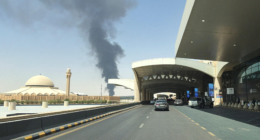
According to Polish authorities, individuals deliberately set fire to equipment at the Starlink installation. Reuters reported that the fire destroyed the station’s power system and backup generator, although the full operational consequences have not been publicly established.
The investigation advanced when German authorities detained two Turkish citizens suspected of involvement in the attack. Their identities have not been publicly disclosed.
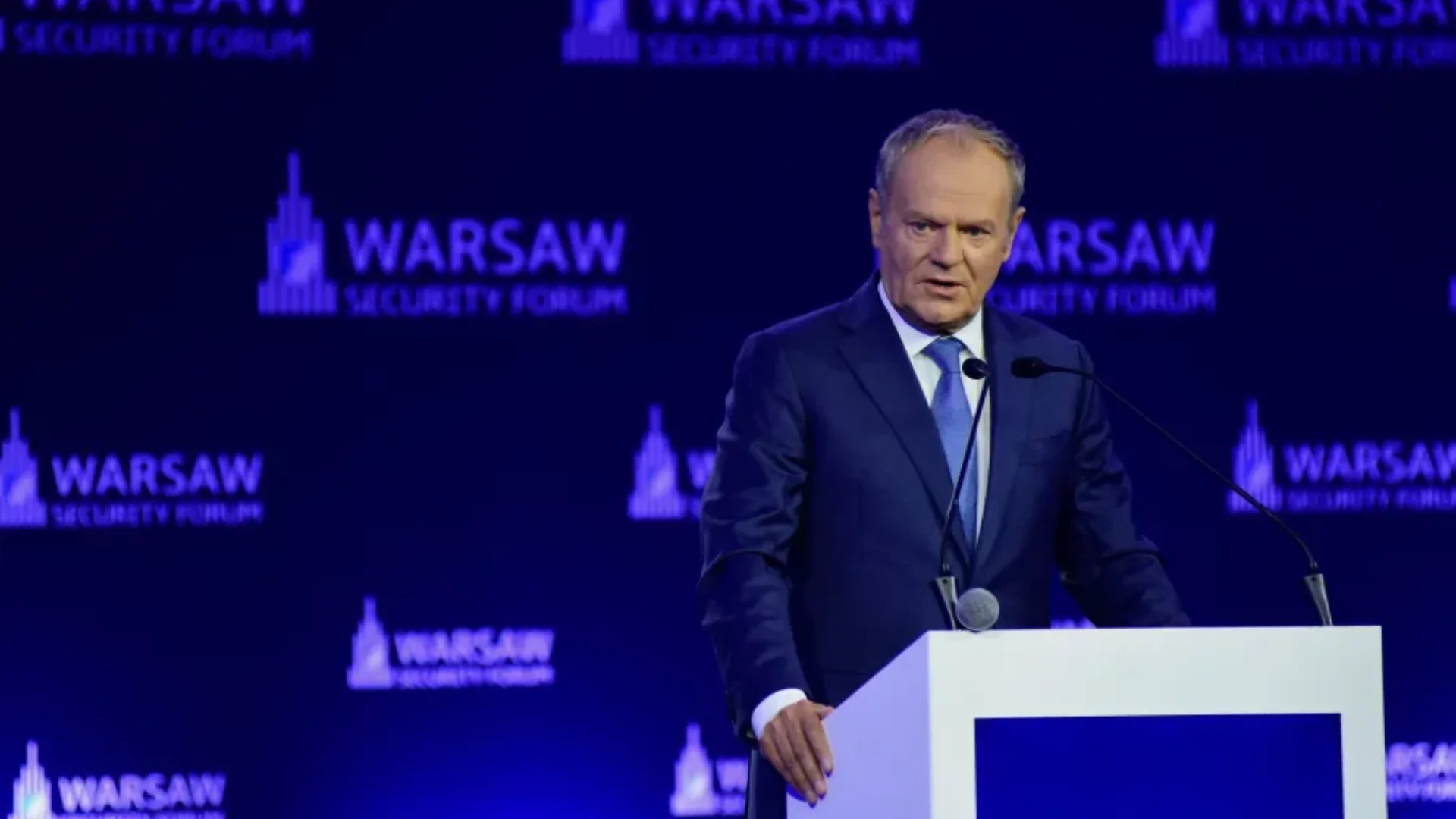
On October 12, Polish Prime Minister Donald Tusk announced the arrests, describing the incident as another example of what his government considers Russia’s campaign of covert attacks against European states.
Tomasz Siemoniak, the minister responsible for coordinating Poland’s intelligence services, went further, directly accusing Russian intelligence agencies of arranging the operation.
Polish investigators believe foreign intelligence services increasingly rely on individuals with criminal connections to carry out disruptive activities while distancing the alleged organisers from the physical crime.
The investigation has continued to expand. Reuters, citing Polish broadcaster RMF FM, reported additional detentions connected with the fire, including a woman arrested in Berlin who is suspected of acting as a driver.
Her precise involvement remains under examination. Polish prosecutors must also determine whether to pursue extradition proceedings.
The investigation demonstrates a central difficulty confronting European law enforcement: establishing who carried out an attack is not necessarily the same as proving who ordered it.
Why Starlink Has Become Important to the War in Ukraine
The alleged targeting of Starlink infrastructure carries particular significance because satellite connectivity has become an essential part of Ukraine’s ability to communicate during the Russian invasion.
Operated by SpaceX, Starlink provides internet access through satellites in low Earth orbit, reducing dependence on conventional terrestrial networks.
For Ukraine, this technology has offered a means of maintaining connectivity even when power lines, telecommunications towers and other infrastructure have been damaged or destroyed.
Starlink terminals are used for civilian communications, emergency coordination and military operations. Ukrainian forces have relied on satellite connections to maintain communication in areas where traditional networks cannot be trusted to remain operational.
This dependence creates security concerns beyond Ukraine’s borders.
Ground stations and supporting equipment form part of the broader satellite communications system. Damage to such facilities can threaten the reliability of local or regional connectivity, depending on the equipment affected and the availability of alternative routes.
However, it would be premature to conclude that the September attack significantly disrupted Ukrainian military communications. Authorities have not publicly established such an outcome.
What matters to investigators is whether the installation was deliberately selected because of its connection to technology supporting Ukraine.
If that intention is established, the incident would represent an attempt to weaken an important communications capability without directly attacking Ukrainian territory.
Poland’s Growing Concern Over Russian Covert Operations
The latest accusations arise against a background of growing concern among European governments about suspected Russian sabotage.
Since the full-scale invasion of Ukraine in February 2022, officials across Europe have investigated fires, infrastructure damage, attempted attacks and other incidents that they believe may involve Russian intelligence networks.
Poland occupies a particularly exposed position. It shares borders with Ukraine, Belarus and Russia’s Kaliningrad region. It is also an important transit country for military equipment, humanitarian assistance and other supplies heading into Ukraine.
These circumstances make the security of Polish transport routes, communications infrastructure and logistics facilities especially important to the wider European response to the war.
Poland’s Internal Security Agency has previously warned about changes in the methods used by suspected Russian-backed networks.
According to an agency assessment reported by the Associated Press, investigators have observed a shift from relatively inexpensive, one-time recruits towards more experienced individuals, including people with military backgrounds and connections to organised crime.
The agency reported that Polish authorities opened 69 espionage investigations during 2024 and 2025 combined, equivalent to the number opened over the much longer period from 1991 through 2023.
Those figures illustrate the scale of Poland’s security concerns, although individual investigations do not, by themselves, establish responsibility for every alleged operation.
The Starlink case fits the broader pattern Polish officials have described: an apparently local crime that investigators suspect may have been organised for purposes extending well beyond the immediate target.
Europe’s Security Challenge Extends Beyond Conventional Warfare
Security officials increasingly use the term hybrid warfare to describe hostile activities that operate outside conventional military confrontation. These may include sabotage, cyberattacks, espionage and efforts to manipulate public opinion.
The distinction matters because governments must respond to suspected attacks without always possessing the evidence required to identify their organisers publicly.
A fire at a communications facility may be investigated as a criminal offence. When intelligence agencies suspect foreign involvement, the same event also becomes a matter of national security.
The European experience offers several examples of these concerns. In Britain, three men were convicted in connection with a 2024 arson plot targeting a London warehouse containing Starlink equipment destined for Ukraine. British prosecutors said Russian intelligence services were responsible for organising the operation.
The Associated Press has tracked more than 210 incidents across Europe that Western officials have associated with suspected Russian sabotage or other hostile activities since the invasion of Ukraine.
The cases vary considerably in their circumstances and available evidence. They nevertheless show why European governments have become increasingly concerned about attacks against civilian infrastructure connected to Ukraine’s war effort.
Russia Rejects the Allegations
Moscow has denied accusations that it is directing sabotage operations across European countries, dismissing such claims as unfounded and politically motivated. That denial is an important part of the continuing dispute.
Although Polish authorities have publicly attributed the Starlink incident to Russian intelligence, the investigation has not yet produced a publicly established judicial finding identifying Moscow as the organiser. The suspects also remain entitled to the presumption of innocence.
For investigators, the central challenge is to establish the connections, if any, between those accused of setting the fire and the individuals who may have recruited, financed or directed them.
For European governments, the broader question is how to protect essential infrastructure against attacks that may be organised abroad but carried out by individuals operating within their own countries.
What Happens Next in the Starlink Sabotage Investigation?
The immediate focus remains on the suspects detained in Germany and the evidence being examined by Polish prosecutors.
Authorities will need to establish the precise sequence of events, determine whether others participated, and clarify the intended consequences of the attack.
Germany’s Federal Criminal Police have confirmed coordination with Polish authorities, reflecting the cross-border nature of the investigation.
For Poland, the case is also a reminder of the security responsibilities that accompany its role as a major European partner of Ukraine.
The consequences of the September fire may ultimately prove limited in operational terms. Its significance, however, will depend on what investigators can establish about the people behind it.
A successful prosecution could clarify how the alleged operation was organised. Equally, unresolved questions about responsibility would leave an important gap between official accusations and evidence available to the public.
That distinction will matter as European governments confront threats to communications networks, transport systems and other infrastructure essential to civilian life and national defence.
The fire in Wola Krobowska has already demonstrated how an incident in a small Polish village can become an international security matter. What investigators establish next will determine whether the case also provides clearer evidence of how suspected foreign sabotage networks operate inside Europe.
Don’t forget to follow us on Facebook | Instagram | Twitter | LinkedIn to get the latest updates from Cape Town Tribune