
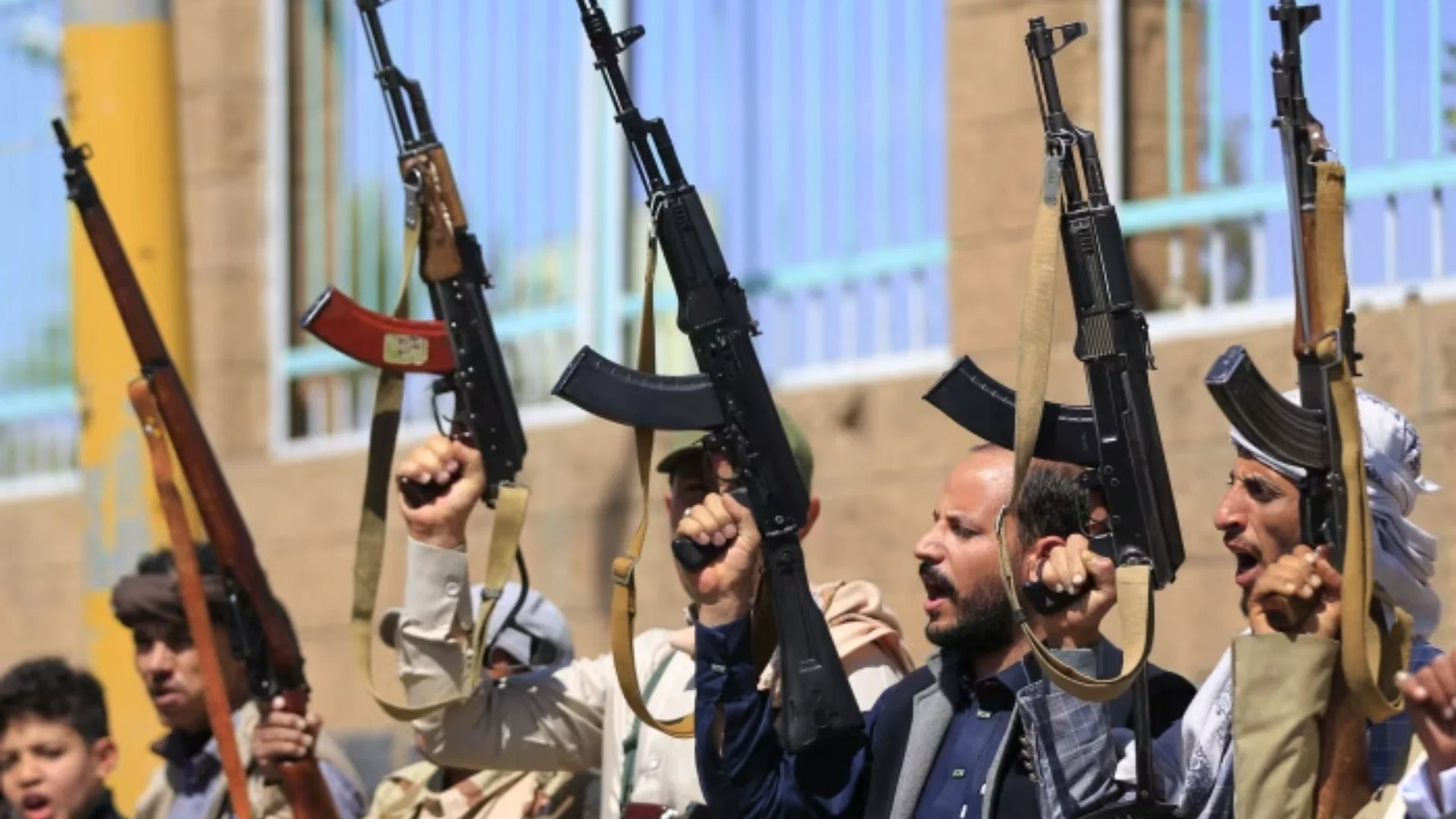
Houthi attacks on Saudi airports have killed three civilians and injured 36 others, marking a dangerous escalation in Yemen’s widening conflict. The strikes targeted King Khalid International Airport in Riyadh and Abha International Airport in southwestern Saudi Arabia, bringing renewed concerns over civilian aviation security and regional stability. The attacks have also heightened fears of further military retaliation as fighting intensifies between Saudi-backed forces and Yemen’s Houthi movement.
Saudi Arabia’s General Authority of Civil Aviation confirmed that the attacks occurred on October 6 and 7, although officials did not specify which airport was struck on each date.
At Abha, two women, a Moroccan and an Algerian resident, were killed, while 28 others were injured. A Sudanese national died in the attack on Riyadh’s airport, where eight additional people sustained injuries.
The Iran-aligned Houthi movement claimed responsibility for both strikes. Saudi aviation authorities, however, did not formally attribute the attacks to any particular group in their initial statement.
The violence comes as Saudi Arabia deepens its involvement in renewed fighting in Yemen, where Houthi forces and Saudi-backed government troops are contesting territory near one of the world’s most strategically important maritime passages.
What is unfolding is no longer confined to Yemen’s internal battlefields. Airports, commercial shipping routes and energy infrastructure are increasingly exposed to a conflict whose consequences extend well beyond the Arabian Peninsula.
Saudi Airports Become Targets as War
The attacks on Riyadh and Abha demonstrate the ability of Houthi forces to threaten important civilian infrastructure far from their principal strongholds in Yemen.
King Khalid International Airport serves Saudi Arabia’s capital and is an important gateway for international passengers, business travellers and foreign workers. Abha International Airport, located closer to the Yemeni border, serves communities in the kingdom’s southwestern region.
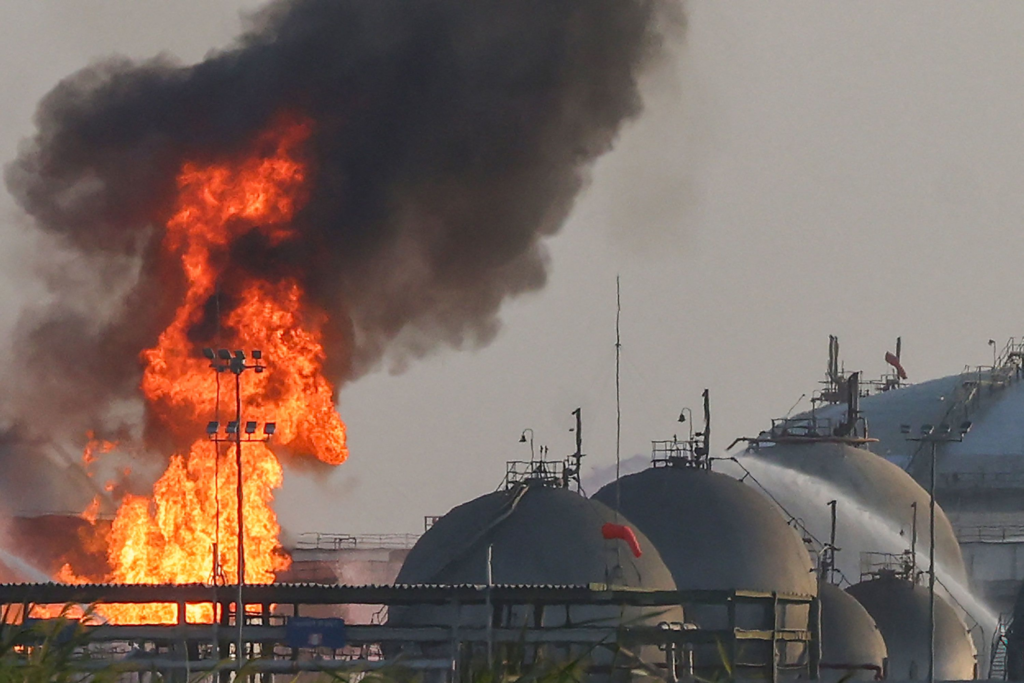
Houthi military representatives said they had used missiles and drones against the airports and other Saudi military installations. The movement also claimed attacks against military positions near the Yemeni border.
The Saudi-led coalition subsequently reported striking more than 80 Houthi military sites across several Yemeni provinces, including Saada, Hodeidah, Jawf and Marib.
The coalition warned that attacks on Saudi civilian infrastructure would not go unanswered, indicating that further military retaliation remains possible.
The immediate human cost is significant. The three people killed were foreign nationals, a reminder that Saudi Arabia’s security environment affects a substantial expatriate population whose lives are closely tied to the kingdom’s transport networks, businesses and public services.
These deaths also expose the limitations of treating airports solely as strategic assets. They are civilian spaces where passengers, workers and families can become casualties of decisions taken hundreds of kilometres away.
Why the Yemen War Is Expanding Again
The latest violence follows the deterioration of a fragile period of relative calm between Saudi Arabia and Yemen’s Houthi movement.
Yemen’s conflict became a regional war after the Houthis seized the capital, Sanaa, in 2014 and a Saudi-led coalition intervened militarily the following year in support of the internationally recognised government.
The coalition sought to prevent the Houthis from consolidating control over Yemen. Iran’s relationship with the movement added another dimension to the conflict, placing Yemen within a broader competition for regional influence.
Years of fighting failed to produce a decisive military outcome. A United Nations-brokered truce in 2022 helped reduce large-scale cross-border attacks, although it did not resolve the country’s political divisions or establish a permanent settlement.
Recent Houthi territorial advances along Yemen’s western coastline have now prompted a substantial Saudi-backed counteroffensive.
According to Reuters, government-aligned forces have attempted to reverse Houthi gains near the Bab el-Mandeb Strait, while Saudi air power has supported operations against rebel positions.
The renewed confrontation has produced a familiar but increasingly dangerous pattern: advances on the ground are followed by missile and drone strikes, which invite further retaliation.
Neither side has demonstrated that military pressure alone can establish a lasting political settlement.
Why the Bab el-Mandeb Strait Matters to the World
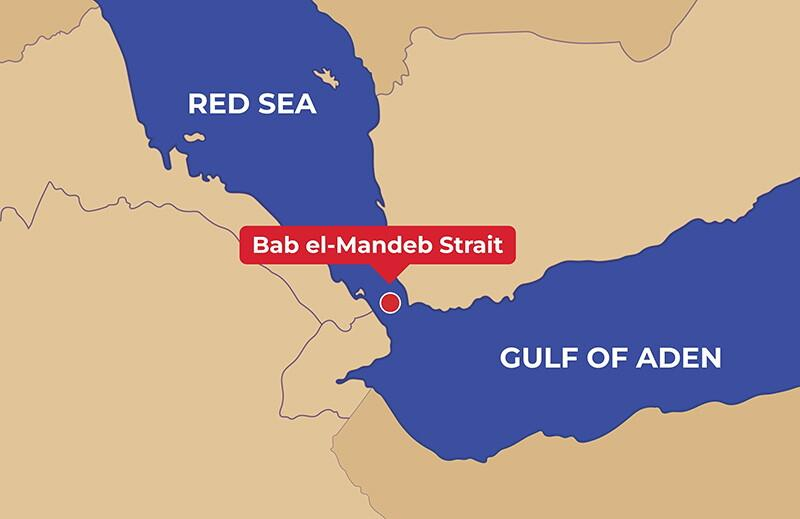
At the centre of the renewed fighting is the Bab el-Mandeb Strait, the narrow maritime passage connecting the Red Sea with the Gulf of Aden.
Its strategic importance is difficult to exaggerate.
Commercial vessels travelling between Asia and Europe use this route to reach the Suez Canal. Oil shipments, manufactured goods and essential commodities depend on the security of these waters.
Disruption can force shipping companies to reconsider routes, raise insurance costs and expose international trade to additional delays.
Saudi-backed forces have been fighting to regain control of coastal territory around the strait following recent Houthi advances. Both sides have made competing claims about control of strategically important positions.
For Saudi Arabia, the implications extend beyond Yemen’s territorial balance. A hostile armed movement capable of threatening Red Sea shipping and Saudi aviation infrastructure presents two overlapping security problems.
Military operations may temporarily weaken Houthi positions, but they also risk encouraging attacks against economically sensitive targets.
For international markets, even the possibility of sustained disruption matters. Shipping companies and energy traders must assess not only whether a route remains accessible, but whether using it is commercially and physically safe.
Iran’s Influence and the Wider Regional Conflict
The Houthis’ relationship with Iran remains central to understanding why the Yemen conflict attracts international attention.
Iran has longstanding political and military ties with the movement, although the Houthis retain their own leadership, domestic priorities, and political calculations.
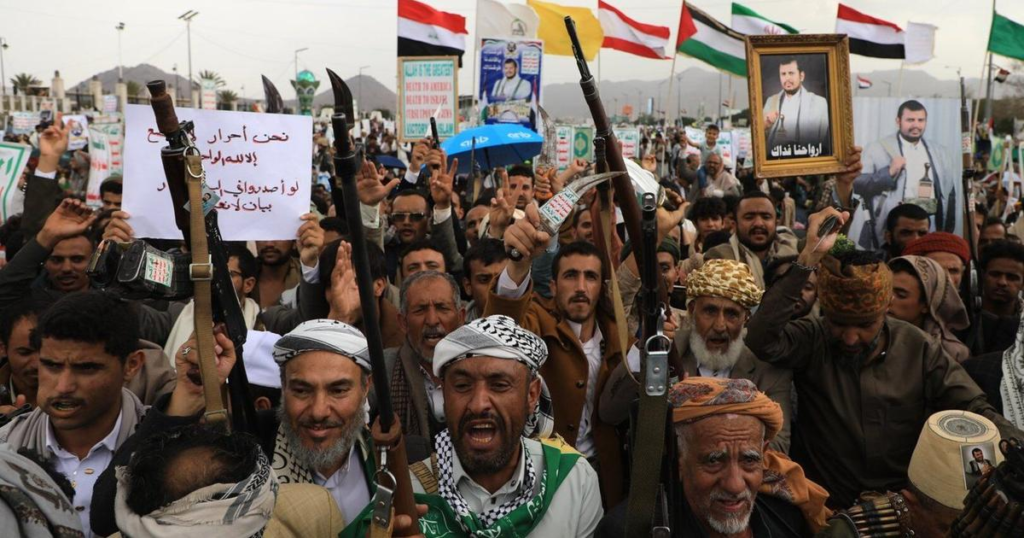
The distinction matters. The Houthis are not simply an extension of Tehran’s foreign policy, and their actions cannot automatically be attributed to direct Iranian orders.
Nevertheless, their missile and drone capabilities have made them an important participant in the region’s wider security confrontation.
The escalation is occurring amid an expanding conflict involving Iran, the United States and several Middle Eastern states. Saudi Arabia’s renewed military campaign in Yemen therefore carries risks beyond its immediate objectives.
Reuters reports that the kingdom’s return to intensive fighting has opened another significant front in the regional conflict, with the security of maritime trade and energy infrastructure increasingly at stake.
A prolonged confrontation would complicate diplomatic efforts to contain hostilities between Iran and its regional adversaries.
It would also force neighbouring governments to weigh military commitments against the economic and political costs of further escalation.
Yemen’s Civilian Population Faces Another Emergency
Behind the military developments lies a humanitarian crisis that has never been adequately resolved.
Years of war have damaged Yemen’s health system, weakened public institutions and left millions struggling with food insecurity, displacement and limited access to essential services.
The latest fighting has made those conditions worse.
Recent reports from international humanitarian agencies indicate that large numbers of families have been displaced by the renewed hostilities. Casualties have increased, and fresh disruptions threaten communities already dependent on humanitarian assistance.
The danger is especially acute in areas where fighting interrupts transport routes and access to medical facilities.
Airports have become part of this increasingly vulnerable network.
Houthi attacks also targeted Aden International Airport in Yemen, disrupting aviation operations. Reports indicated that a civilian aircraft approaching the airport was diverted, narrowly avoiding a potentially more serious incident.
For ordinary Yemenis, the consequences are immediate. Renewed fighting means greater uncertainty over whether roads remain passable, hospitals can function and humanitarian supplies can reach communities that need them.
The strategic importance of Yemen’s coastline is undeniable. So is the vulnerability of the people living alongside it.
Saudi Arabia’s Response and the Risk of a Wider War
The Saudi government faces a difficult strategic choice. A limited response could leave critical infrastructure exposed to further attacks. A prolonged military campaign, however, risks committing the kingdom to another costly conflict without a clear political outcome.
Regional support is beginning to take shape. Reuters reports that Turkey is providing technical and defensive assistance to Saudi Arabia, while Syria is considering possible military support.
These developments suggest that the confrontation could involve more countries, even if their initial participation remains limited.
There is also a new immediate concern. On Thursday, October 8, the Houthis claimed another ballistic missile attack against King Khalid International Airport in Riyadh. Reuters reported that Saudi authorities had not immediately confirmed this latest claim.
That distinction is important. The three confirmed deaths relate to the earlier attacks, and no additional casualty figure has been independently established for the latest claimed strike.
The renewed fighting illustrates why Yemen remains so difficult to stabilise. Territorial victories cannot necessarily prevent long-range attacks, while retaliation may strengthen the conditions for further violence.
Saudi Arabia must protect its population and infrastructure. Yemen needs a political settlement capable of ending more than a decade of destruction. Neither objective can be reliably achieved through an indefinite exchange of missiles and airstrikes.
For now, the deaths at Riyadh and Abha airports have made the consequences of that unresolved conflict unmistakably clear.
Don’t forget to follow us on Facebook | Instagram | Twitter | LinkedIn to get the latest updates from Cape Town Tribune