
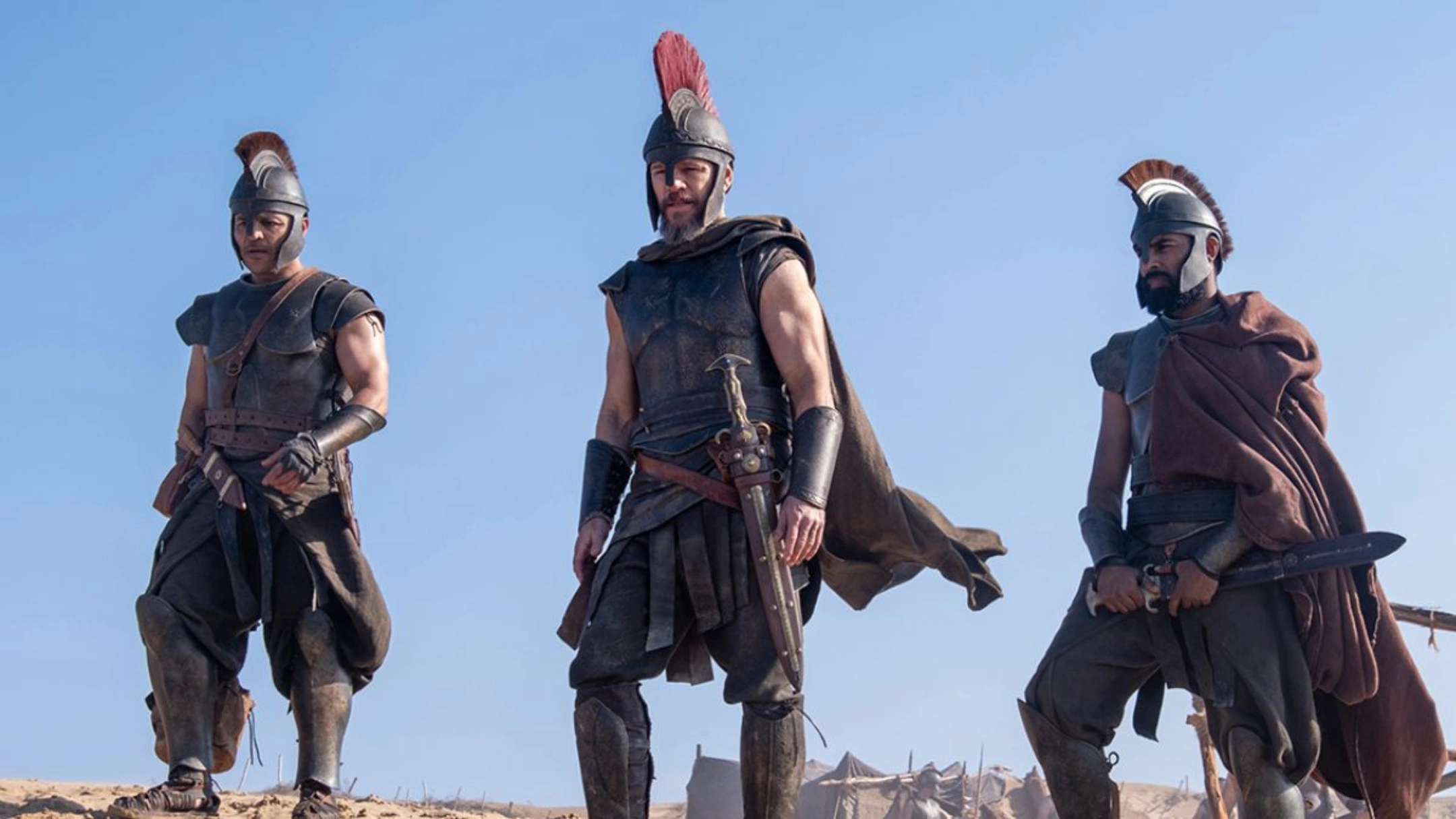
Christopher Nolan’s The Odyssey has spent nearly two months proving that its enormous opening weekend was not the most remarkable part of its theatrical run.
The film has now earned about $1.68 billion worldwide, overtaking Jurassic World to become the highest-grossing release in Universal Pictures’ long history. At the same time, The Odyssey’s box office run is showing extraordinary staying power in South Korea, where the film has remained No. 1 for 40 consecutive days and attracted 10.78 million moviegoers.
Those achievements place Nolan’s adaptation of Homer’s ancient poem in an unusual position. It is not simply one of the biggest films of 2026. It has become a test case for how a filmmaker-driven theatrical release, without relying on a modern franchise or familiar superhero property, can command audiences across very different markets.
The numbers are large. What makes them more significant is how long audiences have continued showing up.
The Odyssey box office success extends far beyond opening weekend
The Odyssey opened internationally in July with expectations befitting one of the year’s most expensive and closely watched films. It delivered immediately.
The film earned about $264 million worldwide during its opening weekend, Nolan’s biggest global debut to date. Roughly $124.5 million came from North America and $139.6 million from international markets.
The result was especially notable because the film carries an R rating, runs for nearly three hours, and is based on literature that predates the modern franchise system by thousands of years. Yet its performance since then has been more revealing than its debut.
According to figures reported by Variety, the film’s domestic total is now around $601.2 million, while international markets have contributed approximately $1.083 billion. That puts its worldwide total at roughly $1.68 billion.
The achievement moves The Odyssey beyond 2015’s Jurassic World, which earned about $1.67 billion worldwide and had long stood as Universal’s biggest global release.
For Universal, that is a remarkable change at the top of its record book. The studio built some of Hollywood’s most valuable franchises, including Jurassic World, Fast & Furious and Despicable Me. Its new all-time leader is instead a Christopher Nolan film based on Homer.
South Korea shows how deep the film’s appeal has become
The latest evidence of the film’s longevity comes from South Korea.
On Monday, September 14, Yonhap reported that The Odyssey had held first place at the South Korean box office for 40 straight days. It drew another 449,000 viewers over the weekend and accounted for 51.5% of all ticket sales from Friday through Sunday.
Its cumulative audience has now reached 10.78 million, making it the seventh most-watched foreign film in South Korean history. It has also remained at the top of the country’s weekend chart for six consecutive weeks.
The 10 million milestone itself arrived on September 6, just 33 days after the film’s South Korean release. The Odyssey became only the 10th foreign film ever to pass 10 million admissions in the country and Nolan’s second film to do so after Interstellar.
South Korea has long been an unusually strong market for Nolan. Interstellar developed an exceptional following there, and the director travelled to Seoul in August to promote The Odyssey alongside producer Emma Thomas and stars Matt Damon and Charlize Theron.
But even against that background, 40 consecutive days at No. 1 is an indication of something more than fan loyalty.
The film opened in South Korea on August 5. By August 28 it had already reached eight million admissions, becoming the fastest film released in the country this year to reach that mark. By September 6, it was over 10 million.
The pattern suggests repeated audience interest rather than a short burst of demand around release weekend.
IMAX has been central to Nolan’s strategy
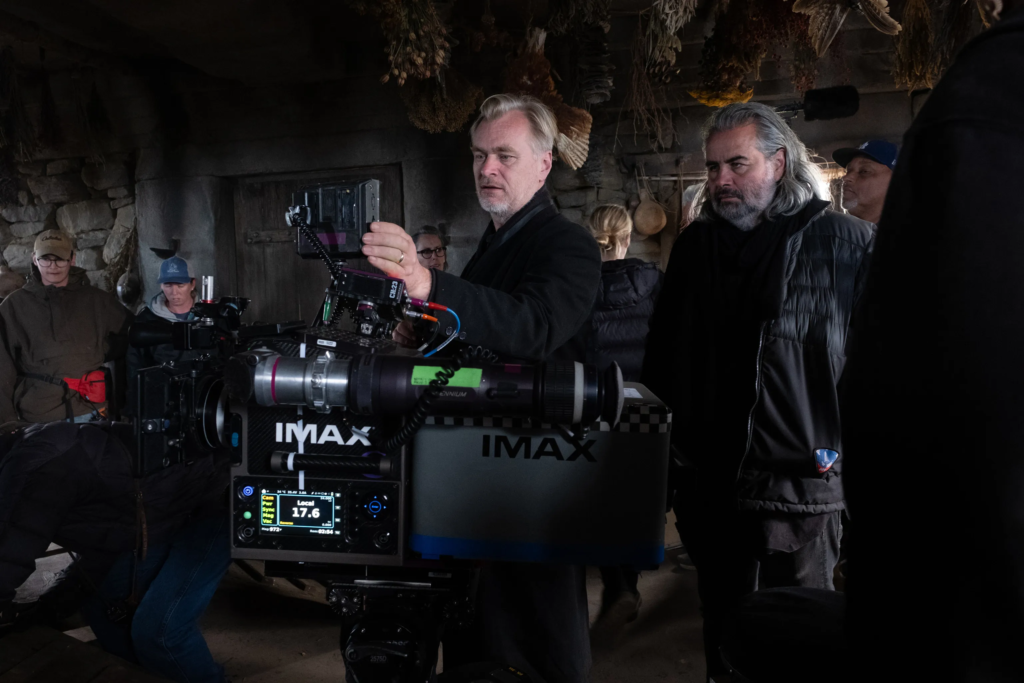
Part of the film’s performance can be traced to the way Nolan designed The Odyssey specifically for cinemas.
The production became the first theatrical feature shot entirely using IMAX film cameras, according to IMAX. The company developed new camera technology that allowed Nolan and cinematographer Hoyte van Hoytema to use the format throughout the production rather than reserving it for selected sequences.
Nolan and van Hoytema used about 2.1 million feet of IMAX film during production. That technical decision became part of the commercial strategy.
IMAX accounted for about 20% of the film’s global opening weekend, generating $52 million. By early September, The Odyssey had earned $485 million from IMAX screens worldwide, making it the highest-grossing IMAX release in the format’s history.
That figure is significant because premium tickets generally command higher prices, but it also points toward an audience willing to seek out particular formats rather than simply watching whichever screening is most convenient.
The film’s run therefore reflects something Nolan has spent years arguing: presentation itself can be part of the attraction.
With Oppenheimer in 2023, audiences travelled considerable distances to see 70mm IMAX screenings. The Odyssey has extended that approach by making the large-format experience central to the entire film.
A $250 million gamble that behaved differently from a franchise
Universal reportedly spent about $250 million producing The Odyssey, before marketing costs. That placed considerable pressure on the film to perform internationally.
On paper, several aspects of the project could have made studios cautious. It is 172 minutes long. It is R-rated. Its story comes from an ancient Greek poem.
Although the cast includes major stars such as Matt Damon, Anne Hathaway, Tom Holland, Zendaya, and Charlize Theron, there was no existing contemporary film franchise to guarantee an established audience.
The film nevertheless crossed $1 billion globally after only three weeks. At that point, it had already generated about $430 million domestically and $579 million internationally.
That pace quickly made it Nolan’s highest-grossing film.
The result is important because Hollywood’s biggest theatrical successes have increasingly been dominated by sequels, superheroes, animation and established intellectual property.
The Odyssey is not entirely outside that system. Homer created one of the most recognisable stories in Western literature, and Nolan himself has become a commercial brand. The film also carries an unusually famous cast and Universal’s full marketing support.
Still, its success suggests that audiences do not necessarily require a continuing cinematic universe when the filmmaker and theatrical experience provide enough attraction.
Christopher Nolan has become part of the selling point
Few working directors receive the kind of marketing treatment usually reserved for major film characters or franchises.
Nolan increasingly does. Audiences know his name from The Dark Knight trilogy, Inception, Interstellar, Dunkirk and Oppenheimer. His films are sold not only through stars and stories but through the expectation of large-scale filmmaking designed for cinemas.
The success of Oppenheimer expanded that reputation considerably. The historical drama grossed nearly $1 billion worldwide and ultimately won the Academy Award for Best Picture.
The Odyssey has taken Nolan’s commercial position further.
Its opening weekend was already the largest of his career. It later became his first movie since The Dark Knight Rises to cross $1 billion and soon surpassed all of his previous films globally.
That gives Universal something unusually valuable. Rather than selling audiences another instalment of a franchise, the studio can sell a Nolan film as an event in itself.
Staying power is the bigger story
Huge opening weekends are now familiar in global cinema.
What is less common is a movie remaining commercially important nearly two months after release.
The film has repeatedly demonstrated that endurance. In early September, during its eighth weekend in cinemas, The Odyssey returned to the top of the global weekend box office, taking nearly $46 million and moving ahead of Spider-Man: Brand New Day for that particular frame.
Its South Korean performance now provides an even clearer example.
A film staying at No. 1 for 40 consecutive days means it has survived new releases, changes in audience demographics and the natural decline that usually follows a blockbuster’s opening period.
That is why The Odyssey’s box office story has become about more than its $1.68 billion total. Its commercial value has come from both scale and longevity.
What The Odyssey means for theatrical cinema
One film cannot settle Hollywood’s continuing debate over the future of movie theatres.
The broader 2026 market is still dominated by familiar brands. Spider-Man: Brand New Day, for example, has generated substantially more worldwide than The Odyssey.
Animated sequels and other established properties also remain central to studio economics. But Nolan’s film provides an important counterpoint.
It shows that audiences can still respond at enormous scale to a project built around a director, a distinctive visual format and a story that does not arrive as another chapter of a recent movie franchise.
IMAX’s own 2026 results underline the wider effect. The company reported a record $728 million global summer box office, up 73% from its previous summer record, and identified The Odyssey as a central driver of that growth.
That does not mean every ambitious historical or literary film will suddenly become a billion-dollar success. Nolan’s position in contemporary cinema is unusual, and Universal’s investment was exceptionally large.
What it does demonstrate is that theatrical audiences can still be persuaded that a movie is worth leaving home to see, particularly when the cinema experience itself is part of what is being sold.
The Odyssey is still adding to its record
The remarkable part is that the final number has not yet been written. At approximately $1.68 billion, The Odyssey has already become Universal’s biggest film ever. In South Korea, it remains comfortably at the top of the market six weeks after opening. The movie has also continued expanding internationally, with Japan among its latest major territories.
Whether it climbs significantly higher will depend on how well it holds as the autumn release calendar becomes more crowded. But the central achievement is already clear.
Nolan took a nearly 3,000-year-old story, mounted it as a $250 million, R-rated film running close to three hours, photographed it entirely with IMAX film cameras, and turned it into Universal’s highest-grossing movie.
The Odyssey’s box office performance is therefore not remarkable simply because of the money it has made. It is remarkable because audiences are still buying tickets.
Don’t forget to follow us on Facebook | Instagram | Twitter | LinkedIn to get the latest updates from Cape Town Tribune