
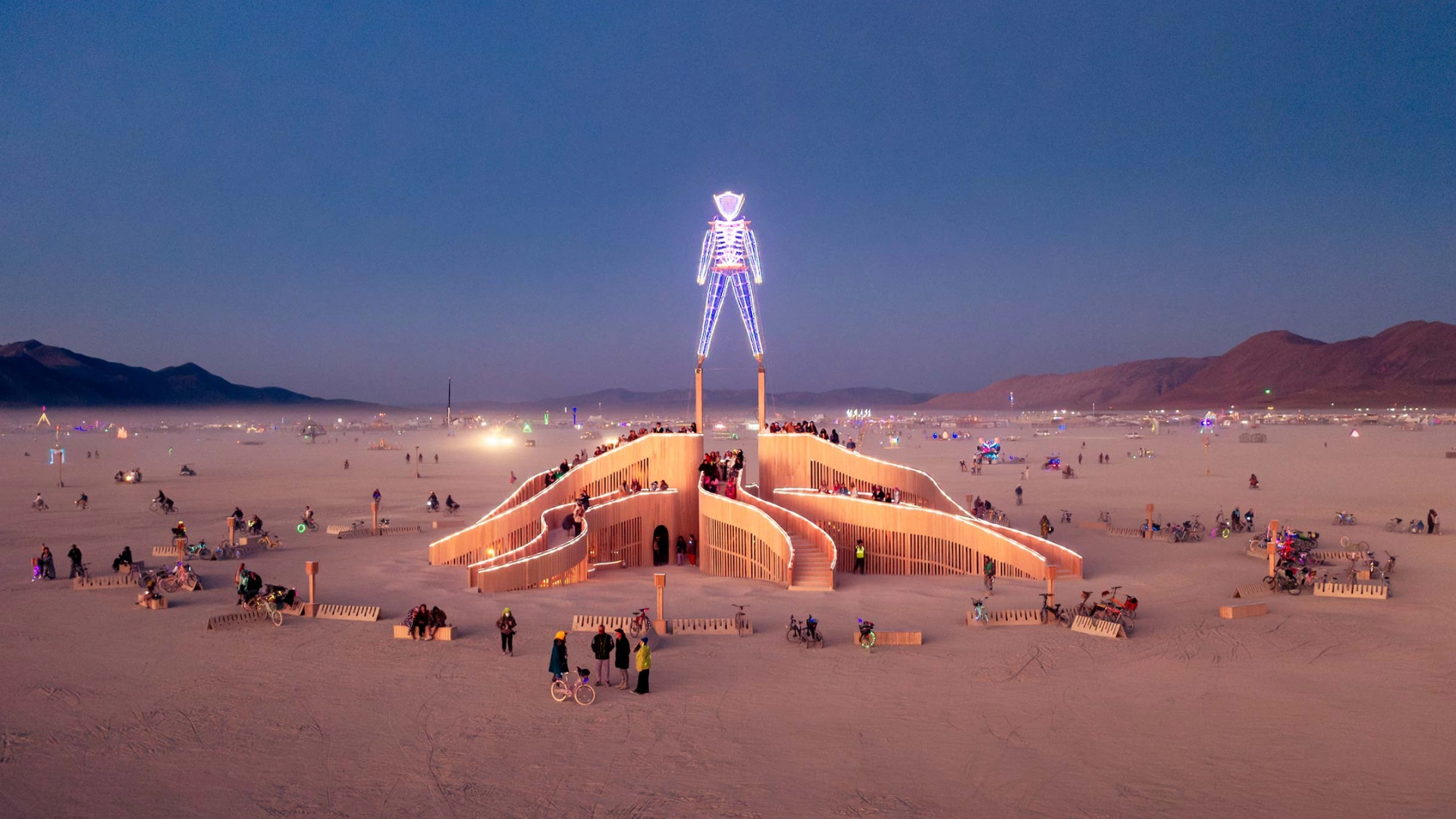

Three deaths connected to Burning Man 2026 have renewed scrutiny of safety at the Nevada desert gathering, while new data showing that its audience is getting older has opened a separate debate about how one of America’s most distinctive cultural events is changing.
Pershing County Sheriff-Coroner Jerry Allen confirmed that two people died within Black Rock City during this year’s event and a third died while being transported to a hospital in Reno.
Authorities have not established the causes of the deaths, with autopsy and toxicology results still pending. The festival typically records about one death a year, according to Allen, making the 2026 toll unusually high.
Burning Man organisers separately confirmed the deaths of two participants at the event. One man in his mid-50s suffered a medical emergency and was taken to the festival’s emergency care centre, where he was pronounced dead.
The second participant, 60-year-old Craigh Mann, was later found dead by campmates. Organisers offered condolences to their families and said participant safety remained a priority.
The deaths occurred during a milestone year for Burning Man, which traces its origins to the burning of an improvised wooden figure on San Francisco’s Baker Beach in 1986.
Four decades later, the gathering draws tens of thousands of people to Black Rock Desert, where participants construct a temporary settlement built around large-scale art, communal activity and self-expression.
Yet alongside questions about safety, another change is becoming increasingly difficult to ignore: the people making the journey to Black Rock City are no longer as young as they once were.
Burning Man 2026 arrives as its audience gets older
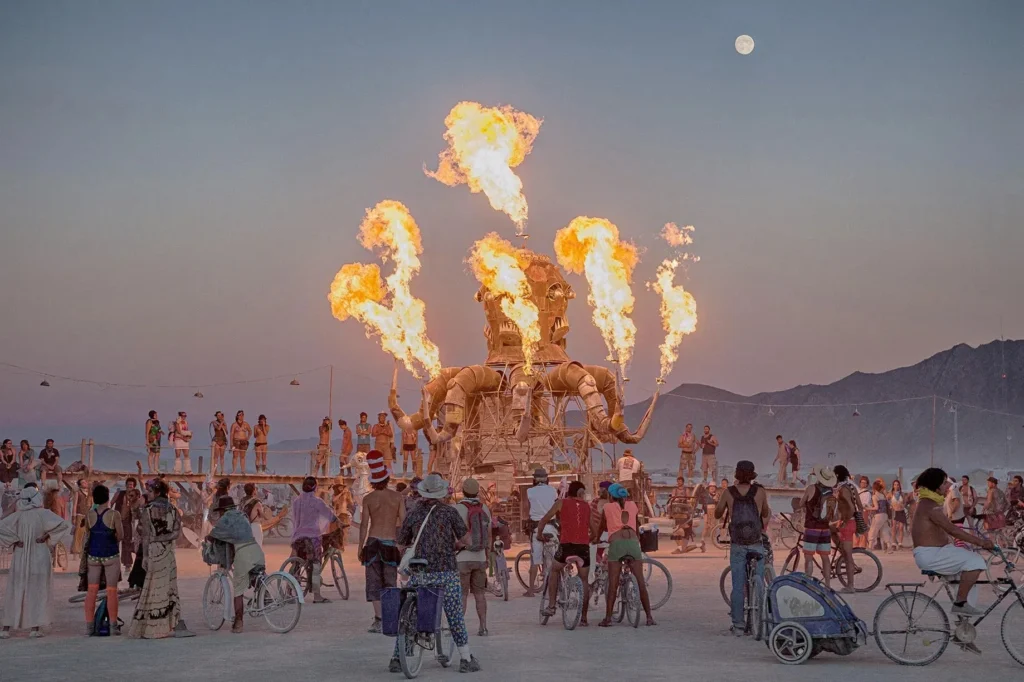
The strongest evidence comes from Burning Man’s own census. In 2014, people aged 20 to 29 accounted for 29.6% of participants. By 2025, that figure had fallen to just 10%. Over the same period, the proportion of people in their 40s increased from 17.2% to 26.1%, while those aged 50 to 59 rose from 10.5% to 15.6%.
The shift means that people in their 50s now outnumber those in their 20s at Black Rock City. People in their 30s remain the largest group, accounting for 38.7% of participants in the 2025 census.
That does not mean the older age profile explains this year’s fatalities. No official finding has established such a connection, and it would be premature to draw one before investigators determine the causes of death.
But the two developments have converged to raise a legitimate broader question: whether an event built around physical endurance and self-reliance is adapting sufficiently as the generation that helped make it a global cultural phenomenon grows older.
The desert has always been part of the risk
Burning Man has never presented Black Rock City as an ordinary festival site. Its culture places heavy emphasis on what organisers call “radical self-reliance”, one of 10 principles that also include participation, communal effort, decommodification and leaving no trace.
Participants are expected to arrive prepared to function for days in an isolated desert environment. Those conditions are central to the experience but also create risks.
The organisation’s 2026 survival information warns of extreme temperatures, dust storms, sudden whiteouts and winds that can exceed 75 mph. Its ticket conditions explicitly acknowledge dangers ranging from severe weather and vehicles to fire, pyrotechnics and other activities.
Burning Man 2026 also encountered difficult weather, including rain, mud, and wind that temporarily affected movement at the event. Such disruption is not unprecedented: the desert setting has repeatedly tested the temporary city’s infrastructure and participants’ ability to manage rapidly changing conditions.
The event does, however, operate substantial emergency infrastructure. Black Rock City has a Nevada-licensed emergency care centre, staffed first-aid stations, ambulances, firefighters and crisis-intervention teams. Patients requiring more advanced treatment can be transported to hospitals in Reno by road or air.
The presence of those services complicates any simple portrayal of Burning Man as an unregulated desert gathering. It has evolved into a temporary city with organised medical and safety systems, even as its culture continues to place unusual responsibility on individual participants.
Why are fewer young people going to Burning Man?
The demographic change may ultimately pose a larger cultural challenge than the ageing of existing participants itself.
Burning Man’s 2025 census found that 25.1% of respondents identified cost as a challenge to attending, making it the most commonly cited practical obstacle. Another 16.4% pointed to difficulty getting time away from work or school.
Attending also requires far more than purchasing admission. Participants must arrange transportation and provide their own food, water, shelter, and equipment for a lengthy stay in a remote location.
That creates a difficult contradiction for an event whose principles include radical inclusion and decommodification. Burning Man officially rejects the idea of passive consumption and emphasises that participants collectively create the event. Yet participating in that culture can require substantial money, time and preparation.
Income data further illustrate the change. According to the 2025 census, about 37% of participants reported personal incomes between $100,000 and $300,000, while roughly 10% earned more than $300,000.
The San Francisco Chronicle noted that the share reporting higher incomes has grown over the past decade, although inflation accounts for part of that increase. These numbers help explain why the debate over Burning Man’s identity has persisted.
From counterculture experiment to global institution
Burning Man began with about 35 people on Baker Beach. It later moved to Nevada and developed into a sprawling temporary community known for experimental art and rejection of conventional commercial culture.
Growth brought international recognition, but also criticism that a gathering associated with artistic rebellion and communal participation had become increasingly accessible to wealthy professionals, celebrities, and the technology industry. The census offers a more complicated picture than that criticism alone suggests.
Almost 28% of participants in 2025 were attending for the first time, indicating that Burning Man continues to attract newcomers. Participants came from more than 110 countries. When asked why they wanted to return, 85.5% cited friends, like-minded people, or a sense of belonging, while 84.3% cited the art.
Those findings suggest that the basic attraction has not disappeared. For many attendees, the event remains less about spectacle than participation, relationships, and creating something collectively. What is changing is the community carrying that culture forward.
Safety and identity are becoming connected questions
The three deaths at Burning Man 2026 deserve careful examination on their own terms. Investigators still need to establish what happened, and the results should determine any conclusions about whether particular safety measures require change.
But the demographic figures create a different challenge. If the people who helped build Burning Man into its present form continue returning as they grow older while fewer people in their 20s replace them, organisers may eventually face questions about everything from medical planning and accessibility to ticket costs and the future of volunteer-led camps.
None of that means an older Burning Man is necessarily a weaker one. Cultural institutions frequently age with the generations that shaped them. The larger issue is renewal.
Burning Man has survived four decades partly because it has never remained exactly what it was. Its transformation from a small San Francisco beach gathering to an international cultural event proves that much.
The question after Burning Man 2026 is whether its next transformation can preserve the participatory culture that made it distinctive while responding to the practical realities of the community that now turns up in the desert.
For the moment, however, the most immediate issue remains the three people who died. Until investigators complete their work, their deaths should prompt scrutiny rather than speculation. The longer-term debate over Burning Man’s ageing population is significant, but it is a cultural story that should not be mistaken for an explanation of what happened this year.
Don’t forget to follow us on Facebook | Instagram | Twitter | LinkedIn to get the latest updates from Cape Town Tribune