
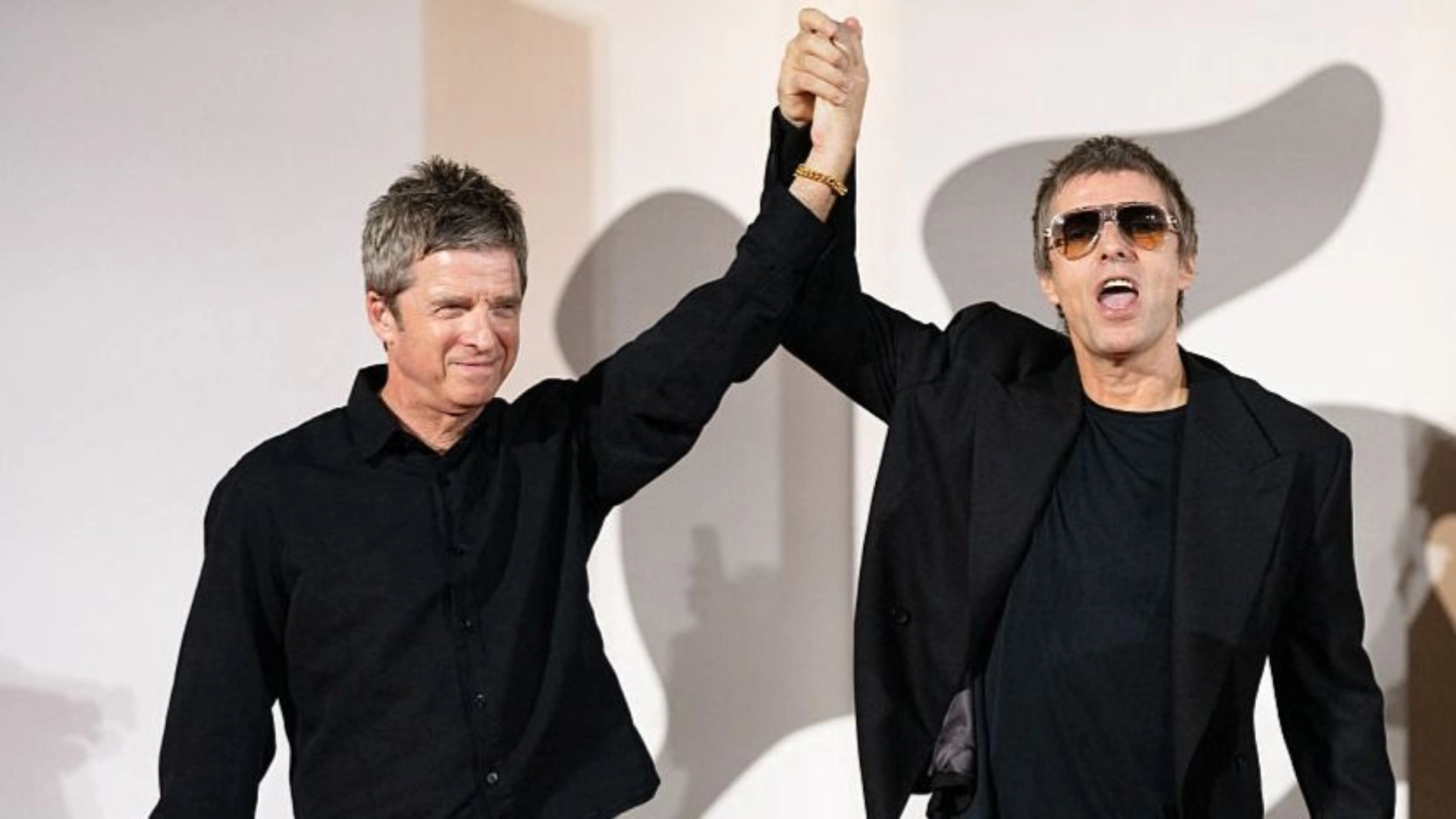
The Oasis comeback is moving from stadiums to cinemas, extending one of music’s biggest reunion stories into a new cultural chapter. Oasis: Don’t Look Back in Anger, the documentary chronicling Liam and Noel Gallagher’s 2025 reunion tour, opens in Britain on September 9 before expanding to Australia on September 10 and the United States on September 11. The Oasis reunion documentary arrives after a tour that drew more than two million people across 41 shows on five continents, turning what began as the return of a famous British rock band into an international event spanning generations.
Directed by Dylan Southern and Will Lovelace, the 122-minute film premiered at the Venice Film Festival on September 5 in the festival’s out-of-competition programme. It combines concert footage with previously unseen rehearsals and the first joint interviews with Liam and Noel in more than 25 years.
Venice describes the film as both a record of the Live ’25 tour and a study of the relationship between two brothers whose public disagreements had become nearly as famous as their songs.
That relationship is what gives the film significance beyond the usual concert documentary. Oasis spent years as a symbol of 1990s British popular culture, but the reunion has shown that the band now belongs to a much wider audience.
Older listeners are revisiting music connected to their youth, while younger fans who discovered Oasis long after the original era are experiencing the band as a live act for the first time.
Oasis Reunion Documentary Captures More Than a Comeback
Oasis split in 2009 after years of tension between the Gallagher brothers, making the possibility of a reunion one of rock music’s longest-running questions. When the Live ’25 tour was announced, demand quickly demonstrated how much value had accumulated around the band during its absence.
The scale became clear even before the concerts began. More than 900,000 Oasis tickets were sold through Ticketmaster during the original sale, according to Britain’s Competition and Markets Authority. Problems around ticket prices and how different ticket categories were presented eventually prompted a formal regulatory investigation. Ticketmaster later agreed to changes requiring clearer information about prices and ticket types.
That controversy was an early reminder that the Oasis reunion was functioning as much as a major commercial event as a musical one. Once the tour began, however, the conversation shifted increasingly towards the audience itself.
Fans travelled internationally to concerts, while photographs from opening shows in Cardiff showed crowds ranging from teenagers to listeners who had followed the band during its original run.
Oasis-inspired clothing including parkas, football shirts, bucket hats and Adidas sportswear became part of the visual language surrounding the concerts. Some younger fans described discovering the group through parents, social media or streaming rather than through the original Britpop era.
The documentary gives that audience a central role. Southern and Lovelace have described filming not just Liam and Noel but the people around the concerts, including families, police, local communities and fans processing the meaning of the reunion.
The directors’ own Venice statement calls the film partly a study of a difficult sibling relationship and partly a celebration of the communal experience of music.
Why Younger Fans Matter to the Oasis Story
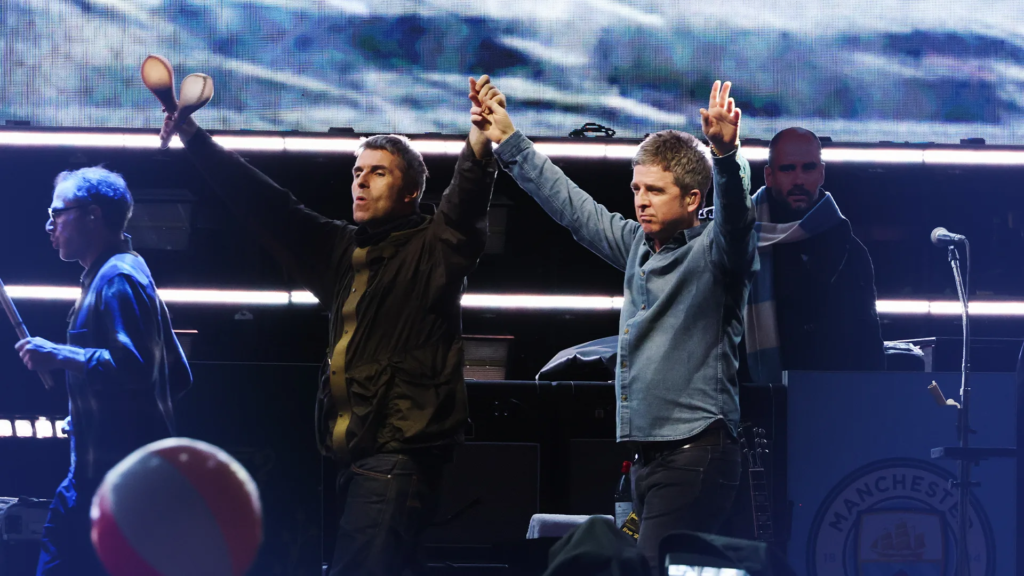
The presence of younger listeners is one of the most important reasons the reunion became larger than a conventional nostalgia tour.
Oasis already had a substantial catalogue and a generation of fans old enough to remember the band’s peak. That alone could have supported large reunion concerts. What changed the cultural equation was the evidence that the music had continued travelling after the band stopped performing together.
At the 2025 shows, fans in their teens and 20s appeared alongside people who had seen Oasis decades earlier. One young concertgoer told the Guardian that discovering the band during the Covid period had helped create a connection to music, while others described being introduced to Oasis through family. Noel Gallagher even acknowledged younger listeners during the tour, thanking people in their 20s for keeping interest in the group alive.
That pattern is not limited to Oasis. Streaming services, TikTok, YouTube, vinyl culture and constantly circulating archive footage have weakened the old divide between current music and catalogue music. A song released decades ago can become part of a teenager’s listening habits without being experienced primarily as an old record.
The Oasis comeback provides a particularly clear example because the band’s wider identity has also been rediscovered. The clothes, haircuts, football references and visual style associated with Britpop have returned alongside the songs. Ahead of the reunion, Pinterest searches related to Oasis reportedly rose sharply, while fashion coverage documented renewed interest in parkas, tracksuits and other styles associated with the Gallagher brothers.
This does not mean younger audiences are simply recreating the 1990s. They are selecting parts of that period and reshaping them through contemporary fashion, social media and streaming culture. Oasis has therefore become both a source of nostalgia and material for a generation with no direct memory of the band’s original rise.
The Business of Turning Memory Into a New Market
The revival also shows how valuable established music catalogues have become when they are connected to new experiences.
A reunion tour generates ticket revenue, but its effects spread much further. It can lift streaming, physical record sales, merchandise demand, brand partnerships, documentaries and interest in archival material. In 2025, sellout tours by Oasis and Coldplay helped push both acts back into Britain’s album charts, while the wider UK market also recorded growth in physical record sales.
Oasis leaned heavily into the visual side of its legacy during the reunion, with merchandise shops and partnerships involving brands including Adidas and Levi’s appearing around the tour. What was once simply the everyday appearance of a British guitar band has become part of a commercially valuable cultural identity.
That market extends beyond products controlled directly by the band. More than 100 hours of Oasis recordings, including rehearsals, concerts and conversations dating from 1994 to 2001, are now scheduled for auction in October with an estimated value of between £1.2 million and £1.6 million. The archive includes 209 digital audio tapes, 73 cassettes and three MiniDiscs. Oasis has objected to the sale, while the auction house says it is proceeding legally; commercial exploitation of the recordings would still require permission because the band retains relevant intellectual property rights.
The timing is telling. Material that may once have interested mainly collectors now carries greater value because Oasis is culturally active again.
A Story About Liam and Noel, Not Just the Songs
The other reason the reunion has maintained attention is that audiences were never waiting only to hear the catalogue.
For years, the relationship between Liam and Noel Gallagher provided a continuing narrative around Oasis. Their disagreements, insults and eventual separation created an unusual situation in which the possibility of reconciliation became part of the band’s mythology.
Don’t Look Back in Anger leans into that history without presenting itself simply as an account of past conflict. The film includes rehearsals and joint interviews, and reporting around it describes a noticeably warmer relationship between the brothers than audiences had seen for years.
That makes forgiveness an important part of the film’s appeal. A reunion between musicians is commercially understandable. A reunion between brothers whose feud appeared permanent carries a different emotional force.
The filmmakers themselves have identified reconciliation and acceptance as central themes. That approach gives the documentary a narrative that can work even for viewers who did not attend the concerts.
What the Oasis Revival Says About Music Culture Now
The Oasis comeback arrives at a moment when the boundaries between new culture and revived culture are increasingly blurred.
Major artists can disappear from stages for years without disappearing from public life. Streaming keeps catalogues continuously available. Social platforms circulate old performances as though they were newly released clips. Fashion cycles move quickly enough for styles from the recent past to become desirable again before the generation that created them has fully left the spotlight.
For music companies, promoters and artists, this creates powerful opportunities. A reunion is no longer dependent only on people who bought the original records. It can reach audiences formed during the years when the group was inactive.
But Oasis also shows why not every reunion can achieve the same effect. The music has to remain culturally useful. Younger listeners need to find something in it that does not feel entirely dependent on remembering the period in which it was made.
That appears to be what happened with Oasis. The songs survived the absence, while the personality surrounding the group became more recognisable rather than less.
What Comes After the Oasis Reunion?
The documentary inevitably raises another question: whether Live ’25 represented a completed reunion or the beginning of another phase for Oasis.
For now, the film offers a way to preserve the scale and atmosphere of the tour while the Gallagher brothers remain back in the public imagination together. It also gives the reunion a life beyond the stadiums, bringing the story to audiences who could not attend the concerts.
More importantly, the response to Oasis offers the music industry a useful case study in how legacy acts can become culturally current without pretending that the past never happened.
The reunion succeeded because the history mattered. The years apart made the concerts more valuable, the brothers’ relationship gave the return emotional meaning and younger listeners prevented the audience from becoming exclusively nostalgic.
Oasis: Don’t Look Back in Anger documents that combination at the moment it became visible on a global scale. What began as speculation over whether Liam and Noel Gallagher could share a stage again ultimately became something larger: a demonstration of how music can leave one cultural era, survive long enough to enter another and find an audience waiting on both sides.
Don’t forget to follow us on Facebook | Instagram | Twitter | LinkedIn to get the latest updates from Cape Town Tribune