
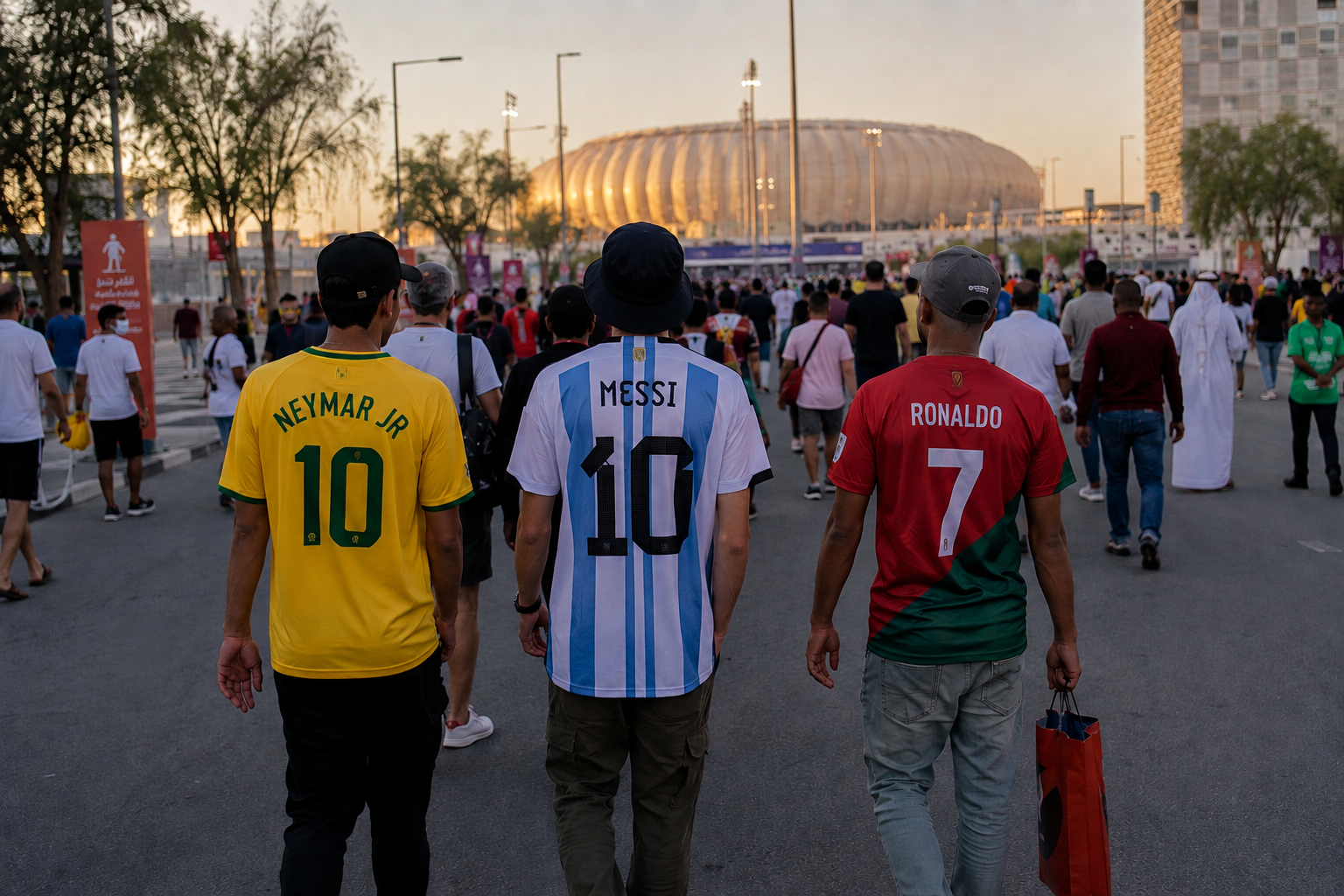

The final whistle has long been blown on the 2026 FIFA World Cup, but one of the tournament’s most visible cultural legacies is still walking the streets.
Football shirts that once belonged mainly in stadiums, sports bars and supporters’ wardrobes have become part of mainstream fashion. They are being worn with tailored trousers, skirts, heels, vintage denim and designer accessories often by people who may not be able to name the club’s starting eleven.
What began as World Cup fashion has developed into something much broader.
Vogue’s end-of-summer assessment this month singled out soccer jerseys among the styles that defined summer 2026, suggesting the look has survived beyond the tournament that helped push it into the mainstream.
The shift reflects a wider collision between sport, streetwear, celebrity culture and luxury fashion. A football jersey is no longer simply evidence of which team someone supports. Increasingly, it is being treated like any other statement piece.
Football Jersey Fashion Has Moved Beyond Match Day
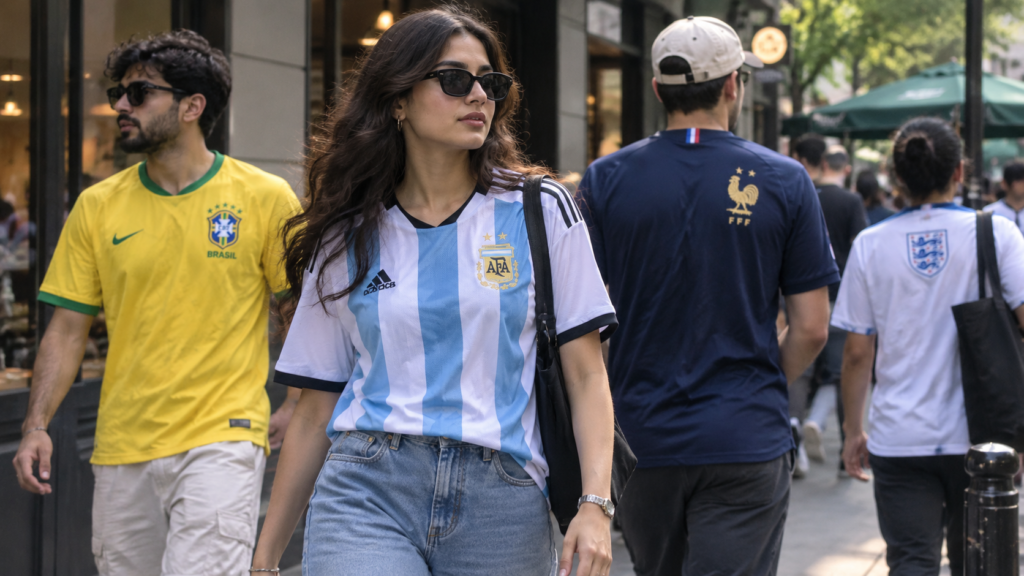
The appeal of a football shirt has traditionally been straightforward: supporters wear their team’s colours.
That logic still matters. But the way jerseys are being styled has changed significantly.
Instead of being paired automatically with jeans, shorts or trainers, football shirts are increasingly appearing in deliberately contrasting outfits.
Zendaya offered one of the clearest examples earlier this summer when she paired a sports-inspired jersey top with a plaid midi skirt and pointed heels. Vogue described the combination as an example of unexpected sportswear, where the athletic piece worked precisely because the rest of the outfit did not look sporty.
That contrast has become central to the trend.
Oversized jerseys can sit over slip dresses. Vintage football shirts are being worn with skirts. Tracksuit jackets are paired with more polished accessories. Team colours are appearing alongside pieces that have little connection to the game itself.
The result is less “going to a match” and more “building an outfit around a football shirt.”
The World Cup Gave the Trend a Global Stage
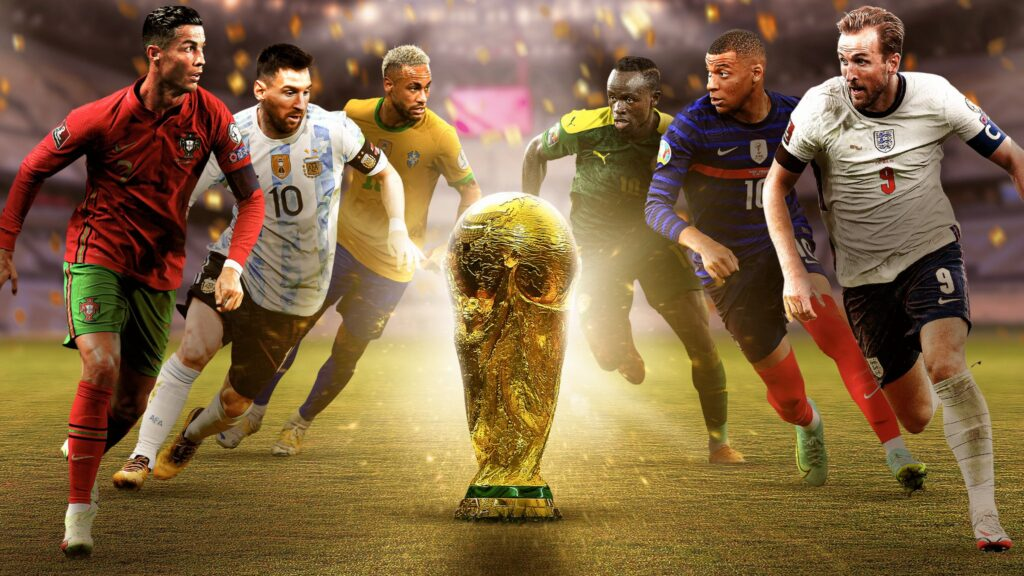
Football and fashion have intersected for decades, particularly in Europe and Latin America. What changed in 2026 was the scale of the exposure.
The World Cup turned football clothing into one of the summer’s most visible visual languages.
Vogue reported during the tournament that customised sports clothing had become a major part of game-day style, with fans wearing embroidered denim, altered jerseys, personalised shirts and pieces made by independent designers. The publication argued that the boundary between sports clothing and everyday fashion was becoming increasingly difficult to see.
That matters because major sporting events do more than create fans. They create images.
For weeks, football shirts appeared on television broadcasts, social platforms, celebrity accounts and city streets across North America and beyond.
Once the jersey was removed from the stadium and placed alongside fashion, music and influencer culture, it gained a second identity.
The tournament may have accelerated the trend, but it did not create it from nothing.
Fashion Brands Were Already Betting on Football
The fashion industry entered the World Cup prepared. A wave of collaborations connected football to designers, streetwear labels and luxury aesthetics.
Nike teamed with Palace Skateboards around the England team. Adidas worked with Willy Chavarria on a Mexico-inspired collection featuring oversized jerseys and tailored tracksuits. Nike and the Virgil Abloh Archive created a US men’s national team capsule influenced by Off-White’s design language. Jacquemus also collaborated with Nike and the French Football Federation on a more refined interpretation of the French national shirt.
These projects did more than sell tournament merchandise. They repositioned football clothing as design.
A crest, number or national colour could now sit inside the same fashion conversation as silhouette, tailoring and fabric.
That crossover also helped make jerseys appealing to consumers who may care as much about the look of a shirt as the result of a match.
Brazilcore Shows How Football Shirts Became Cultural Fashion
Few trends illustrate the shift better than Brazilcore. Brazil’s yellow football jersey has always been one of the most recognisable shirts in sport. In 2026, however, it increasingly became part of a wider fashion aesthetic built around yellow, green and blue, alongside pieces such as Havaianas and Y2K-style sunglasses.
Vogue Business reported in July that the trend had been embraced by celebrities including Sabrina Carpenter, Tyla, Dua Lipa, Addison Rae and Alex Consani during the World Cup period.
The jersey functions differently in that context. It is still associated with football, but it can also communicate nostalgia, nationality, summer, colour and a relaxed style of dressing.
That flexibility is one reason football shirts have become useful to fashion. They already arrive loaded with meaning.
At the same time, Brazilcore has raised questions about how international brands borrow national symbols. Brazilian designers interviewed by Vogue Business argued that companies need to understand the cultural context behind the imagery they use rather than reducing Brazilian identity to a few profitable colours and motifs.
That tension is likely to become more important as football aesthetics continue moving into global fashion.
Celebrity Style Has Helped Normalise the Jersey
Fashion trends rarely spread through one channel alone. The jersey’s rise has benefited from athletes, musicians, actors, influencers and high-profile spectators all wearing sports-inspired pieces in different ways.
Michelle Obama wore a sporty jersey-influenced look earlier this summer, while Zendaya showed how athletic clothing could be styled with more traditional fashion pieces.
At the World Cup itself, personalised clothing worn by players’ partners also attracted attention.
Some transformed traditional fan merchandise through embellishment, tailoring and customisation rather than simply wearing a replica shirt.
Vogue noted that designers producing customised sports pieces saw growing demand during the tournament, reinforcing the idea that supporters increasingly want clothing that expresses personal style as well as team loyalty.
That shift is important. The jersey no longer has to be the entire outfit. It can simply be the starting point.
Football Clubs Have Never Had More Jerseys to Sell
There is also a significant business engine behind the trend. Reuters analysed kit releases from the 20 clubs competing in the 2026-27 Premier League and found that teams have steadily increased the number of shirts they put on sale.
The same group of clubs released fewer than 50 new jerseys annually in the early Premier League era. Recent seasons have seen totals approach 200 new shirts, while clubs have largely stopped carrying old designs into subsequent seasons.
Reuters counted 211 new jerseys in 2025 among the current Premier League clubs and reported that at least 190 Premier League jerseys were already on sale as the new season began in 2026.
That constant supply gives consumers far more choice than the traditional home-and-away model.
There are third kits, goalkeeper shirts, training jerseys, pre-match tops, limited editions and collaborative designs.
Football clubs are effectively producing seasonal clothing collections and merchandise matters financially.
Reuters’ analysis of European club finances found that kits and merchandise represented substantial shares of revenue for many leading teams, including Barcelona, Bayern Munich, Manchester United and Arsenal.
Fashion’s embrace of football therefore arrives at a convenient moment for clubs looking to sell far beyond their core supporter base.
Vintage Jerseys Have an Advantage New Clothes Cannot Replicate
There is another reason the trend has longevity: old football shirts often become more desirable with age.
Retro kits can evoke a specific player, tournament, club era or childhood memory. Even when the wearer has no direct connection to that history, the shirt can function like a vintage band tee.
Older jerseys also tend to feature colour combinations, sponsor logos and design details that immediately distinguish them from conventional fashion basics.
That nostalgia fits neatly with fashion’s continuing interest in the 1990s and early 2000s.
A decades-old football shirt therefore has two markets at once: collectors interested in the game and style-conscious consumers interested in the design.
That makes the jersey unusually resilient compared with many short-lived sports trends.
There Is a Sustainability Problem Behind the Boom
The endless stream of new kits also has a less fashionable side.
Most football shirts are made primarily from polyester, and the growing number of annual releases raises questions about waste and overconsumption.
Reuters cited Green Football estimates suggesting that around 100,000 tonnes of sportswear are discarded each year in the UK, while noting that many clubs now produce far more kits over a four-year period than they did in the early 1990s.
That creates an obvious contradiction. Vintage football shirts are becoming desirable partly because they are durable, distinctive and tied to a specific moment. At the same time, modern football increasingly operates on a fast-release cycle that encourages supporters to replace designs annually.
If football jersey fashion continues growing outside traditional fan culture, scrutiny of that model is likely to grow with it.
Why the Football Jersey Trend May Last
The World Cup helped football shirts dominate summer 2026, but the trend has several advantages that could keep it relevant well beyond one tournament.
Jerseys are colourful. They are easy to layer. They work oversized. They carry built-in graphics. Vintage versions are widely available. And unlike many fashion trends, they already mean something before they enter an outfit.
Most importantly, they can be styled in almost opposite directions.
A supporter can wear one with jeans and trainers to watch a match. Someone else can wear the same shirt with a skirt, heels and jewellery without any intention of entering a stadium.
That versatility is what separates the current jersey fashion movement from ordinary fan merchandise. The World Cup gave the jersey its biggest stage of the year.
Fashion appears to have decided it does not need to give it back.
Don’t forget to follow us on Facebook | Instagram | Twitter | LinkedIn to get the latest updates from Cape Town Tribune