


US President Donald Trump has publicly urged Ukrainian President Volodymyr Zelensky to stop Russian refinery strikes, putting new pressure on Kyiv over a military campaign that has damaged Moscow’s fuel industry but is also contributing to strains in an already tight global energy market.
Trump made the appeal on Sunday during a visit to the Irish Open in western Ireland. He said Washington had discussed the issue with Zelensky and argued that Ukraine should direct its attacks toward other Russian targets rather than facilities involved in diesel production. Trump linked the strikes to a worsening fuel shortage that is being felt far beyond Russia.
The intervention places one of Ukraine’s most important long-range military strategies under renewed scrutiny. Kyiv has increasingly used drones to attack Russian refineries, fuel depots and other energy infrastructure, seeking to weaken a sector that generates revenue for Moscow and provides fuel for the Russian economy and military.
But the campaign is unfolding during an unusually fragile period for global energy markets. Diesel supplies are already under pressure from conflict in the Middle East, lower Russian exports, limited refining capacity and depleted inventories in several major markets.
In the United States, the national average diesel price moved above $6 a gallon for the first time last week, according to GasBuddy data cited by Reuters.
Trump challenges a central part of Ukraine’s strategy
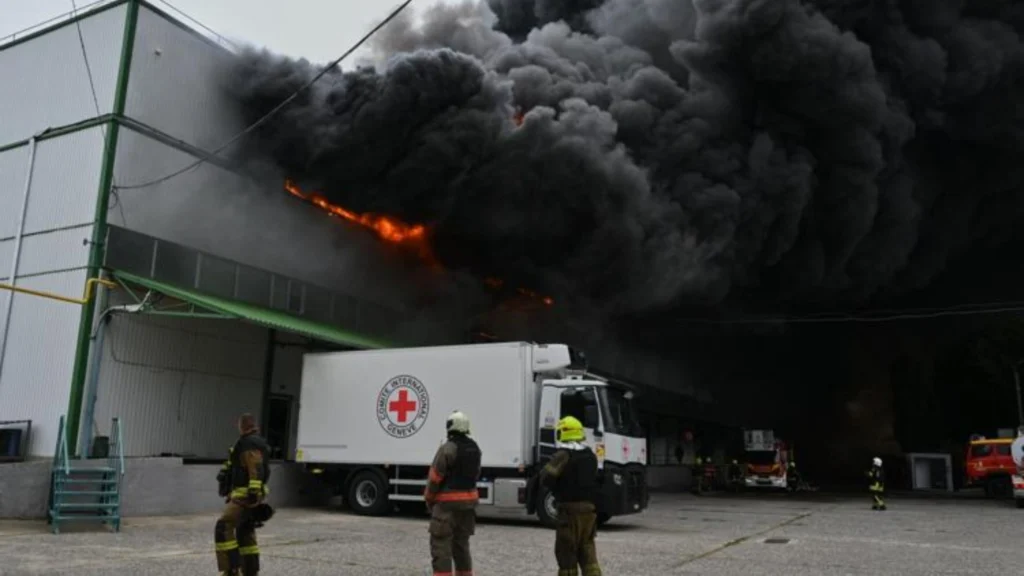
Ukraine has defended the Russian refinery strikes as legitimate attacks on infrastructure that supports Moscow’s war effort.
Russia has repeatedly targeted Ukraine’s own electricity, fuel and energy systems since launching its full-scale invasion in February 2022.
Kyiv argues that striking Russian energy facilities both limits Moscow’s ability to sustain military operations and raises the economic cost of continuing the war.
Ukraine’s ability to conduct increasingly long-range drone operations has given it a way to reach facilities hundreds of kilometres from the front line. Refineries are especially significant because crude oil production alone does not provide armies, trucks or consumers with usable fuel. Oil must first be processed into products including diesel and gasoline.
Repeated Ukrainian attacks have disrupted Russian processing facilities and tightened domestic fuel supplies. Russia has also restricted diesel exports as it attempts to protect domestic supplies.
The consequences are becoming visible in Russia’s energy outlook. The International Energy Agency recently lowered its forecast for Russian oil production, while a Russian government draft reviewed by Reuters projected the country’s 2026 oil output at its lowest level in 17 years. Expectations for fuel exports in 2026 and 2027 were also reduced.
That suggests Ukraine’s campaign is creating economic pressure. It also helps explain why Washington is increasingly concerned about its effects beyond the battlefield.
Why diesel has become a global problem
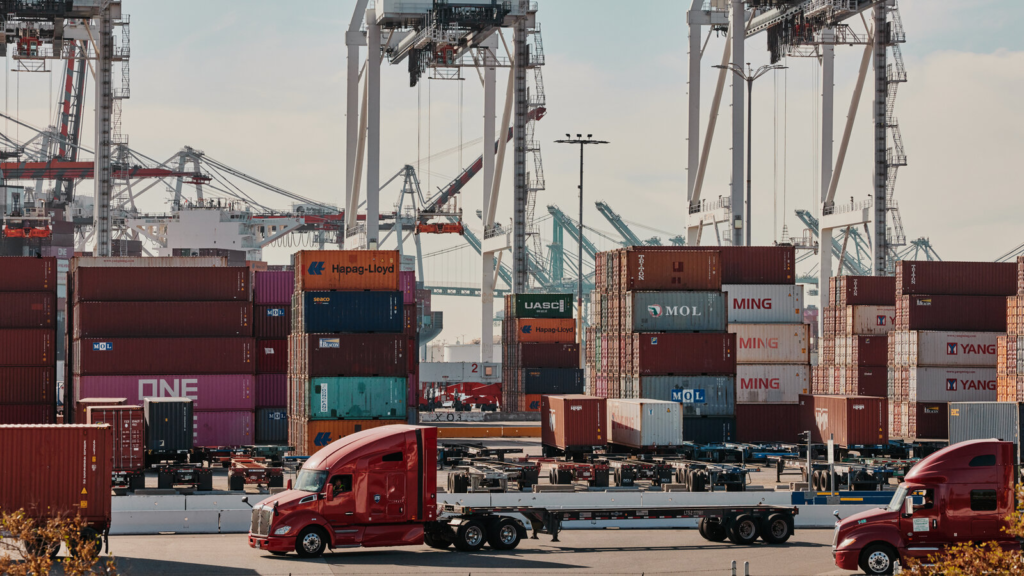
Diesel occupies an unusually important place in the world economy. It powers freight trucks, agricultural equipment, ships, trains and heavy machinery. When diesel prices rise sharply, the effects can spread through transport networks and eventually reach the price of food, manufactured goods and everyday deliveries.
US diesel inventories were recently about 13% below their five-year average, according to Energy Information Administration data reported by Reuters. At the same time, crude prices have returned above $100 a barrel amid continued instability in the Middle East.
The combination has created a difficult situation for governments already worried about inflation.
Higher diesel costs do not remain confined to petrol stations. Transport companies face higher operating expenses, farmers pay more to run machinery, and businesses may pass increased distribution costs to consumers.
The political consequences can also be significant. Rising fuel prices are particularly sensitive in the United States ahead of the November midterm elections, where the cost of living remains an important concern for voters.
Ukraine is only one part of the diesel squeeze
Trump argued that the current shortage was being driven by developments in the Russia-Ukraine war rather than the Middle East. The broader market picture, however, is more complicated.
Reuters reported last week that US diesel prices have risen by almost 60% since the United States and Israel began their war with Iran in late February.
The conflict has severely disrupted shipping through the Strait of Hormuz, one of the world’s most important energy routes. Before the war, roughly one-fifth of global oil supply passed through the waterway.
At the same time, the Russian refinery strikes have reduced Russian processing capacity and helped push Moscow toward restrictions on diesel exports.
China has also limited some fuel exports, while global refining capacity has struggled to compensate for simultaneous disruptions in Russia and the Middle East.
Industry executives told Reuters earlier this month that around four million barrels a day of diesel supply from Russia and the Middle East had been lost from the international market, leaving supplies likely to remain tight through the winter.
The diesel crisis is therefore the result of several overlapping disruptions rather than a single military campaign.
That distinction matters because stopping Ukrainian attacks may ease one source of pressure without resolving the wider shortage.
A difficult request for Zelensky
For Zelensky, Trump’s demand presents a difficult strategic calculation.
Ukraine has fewer resources than Russia and has relied increasingly on drones and other long-range weapons to attack economically important targets far behind Russian lines.
Energy infrastructure offers Kyiv a way to impose costs on Moscow without attempting to match Russia’s larger conventional military resources. Giving up or significantly reducing the campaign could therefore remove a source of pressure on the Kremlin.
At the same time, Ukraine remains heavily dependent on Western military support, intelligence and political backing. A direct request from the US president cannot easily be dismissed.
The disagreement also raises a broader question about the extent to which Ukraine’s military strategy may increasingly be shaped by the economic priorities of its allies.
For Washington, the immediate concern is no longer limited to whether Ukrainian attacks are weakening Russia. The administration must also consider whether those attacks are contributing to fuel shortages, inflation, and higher costs for American consumers.
For Kyiv, the calculation is different. Russian energy infrastructure is viewed not simply as an economic asset but as part of the system that finances and supports Moscow’s war.
Russia’s energy sector is increasingly part of the battlefield
Energy has been central to the conflict since its beginning.
Russia has repeatedly attacked Ukrainian electricity infrastructure, leaving cities vulnerable to blackouts and placing enormous pressure on the country’s power network.
Ukraine has responded by expanding attacks against Russian refineries, storage sites and other energy facilities. The result is an increasingly direct contest over each country’s ability to sustain both its economy and its military.
Recent fighting has continued on multiple fronts. Russia has maintained heavy drone and missile attacks on Ukrainian cities and infrastructure, while Ukraine has continued operations against targets inside Russia.
Russian strikes have also reached areas close to Ukraine’s border with NATO member Poland, increasing concerns about the geographical expansion of the conflict’s risks.
The debate over Russian refinery strikes therefore goes beyond fuel prices. It touches one of the central questions facing Ukraine and its allies: how far Kyiv should be allowed to take the war into Russia when those attacks begin to have significant economic consequences outside the region.
Pressure on Kyiv could grow if fuel prices remain high
Trump’s intervention does not necessarily mean Ukraine will immediately stop attacking Russian energy infrastructure. But it signals that the economic effects of the campaign have become important enough to create a public disagreement between Washington and Kyiv.
Much may depend on what happens to global fuel prices next. If diesel supplies improve, political pressure on Ukraine to change its strategy could ease. If prices continue climbing, Washington may become more determined to limit attacks on Russian refineries. The outlook remains uncertain.
The Middle East continues to pose serious risks to oil and fuel supply, while Russia’s refining industry remains vulnerable to Ukrainian drones. International energy markets are consequently being shaped by two major wars simultaneously.
For Ukraine, that creates an uncomfortable reality. A campaign designed to weaken Russia is increasingly being judged not only by what it does to Moscow, but by what motorists, farmers, transport companies and consumers around the world are paying for fuel.
Trump’s call for an end to the Russian refinery strikes has brought that conflict into the open. The next question is whether Zelensky is prepared to alter one of Ukraine’s most consequential strategies, and what Washington might do if he does not.
Don’t forget to follow us on Facebook | Instagram | Twitter | LinkedIn to get the latest updates from Cape Town Tribune