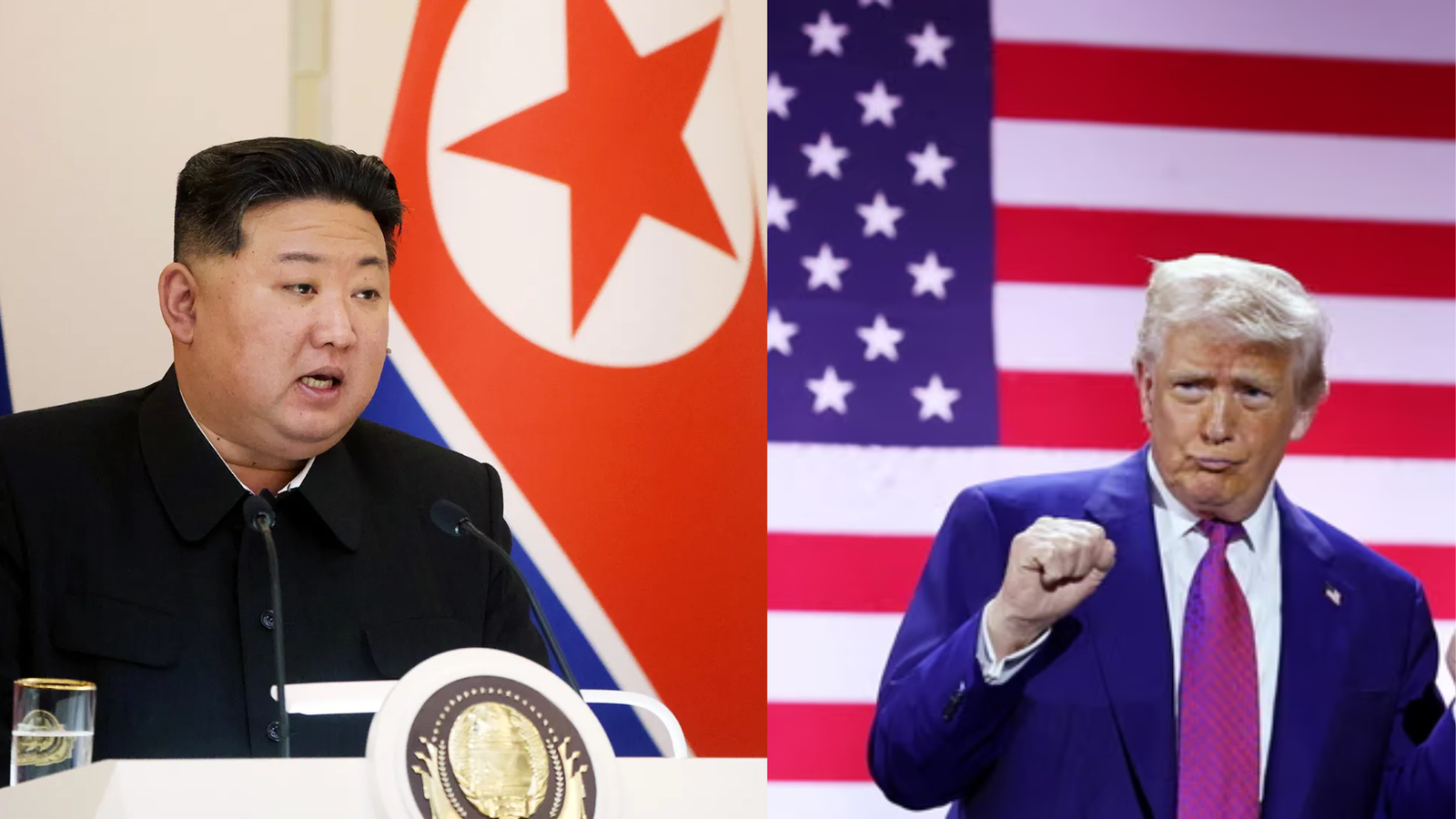

North Korea has fired a barrage of short-range ballistic missiles just as Donald Trump is attempting to revive diplomacy with Kim Jong Un, delivering an unmistakable reminder of how difficult any renewed dialogue with Pyongyang is likely to be.
South Korea’s military said North Korea launched around 10 short-range ballistic missiles from the Pyongyang area toward waters east of the Korean Peninsula on August 20. The missiles flew roughly 300 kilometres before falling into the sea. Reuters separately reported South Korea as saying more than 10 missiles were launched.
The timing is particularly striking.
Trump has ordered a substantial reduction in US participation in annual military exercises with South Korea and has publicly expressed interest in talking to Kim again. Washington’s moves have been widely interpreted as an effort to lower tensions and create space for renewed diplomacy.
Pyongyang, however, has not responded with the conciliatory gesture Trump may have wanted.
Instead, North Korea fires missiles while simultaneously making clear that it considers Washington’s policy fundamentally unchanged.
That contradiction now sits at the centre of the latest attempt to reset one of the world’s most difficult diplomatic relationships.
Why Did North Korea Fire the Missiles?
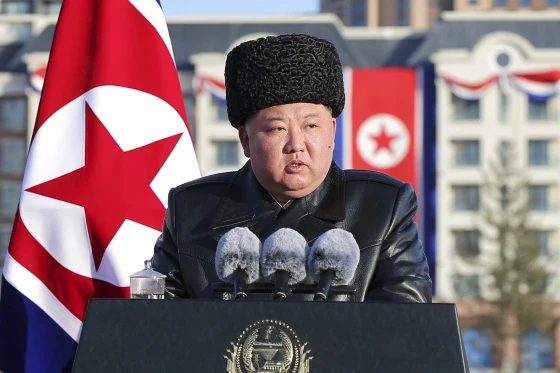
The launches came during the annual Ulchi Freedom Shield exercises conducted by the United States and South Korea.
North Korea has long condemned these drills as preparations for an invasion, while Washington and Seoul insist they are defensive exercises intended to maintain military readiness.
Trump recently ordered US participation to be substantially reduced. The exercises are being wrapped up six days earlier than originally planned, as part of an effort to ease tensions with Pyongyang.
But North Korea says reducing the size or duration of the drills does not change what it considers to be their hostile nature.
Kim Yo Jong, Kim Jong Un’s powerful sister and one of Pyongyang’s most prominent political voices, dismissed the changes before the latest missile barrage.
She said the “provocative” nature of the exercises remained unchanged despite their reduced scale and duration.
The missile launch therefore appears to carry a political message as well as a military one: Pyongyang does not want Trump’s concessions to be interpreted as having forced North Korea into a softer position.
Trump Is Trying to Reopen the Door to Kim Jong Un
The launches arrive as Trump once again emphasizes his personal relationship with Kim Jong Un.
Trump has said he wants renewed engagement with the North Korean leader and has expressed interest in meeting him later this year. His administration’s decision to scale back military exercises with South Korea is one of the clearest indications yet that Washington is prepared to experiment with incentives to encourage dialogue.
It marks a return to one of the defining foreign-policy strategies of Trump’s first presidency.
Between 2018 and 2019, Trump pursued highly personal diplomacy with Kim, breaking with decades of US practice by dealing directly with the North Korean leader.
Those talks temporarily reduced tensions but ultimately failed to produce an agreement capable of dismantling North Korea’s nuclear weapons programme.
Now, years later, Trump appears willing to test personal diplomacy again.
The challenge is that the North Korea he is dealing with in 2026 is not the same North Korea he negotiated with several years ago.
Kim Yo Jong Is Not Closing the Door Completely
Pyongyang’s public response is cold, but it is not necessarily an outright rejection of diplomacy. That distinction is important.
Kim Yo Jong has criticised Washington’s continued military posture and rejected the suggestion that reducing exercises represents a meaningful change in US policy.
She has also denied Trump’s suggestion that recent communication has taken place between him and Kim Jong Un.
Yet Reuters reported that her rhetoric stopped short of completely shutting down the possibility of future engagement.
She has continued to distinguish between the personal relationship involving Trump and Kim Jong Un and North Korea’s broader objections to US policy. Analysts see that as potentially deliberate: Pyongyang can demand more concessions without eliminating diplomacy as an option.
That leaves Washington with an opening — but not necessarily on Washington’s preferred terms.
North Korea Fires Missiles While Raising the Price of Diplomacy
Seen in isolation, launching ballistic missiles while another country offers dialogue might appear to be a rejection of negotiations. North Korean diplomacy has rarely worked that simply.
Pyongyang has repeatedly used missile tests and military demonstrations alongside negotiations. Weapons development can increase pressure on adversaries and improve North Korea’s bargaining position before talks even begin.
The latest missile barrage may therefore serve several purposes.It demonstrates that North Korea’s military programme will continue despite Trump’s outreach.
It allows Pyongyang to reject the idea that scaling back US-South Korean exercises is sufficient compensation for returning to negotiations.
And it reminds Washington and Seoul that North Korea still possesses substantial military leverage.
In other words, the launches do not necessarily mean diplomacy is dead.
They may instead indicate that Pyongyang wants a higher price for returning to it.
The Nuclear Issue Has Become Even Harder
Any renewed Trump-Kim Jong Un diplomacy would immediately encounter the same fundamental disagreement that undermined earlier negotiations: nuclear weapons.
Washington continues to support the denuclearisation of North Korea.
Pyongyang, meanwhile, has spent years expanding its weapons capabilities and treating its nuclear arsenal as central to national security.
That makes the starting positions increasingly difficult to reconcile.
North Korea has also developed closer strategic relationships with Russia and China, giving Kim alternatives to the economic and diplomatic isolation that once provided Washington with greater leverage. Reuters notes that these stronger relationships may reduce Pyongyang’s urgency to reach an agreement with the United States.
This matters because Trump’s earlier diplomacy relied partly on the assumption that direct engagement and potential sanctions relief could persuade Kim to negotiate over his nuclear programme.
Today, North Korea may calculate that it has less to lose by refusing.
Military Exercises Are Now Part of the Diplomatic Bargaining
Trump’s decision to reduce the Ulchi Freedom Shield exercises demonstrates how military policy is becoming intertwined with the diplomatic effort.
The United States and South Korea concluded the drills early following Trump’s directive. The move was intended to reduce friction at a moment when Washington hopes to bring Pyongyang back toward dialogue.
But there is a difficult trade-off.
Military exercises exist partly to ensure that US and South Korean forces are prepared to respond to a potential conflict.
Reducing them may create diplomatic space, but doing so while North Korea continues testing ballistic missiles can raise concerns about readiness and deterrence.
Seoul therefore finds itself in a particularly sensitive position.
South Korea wants lower tensions on the Korean Peninsula but must also respond when North Korea conducts missile launches that violate United Nations Security Council resolutions.
Following the August 20 barrage, South Korea convened an emergency security meeting and called on Pyongyang to halt such launches.
Kim Jong Un Has More Strategic Leverage Than Before
The broader geopolitical environment also strengthens Pyongyang’s hand.
North Korea has expanded military cooperation with Russia while maintaining its crucial relationship with China.
Those ties complicate Washington’s ability to isolate Kim economically or diplomatically.
They also mean a renewed US-North Korea dialogue would take place against a wider backdrop involving Moscow and Beijing rather than solely the security dynamics of the Korean Peninsula.
China has already blamed Washington’s “hostile” policy for continuing tensions and urged dialogue while calling on South Korea to avoid taking sides in broader US-China competition.
That gives the current confrontation implications well beyond North and South Korea.
What Happens Next?
For now, Trump’s diplomatic outreach and North Korea’s missile launches are moving on parallel tracks.
Trump is signalling that he wants communication. Washington has reduced military exercises.
Kim Yo Jong is publicly dismissing those concessions as insufficient.
And North Korea continues to demonstrate its ballistic missile capabilities.
There is no guarantee that these competing signals will eventually produce meaningful negotiations.
But Pyongyang has also avoided language that would make future dialogue impossible. That ambiguity may be intentional.
North Korea can continue testing weapons and demanding changes from Washington while keeping diplomatic engagement available if Trump eventually offers terms it considers worthwhile.
That is what makes the latest missile launch more significant than another weapons test.
North Korea fires missiles at precisely the moment Trump is trying to lower tensions, showing that any renewed diplomacy with Kim Jong Un will begin not with goodwill, but with a struggle over leverage.
And before serious negotiations can begin, Washington and Pyongyang still have to agree on something much more basic: what each side must give up simply to get the conversation moving.
FAQs
Why did North Korea fire missiles?
North Korea launched around 10 short-range ballistic missiles on August 20 during US-South Korean military exercises. Pyongyang has repeatedly condemned the exercises as provocative, even after Donald Trump ordered them to be substantially reduced.
What missiles did North Korea launch?
South Korea said the weapons were short-range ballistic missiles launched from the Pyongyang area. They travelled approximately 300 kilometres toward waters east of the Korean Peninsula.
Why has Trump reduced US-South Korea military drills?
Trump ordered a significant reduction in US participation as he seeks to lower tensions and revive diplomacy with Kim Jong Un. The annual Ulchi Freedom Shield exercises subsequently ended six days earlier than scheduled.
Is Kim Jong Un open to talks with Trump?
North Korea has not agreed to renewed talks. Kim Yo Jong has criticised Washington’s policies and dismissed the scaling back of military exercises, although analysts say Pyongyang has not completely closed the door to future diplomacy.
What does Kim Yo Jong say about Trump’s outreach?
Kim Yo Jong says reducing the scale and duration of US-South Korean military exercises does not change what North Korea considers their hostile character. She has also rejected claims of recent communication between Trump and Kim Jong Un.
Don’t forget to follow us on Facebook | Instagram | Twitter | LinkedIn to get the latest updates from Cape Town Tribune