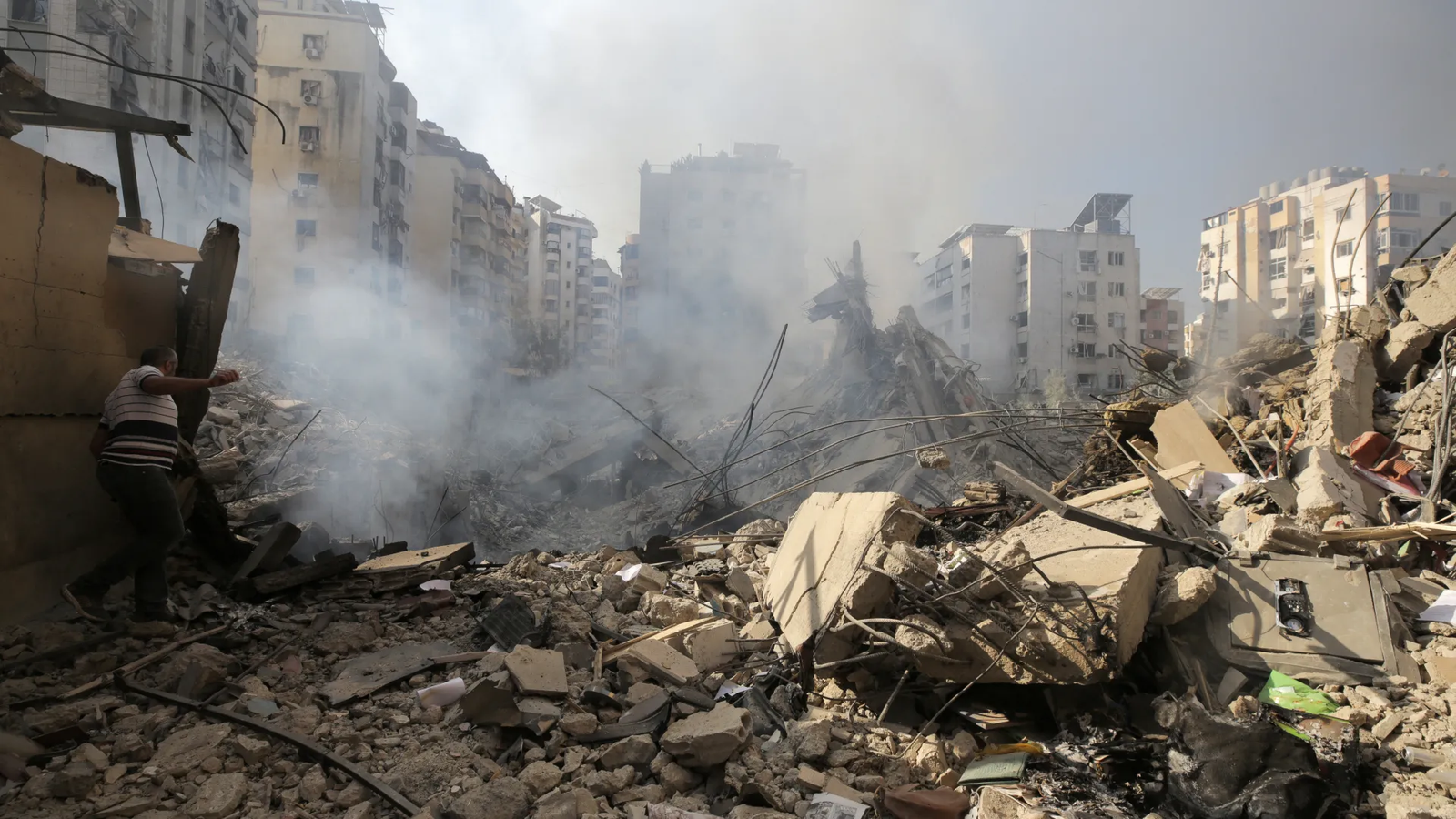

Israeli airstrikes on a southern Lebanese town killed at least 11 people early Monday, including two children and two medics, according to Lebanon’s state-run National News Agency, extending a period of increased military activity despite a U.S.-mediated ceasefire reached in June.
The latest Israeli strikes in Lebanon hit Kfar Rumman shortly after midnight, the Lebanese agency reported. Nine people were killed when a residential building was struck, and five others were wounded, while two medics died in a separate drone strike on a vehicle, according to the agency. Reuters said the Israeli military did not immediately respond to questions about the attacks or whether it knew civilians were present at the locations.
Monday’s casualties followed another series of Israeli strikes on Sunday in which Lebanese authorities reported at least seven deaths. Israel said Sunday’s operations followed drone attacks launched by Hezbollah against Israeli forces in southern Lebanon. The circumstances surrounding individual strikes and the military targets described by the parties have not been independently verified.
The violence is placing renewed pressure on a ceasefire framework negotiated with U.S. involvement in June. Although the agreement sharply reduced the intensity of fighting between Israel and Hezbollah, Israeli military operations and Hezbollah activity have continued in parts of southern Lebanon.
Israeli strikes in Lebanon intensify after weekend attacks
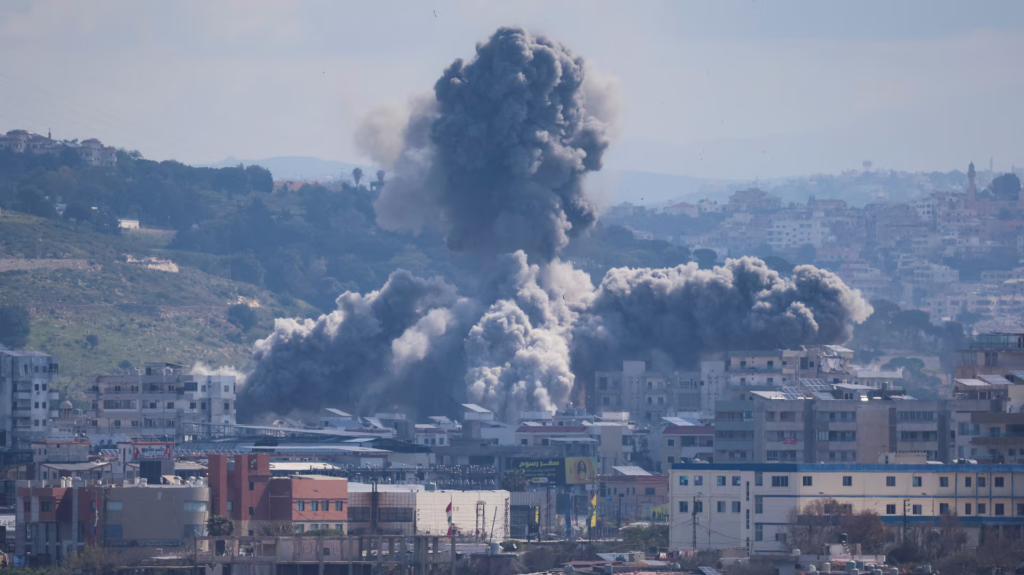
The Israeli military said Sunday’s strikes targeted Hezbollah infrastructure after the Lebanese armed group used drones against Israeli forces.
Lebanese authorities, meanwhile, reported casualties from strikes across the south. The two accounts describe different elements of the same escalation and should be treated separately: Israel has presented its operations as attacks on Hezbollah military sites, while Lebanese authorities have reported the human toll resulting from the strikes.
Monday’s attacks in Kfar Rumman added another layer to the confrontation. According to Reuters, the strikes there were not preceded by an online evacuation warning from the Israeli military. The military did issue a separate warning early Monday for an area around another building in southern Lebanon where it said Hezbollah facilities would be targeted.
The absence of an immediate Israeli statement on the Kfar Rumman strikes means the purpose and intended targets of those specific attacks remain unclear. Lebanon’s National News Agency identified the locations as a residential building and a civilian vehicle, but Israel had not provided its own account when Reuters published its report.
June ceasefire has reduced attacks but not ended it
Lebanon and Israel agreed to a U.S.-brokered framework on June 26 after months of heavy fighting.
The arrangement links a gradual Israeli withdrawal from parts of southern Lebanon with the Lebanese government’s disarmament of non-state armed groups, including Hezbollah, according to Reuters. Hezbollah was not a party to the agreement and has rejected demands that it disarm under the conditions currently proposed.
The agreement led to a substantial reduction in violence, but it did not produce a complete halt to military operations.
Israeli troops have remained in parts of southern Lebanon, while Israel has continued carrying out strikes both within and beyond the area it describes as a security zone. Hezbollah has also continued military activity against Israeli forces, including drone operations around contested positions.
The dispute over the sequence of the agreement remains central. Israel has tied further withdrawal to progress on Hezbollah’s disarmament, while Hezbollah has resisted disarming while Israeli troops remain on Lebanese territory.
That disagreement has made implementation difficult even when the overall level of fighting has declined.
Strategic ridge remains central to Israel-Hezbollah confrontation
Recent confrontations have been particularly intense around the Ali al-Taher ridge, near Nabatiyeh in southern Lebanon.
The elevated area has become a significant military position because it overlooks surrounding roads and communities and contains underground infrastructure that Israel says has been used by Hezbollah. Israeli forces have conducted operations around the ridge, while Hezbollah has used drones against Israeli troops in the area.
Israel said on September 4 that its forces had cleared Hezbollah fighters from tunnels beneath the ridge. A Lebanese military official told Reuters that Israel controlled southern entrances to the tunnel network and monitored northern approaches with drones, but the full extent of Israeli control was unclear. Hezbollah did not immediately comment on Israel’s account.
The United States has been involved in attempts to find an arrangement for the area as part of the wider ceasefire process. Associated Press reported that a proposal for Hezbollah to hand the ridge to the Lebanese army had been rejected by the group.
Casualty toll has continued to rise
The current fighting in Lebanon is part of a wider conflict that intensified earlier this year.
Reuters reported that more than 4,300 people have been killed in Lebanon since the latest round of hostilities began on March 2, citing the death toll from the conflict period. Hezbollah began firing rockets at Israel shortly after U.S. and Israeli strikes on Iran, triggering a major Israeli air and ground campaign in Lebanon.
The June ceasefire significantly reduced those exchanges, but repeated strikes since then have demonstrated that the arrangement remains incomplete.
An Israeli strike in southern Lebanon on August 15, for example, killed at least 11 people, according to Lebanon’s health ministry. Israel said those attacks targeted Hezbollah infrastructure in response to actions against its forces.
These incidents have continued alongside negotiations over Israeli withdrawal, Hezbollah’s weapons and the future role of the Lebanese army in the south.
Renewed fighting puts diplomatic efforts under pressure
The immediate question is whether the latest Israeli strikes in Lebanon and Hezbollah’s drone activity remain limited or develop into a broader period of sustained fighting.
The ceasefire has so far prevented a return to the intensity seen earlier in the year, but the military and political issues at the centre of the conflict remain unresolved. Israeli forces continue to operate in southern Lebanon, Hezbollah has rejected the disarmament terms as currently framed, and both sides continue to accuse the other of actions that undermine the arrangement.
The deaths reported on Sunday and Monday will add pressure to U.S.-backed diplomatic efforts to preserve the ceasefire and move its outstanding provisions forward.
The situation remains developing. Casualty figures, military accounts and information about individual strikes may change as Lebanese authorities, the Israeli military and other parties issue further statements.
Don’t forget to follow us on Facebook | Instagram | Twitter | LinkedIn to get the latest updates from Cape Town Tribune