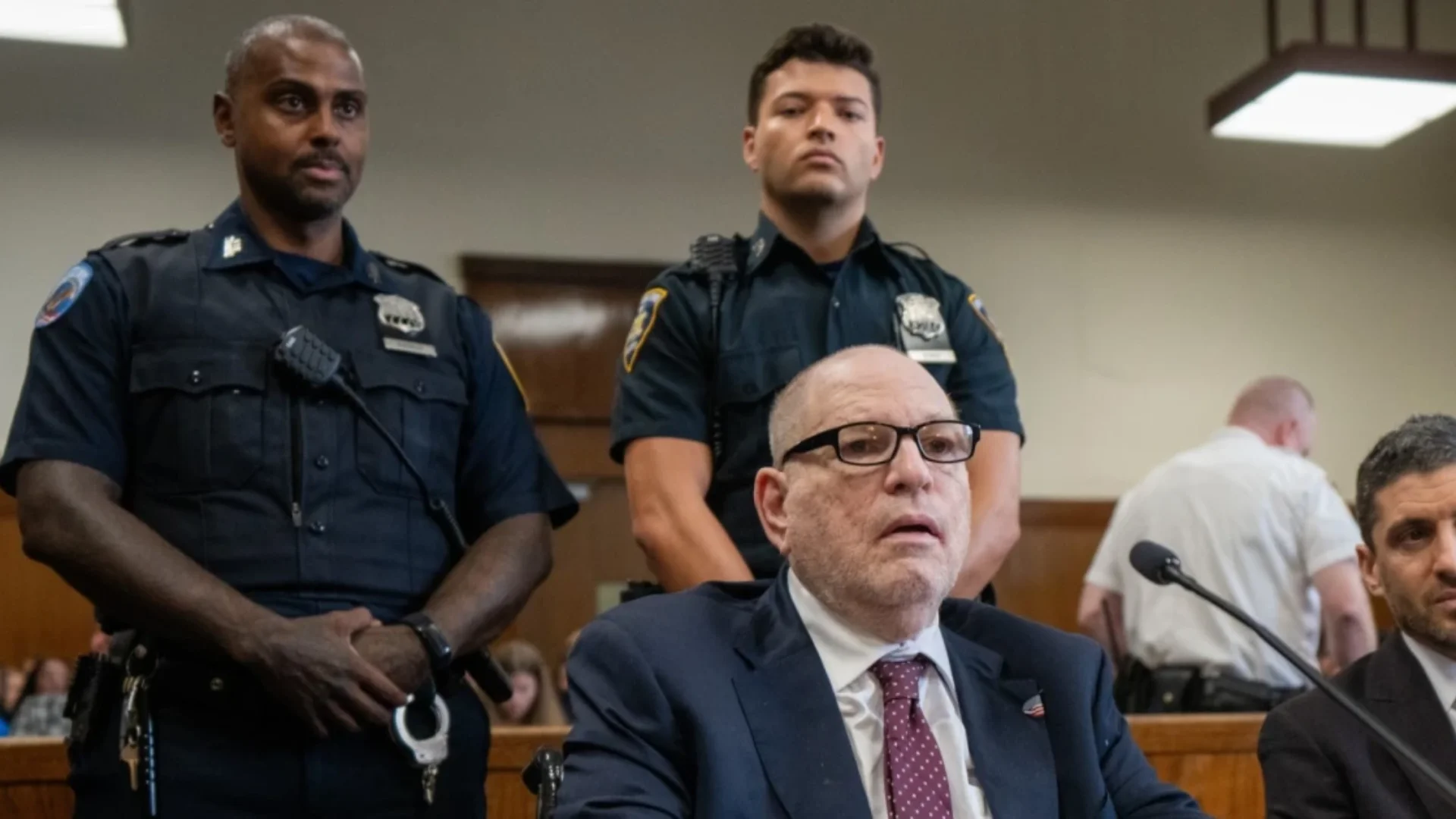
The former Hollywood producer received a 15-year prison term after his retrial conviction for sexually assaulting former production assistant Miriam Haley in 2006. His lawyers say they will appeal.
Harvey Weinstein has been sentenced to 15 years in prison in New York after being convicted of sexually assaulting former production assistant Miriam Haley, adding another substantial prison term to a legal saga that has stretched across two coasts, multiple trials and nearly a decade.
Judge Curtis Farber imposed the sentence in Manhattan on September 23. Weinstein, 74, was convicted at a 2025 retrial of committing a first-degree criminal sexual act against Haley, who testified that he assaulted her at his Manhattan apartment in 2006.
Weinstein continues to deny sexually assaulting anyone or having non-consensual sex. His lawyers have said they will appeal the conviction and sentence.
The ruling is significant not because it neatly closes the case. It does not. Weinstein still faces resentencing in California, where a separate rape and sexual assault conviction remains in place. His New York lawyers are also preparing another challenge.
What the sentence does is bring a measure of legal clarity to one part of a case that has repeatedly been reopened, retried and reconsidered.
A conviction overturned, then won again
Weinstein was first convicted in New York in 2020 after a closely watched trial that became one of the defining legal proceedings of the #MeToo era.
That jury found him guilty of sexually assaulting Haley and raping aspiring actress Jessica Mann. He was sentenced to 23 years in prison.
Four years later, however, New York’s highest court overturned the conviction.
The Court of Appeals ruled that the trial judge had allowed testimony about allegations that were not directly part of the criminal charges before the jury. The court concluded that those decisions had denied Weinstein a fair trial and ordered prosecutors to start again.
The ruling did not find Weinstein innocent. It meant the prosecution had to prove its case under narrower evidentiary rules.
That second trial produced a more complicated outcome.
In 2025, jurors convicted Weinstein on the charge involving Haley. They acquitted him on a separate allegation involving former model Kaja Sokola and failed to reach a unanimous verdict on the rape allegation involving Mann.
The unresolved Mann charge later went to trial again in 2026. That proceeding also ended with a deadlocked jury.
Prosecutors eventually dropped the charge after Mann said she did not want to testify for a fourth time.
Haley’s conviction therefore became the central surviving New York case against Weinstein and the basis for Wednesday’s sentence.
Miriam Haley returned to court after years of litigation
Haley has now testified against Weinstein twice. She first took the stand at the 2020 trial and returned five years later after the original conviction was overturned.
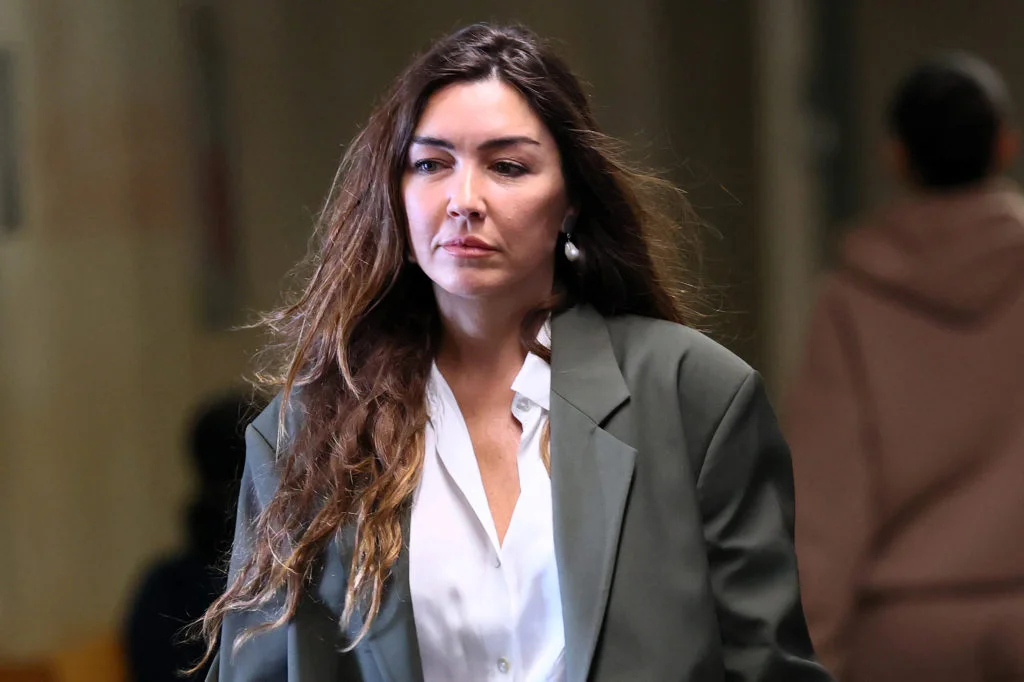
Before Farber announced the sentence, Haley addressed the court and described the lasting effect of the assault as well as the burden of participating in years of criminal proceedings.
Her role in the case has become notable not only because of the verdict, but because of what was required to sustain it.
An overturned conviction meant reopening testimony she had already given publicly. A retrial meant confronting the defence again. The extended appeals and mistrials surrounding the broader Weinstein prosecution ensured that the case remained unsettled long after the original verdict.
Manhattan District Attorney Alvin Bragg praised Haley after the sentencing and pointed to the persistence required to continue participating in the case.
For Haley, however, the hearing was not primarily about Weinstein’s place in Hollywood history or the cultural movement that followed his downfall.
It was the sentencing of a man convicted of assaulting her.
That distinction is important.
More than 100 women have accused Weinstein of sexual misconduct, but Wednesday’s New York sentence concerns one specific criminal conviction.
Harvey Weinstein Asked the Court for Leniency
Weinstein appeared in court using a wheelchair and asked the judge for mercy, citing his age and serious medical problems.
His health has been a recurring issue throughout recent proceedings. His lawyers have pointed to cancer, heart problems and other conditions in arguing for leniency.
Weinstein also expressed regret for pain connected to his conduct, but he did not accept criminal responsibility for the assault.
He again insisted that he was innocent. That contradiction was central to the hearing.
A defendant can ask for mercy while maintaining innocence, but judges are also permitted to consider expressions of remorse and acceptance of responsibility when determining punishment.
Farber indicated that Weinstein’s refusal to accept responsibility weighed against him. The judge also referred to the immense power Weinstein once held in the entertainment industry and the imbalance described by women who encountered him professionally.
Weinstein faced a maximum sentence of 25 years. The judge imposed 15 years.
Harvey Weinstein Still Faces Resentencing in California
The New York sentence is substantial, but it is only part of Weinstein’s legal position.
A Los Angeles jury convicted him in 2022 of rape and sexual assault in a separate case. He was sentenced to 16 years in prison.
That conviction has not been overturned. The sentence, however, must be reconsidered.
A California appeals court ruled that the original sentencing judge had improperly treated Weinstein’s old New York convictions as an aggravating factor. Those convictions were later overturned, making a new California sentencing hearing necessary.
The practical question is now how the California and New York prison terms will interact.
If they are served concurrently, some of the time would overlap. If they are ordered to run consecutively, Weinstein could face a considerably longer period in prison. That issue has not yet been fully resolved.
Farber indicated that the California court will have an important role in determining how the sentences operate alongside one another.
So while the 15-year term is clear, the ultimate length of Weinstein’s imprisonment is not.
How Harvey Weinstein Rose to Power in Hollywood
It is easy, after years of courtroom photographs and prison appearances, to forget the scale of Weinstein’s former influence.
For much of the 1990s and 2000s, he stood close to the centre of American independent cinema.
Through Miramax, which he founded with his brother Bob Weinstein, and later The Weinstein Company, he helped distribute and produce films including Pulp Fiction, Good Will Hunting, Shakespeare in Love, The English Patient and Chicago.
His reputation extended beyond film financing.
Weinstein became famous within Hollywood for aggressive awards campaigning and an ability to position smaller films as serious Oscar contenders. Careers could be accelerated by his support. Projects could gain access to audiences they might otherwise never have reached. That power disappeared rapidly in 2017.
Investigative reports by The New York Times and The New Yorker detailed allegations from numerous women who accused Weinstein of harassment, assault, and abuse.
More accusations followed, and Weinstein was removed from his company. Professional organisations expelled him. The Weinstein Company eventually collapsed.
He denied rape and sexual assault and maintained that sexual encounters had been consensual. The allegations nevertheless became one of the main catalysts for the modern #MeToo movement.
Why the case changed Hollywood
The fallout from the Weinstein revelations reached far beyond the man himself. They forced Hollywood to confront how power, influence, and institutional silence had allowed serious allegations to remain hidden for years.
Studios strengthened workplace policies, complaints began receiving greater scrutiny, and intimacy coordinators became more common on sets. Actors and crew members also became more willing to speak openly about misconduct that might once have been handled quietly.
Still, the industry’s response has been uneven. Questions remain over how allegations should be investigated, what due process should require, and whether the same standards are applied when the accused is commercially valuable.
Weinstein’s own case shows why those questions are difficult.
His original New York conviction was widely seen as a landmark moment in criminal accountability. It was later overturned after an appeals court found that the trial had been unfair. Prosecutors tried him again.
At the retrial, Weinstein was convicted on one charge, acquitted on another, and faced a deadlocked jury on a third. That unresolved allegation led to another trial, another deadlock and, eventually, dismissal after the complainant declined to testify again.
The result is less straightforward than a simple arc of accusation, conviction and punishment. It is also a more realistic picture of how criminal justice can unfold: slowly, unevenly and with far fewer clean endings than public narratives often suggest.
The 15-year sentence is substantial, but the legal process continues
Weinstein’s lawyers are expected to challenge the latest conviction. California still must resentence him. Those proceedings mean the legal story that began years ago is not finished. Yet Wednesday’s ruling still carries considerable weight.
Harvey Weinstein has been sentenced to 15 years in prison after a New York jury, hearing the case under the rules established following the reversal of his first conviction, found him guilty of sexually assaulting Miriam Haley.
For Haley, the sentence comes after years of testimony, appeals and retrials. For Weinstein, it adds a major new term of imprisonment while his separate California conviction remains active.
For Hollywood, the case remains inseparable from a period when questions of power, silence and accountability moved from private conversations to the centre of public life.
That cultural shift began long before the courts finished their work. The courts are still working through the consequences.
Don’t forget to follow us on Facebook | Instagram | Twitter | LinkedIn to get the latest updates from Cape Town Tribune