Paramount Skydance has settled the antitrust challenge brought by California and 11 other states, removing a major obstacle to its Warner Bros. Discovery takeover while accepting significant production, worker and editorial safeguards.
Paramount Warner Bros merger plans have cleared their biggest legal obstacle yet, moving one of Hollywood’s most consequential corporate transactions significantly closer to completion.
Paramount Skydance has reached a settlement with California and 11 other U.S. states that sued to stop its approximately $110 billion acquisition of Warner Bros. Discovery. The agreement ends a legal confrontation that had threatened to delay the transaction well into 2027 and gives Paramount a much clearer path towards completing the takeover.
Chief executive David Ellison has told Paramount employees that the company hopes to complete the Warner Bros. transaction in approximately two weeks, although closing the deal would mark only the beginning of the much larger task of integrating two vast entertainment businesses.
The legal battle may be approaching its end. The harder questions about jobs, film production, streaming strategy and corporate power are only beginning.
Paramount Warner Bros merger faced a possible delay into 2027
The settlement ends a confrontation that had become increasingly costly for Paramount.
California Attorney General Rob Bonta led a coalition of 12 state attorneys general challenging the acquisition on antitrust grounds. The states argued that combining Paramount and Warner Bros. Discovery could reduce competition in theatrical film distribution and basic cable television, potentially resulting in fewer productions, fewer opportunities for workers, and higher costs for consumers.
Earlier this summer, the states secured an agreement that would have prevented the companies from completing the merger until after an antitrust trial or June 1, 2027, whichever came first. That was more than an inconvenient delay.
Paramount also faced financial consequences tied to the transaction if it remained unfinished beyond a specified deadline. Reuters reported that the company could have incurred a roughly $7 million daily fee, adding pressure as the legal dispute continued.
The settlement removes that immediate threat. It also represents a substantial change from only a few months ago, when the merger appeared capable of spending much of the following year in court.
The transaction still requires the remaining legal and administrative steps to be completed, and the settlement itself is subject to court approval. But the state-level challenge that had threatened to keep the companies apart has effectively been resolved.
For Ellison, it is a significant corporate victory. For the states, the outcome is being presented differently: not as an endorsement of consolidation, but as a negotiated attempt to restrict some of its consequences.
Paramount Warner Bros merger comes with strict film commitments
The settlement is unusually detailed for a Hollywood transaction. Rather than forcing Paramount to abandon the acquisition or immediately sell a major studio asset, the states secured a series of financial and operational commitments designed to protect film production, industry workers and competition.
The merged company must release 30 films per year during the first two years following the transaction. That requirement rises to 32 films annually during years three, four and five.
At least four releases each year must be independent films. The agreement also establishes minimum requirements for wide theatrical releases, with 20 required during each of the first two years and 21 in each of the following three years.
Failure to meet those commitments could prove expensive. Paramount could be required to pay $30 million for each film by which it falls short, with substantial portions of the money directed towards entertainment-industry healthcare and retirement funds as well as antitrust enforcement.
The agreement also creates the possibility that Miramax could be divested if certain film-output commitments are not met. That changes the nature of the promise.
Hollywood companies frequently announce ambitious production plans during acquisitions. Those plans can later change as market conditions, executive priorities, or cost-cutting programmes evolve.
Here, the production targets carry enforceable financial consequences.
For an industry that has spent years questioning whether the major studios are making enough theatrical films, that is significant.
At least $1.5 billion more for U.S. production
Another major condition concerns domestic filmmaking. Paramount has committed to spending at least $300 million more each year on U.S. film production than it spent in 2025, amounting to at least $1.5 billion in additional domestic investment over five years.
The timing is important. Film and television production in Los Angeles has faced continuing pressure as studios move projects to locations offering lower costs or more generous tax incentives. At the same time, Hollywood has been adjusting to the consequences of the streaming expansion, labour disputes, corporate restructuring and changing audience habits.
Against that background, a five-year production commitment is not a minor concession. California officials have argued that the agreement gives industry workers something tangible in exchange for allowing the transaction to proceed.
The settlement includes a $47.5 million workforce fund intended to support training and career development for employees affected by the merger. Paramount must also honour existing collective bargaining agreements and continue negotiating with unions in good faith.
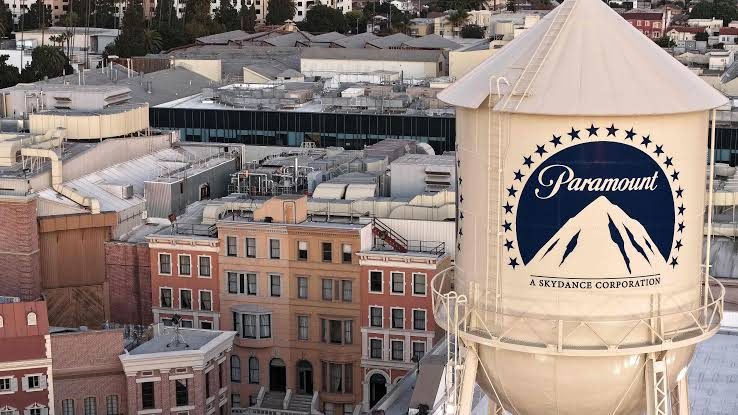
The company has additionally agreed not to sell the historic Paramount and Warner Bros. studio lots in California for at least five years.
For an industry accustomed to mergers being followed by layoffs, spending reductions and property reviews, those commitments will be closely watched.
CNN and CBS become part of the merger debate
The settlement extends beyond movie production. One of its most unusual provisions concerns CNN and CBS News, two major American news organisations that would fall under the same corporate parent once the transaction is completed.
Paramount has agreed to establish a News Editorial Independence Board designed to provide oversight of editorial independence at both organisations.
The arrangement does not remove corporate ownership of either newsroom. It does, however, create an additional layer of scrutiny at a time when questions about media ownership and editorial influence have become increasingly important across the industry.
The states also secured restrictions involving cable negotiations. For five years, Paramount must negotiate carriage fees for its existing basic cable channels separately from those owned by Warner Bros. Discovery.
The provision is intended to prevent the combined company from using its greater scale to package the two sets of channels together when negotiating with television distributors.
Paramount must also maintain a free streaming service comparable to Pluto TV and preserve its current general level of service.
These provisions may appear technical, but they address one of the fundamental concerns behind the states’ challenge: whether a larger company controlling more desirable programming could gain enough bargaining power to affect competition and ultimately consumer prices.
Paramount Warner Bros merger also ends the WGA court fight
The states’ settlement quickly affected another legal challenge. The Writers Guild of America, which had separately attempted to stop the acquisition, also agreed to settle its lawsuit.
The union said it continued to believe the merger could harm writers and the wider entertainment business but acknowledged the practical difficulties of continuing a major antitrust case after the state attorneys general had withdrawn their challenge.
Under the WGA agreement, Paramount will contribute $17.5 million to the guild’s health plan, cover certain legal costs and accept restrictions involving layoffs at CBS News’ broadcast operation for five years.
The union’s decision clears another obstacle from Paramount’s path. It should not, however, be interpreted as organised labour embracing the transaction.
The WGA has continued to express concern about consolidation in Hollywood and its potential effect on employment, bargaining power and the number of companies buying creative work.
The settlement instead reflects a changed legal reality. Once the coalition of states reached its agreement with Paramount, pursuing the case independently became considerably more difficult.
Why Paramount wanted Warner Bros. Discovery
The scale of the proposed company helps explain why the battle became so intense.
Paramount already controls a major film studio, CBS, Paramount+, and cable networks including MTV and Comedy Central.
Warner Bros. Discovery brings Warner Bros. Pictures, HBO, CNN, Max, DC Studios, and a large collection of television channels, film libraries, and globally recognised intellectual property.
Combining them would create one of the most extensive entertainment businesses in the world. Its assets would range from Mission: Impossible and Star Trek to Harry Potter, DC superheroes, HBO programming and Warner Bros.’ century-old film catalogue.
Paramount has argued that greater scale is necessary to compete in an entertainment market increasingly shaped by technology companies and global streaming platforms with enormous financial resources.
Opponents look at the same scale and see a different problem. The states’ original lawsuit argued that combining two major film distributors could weaken competition in a business that has already experienced substantial consolidation. That fundamental disagreement has not vanished simply because a settlement has been made.
Critics question whether the safeguards go far enough
The Paramount-Warner Bros merger continues to face criticism from antitrust advocates and others who wanted regulators to pursue the attempt to block the transaction.
Some critics argue that temporary production guarantees and financial penalties cannot replace the competition that exists when Paramount and Warner Bros. operate as separate businesses.
Others have questioned why the settlement does not require more significant structural remedies, such as forcing Paramount to sell important assets before completing the takeover.
California Attorney General Rob Bonta has defended the agreement while making clear that it should not be viewed as a broad government endorsement of Hollywood consolidation.
His office argues that enforceable production guarantees, additional domestic investment, worker protections and restrictions on cable negotiations address several of the most serious concerns raised by the transaction.
Critics remain unconvinced. They argue that the merged company could still have greater influence over jobs, film distribution, programming costs and the availability of opportunities for writers, directors, producers and other creative workers.
That argument will continue after the lawsuits disappear. The settlement resolves whether the participating states will continue trying to stop the transaction. It does not settle the broader debate over whether Hollywood benefits when already large entertainment companies become even larger.
What the Paramount Warner Bros merger means for Hollywood
For Paramount, the immediate objective is straightforward: complete the acquisition.
What follows will be considerably more complicated. The combined company will inherit overlapping departments, competing streaming strategies, duplicated executive structures and two major film studios that will need to operate within a single corporate system.
There will inevitably be difficult decisions about leadership, spending and organisation.
At the same time, the settlement means Paramount cannot respond to those overlaps simply by reducing theatrical output.
It now has legally enforceable production commitments to meet. That makes the Paramount Warner Bros merger an unusual test for modern Hollywood consolidation: regulators are allowing two enormous entertainment businesses to combine while attaching specific obligations intended to preserve production, employment and competition.
Whether those safeguards are effective will become clearer only after the companies begin operating together.
For cinema owners, the promise of at least 30 theatrical releases annually from the combined business could provide a meaningful pipeline of films.
For workers, the production commitments and workforce fund offer some protection, although they do not eliminate the risk of restructuring.
For rival studios and distributors, a larger Paramount-Warner organisation could alter negotiations across theatrical distribution, television and streaming.
For audiences, the longer-term effect is harder to determine. Greater scale could allow the company to invest more heavily in films and programming. Critics argue that less competition could eventually reduce choice.
Both possibilities will be tested in the years ahead.
What is already clear is that the Paramount Warner Bros merger is considerably closer to becoming reality.
A legal fight that threatened to delay the transaction until 2027 has ended in a negotiated settlement. Paramount has preserved the acquisition it wanted while accepting billions of dollars in production commitments and a collection of restrictions that will shape the combined company for years.
Ellison has told employees the closing could arrive within approximately two weeks.
If that timetable holds, one of Hollywood’s largest corporate combinations will soon leave the courtroom and move into the far more complicated territory of actually combining two entertainment empires. That is where the lasting consequences of the deal will begin.
Don’t forget to follow us on Facebook | Instagram | Twitter | LinkedIn to get the latest updates from Cape Town Tribune