Nepal glacial flood rescue operations are continuing weeks after a catastrophic collapse high in the Himalayas sent ice, mud, rocks and water through mountain valleys, leaving more than 5,000 people missing and devastating communities near the country’s border with China.
At least 1,386 people have been confirmed dead in Nepal, while 5,130 remain missing, according to figures reported by Reuters on September 15. On the Chinese side of the border, at least 43 people have died and 519 are still unaccounted for.
The disaster began on August 26 when a glacier collapsed close to the Nepal-Tibet border, unleashing a destructive flow into river valleys below. The flood swept through settlements, roads, bridges, hydropower facilities and the Gyirong border crossing, an important route connecting Nepal with Tibet.
Nearly three weeks later, the scale of the destruction is still making it difficult for authorities to determine what happened to thousands of people.
For families waiting for news, the uncertainty has become one of the most painful consequences of the disaster.
Families Still Searching After the Nepal Glacial Flood
The missing include local residents, workers at hydropower projects and international travellers who were passing through the border region.
Among them is Arushi Gupta, a 33-year-old Indian consultant who was travelling toward Tibet on a pilgrimage to Mount Kailash when the disaster struck.
Her family last heard from her on August 26 as she approached the Gyirong border crossing. Since then, relatives have travelled to Nepal, visited hospitals, checked official lists and provided DNA samples in the hope of finding information about her whereabouts.
Families of other missing travellers have followed similar routes.
Relatives in several countries have contacted embassies, police departments and government agencies. Some have joined online groups where families exchange information about hospital admissions, identified victims and possible survivors.
The scale of the Nepal glacial flood has made those searches especially difficult. Officials estimate that the disaster left around 2.2 million tonnes of debris across affected valleys, burying buildings and infrastructure beneath mud, rock and sediment.
Authorities in Nepal and China say they are coordinating efforts to identify victims and trace the missing. India has also said it is working with both governments to obtain information about its citizens.
However, the destruction of roads and communications networks has complicated efforts to reach some areas and confirm the fate of those who were caught in the flood.
Rare Rescues Bring Hope Amid a Growing Death Toll
Although hopes of finding more survivors have diminished as time passes, several extraordinary rescues have shown why families continue to wait for answers.
One of the most remarkable involved Sanjay Sah, a 30-year-old mechanical foreman who was working at the Upper Trishuli 3A Hydropower Station when the flood struck.
Sah became trapped inside a tunnel beneath the mountain as floodwaters and debris surrounded the facility.
He survived for nine days without food, drinking available floodwater and water seeping through the mountain. Rescue workers eventually reached him after clearing their way through damaged sections of the hydropower complex.
Sah was one of only a small number of workers pulled alive from tunnels buried by debris. Around 900 hydropower workers are still missing following the disaster.
Search teams have faced difficult conditions throughout the operation.
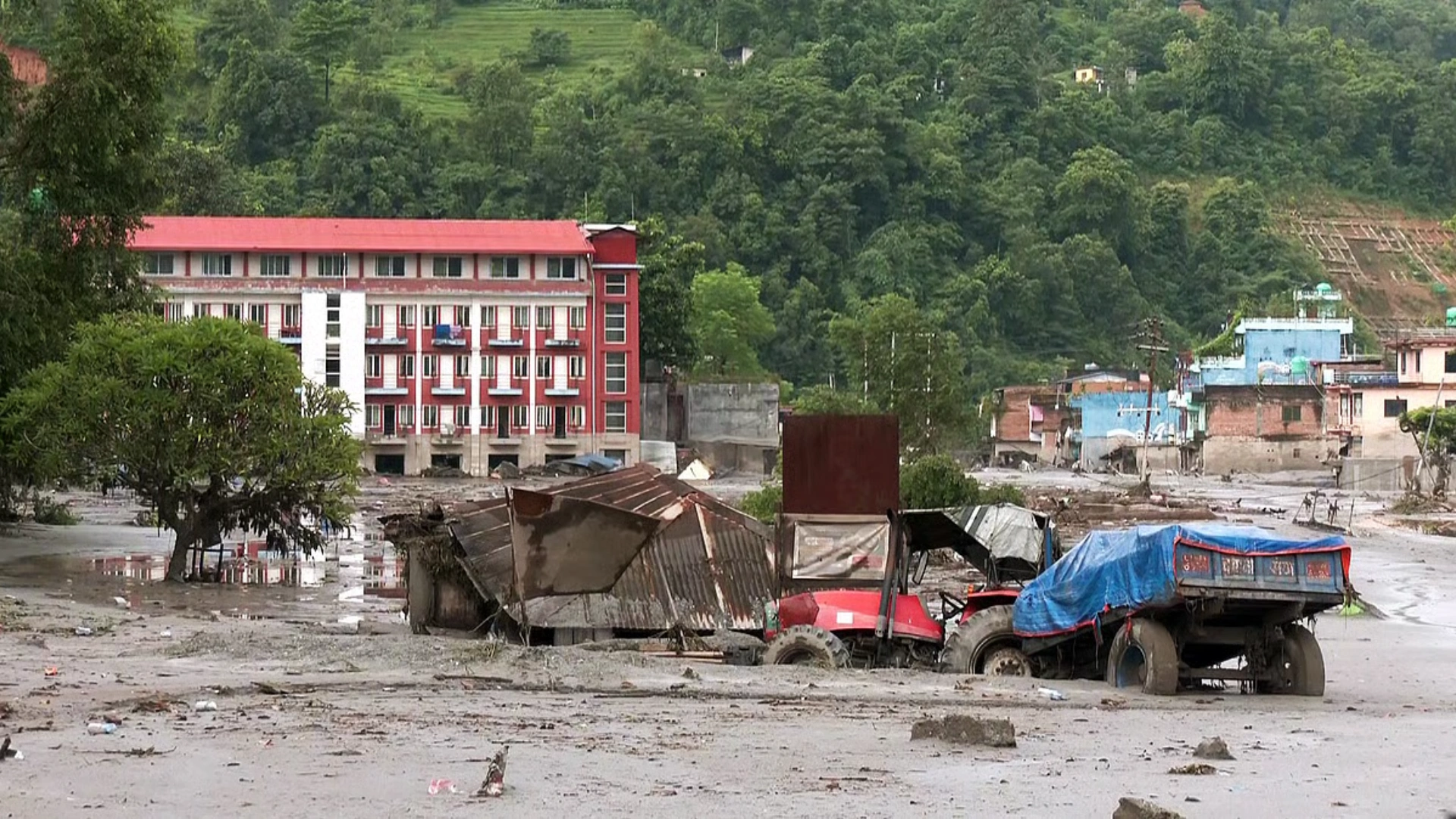
Entire stretches of the Trishuli River valley were covered in thick layers of mud following the flood. In some places, buildings, roads and other signs of settlements were almost completely erased.
The Gyirong border crossing was also destroyed. Photographs and aerial images from the region showed large areas buried under grey sediment and debris.
The terrain has forced rescuers to combine heavy machinery, helicopters and other equipment to reach isolated areas. Nepal’s military has also used cargo drones to deliver food, medicine and other supplies where damaged roads have made conventional transport difficult.
Hydropower Damage Creates a Second Crisis
The Nepal glacial flood has also delivered a severe blow to the country’s electricity system.
More than 12 hydropower plants were swept away or badly damaged, according to Reuters. The destruction eliminated about one-tenth of Nepal’s electricity generation capacity and forced the country to halt power exports.
Hydropower supplies almost all of Nepal’s electricity and had become an increasingly valuable source of export income.
Following the flood, Nepal turned to neighbouring India to meet domestic demand.
India has approved exports of up to 654 megawatts of electricity to Nepal for 18 hours each day until the end of December. The arrangement is intended to help compensate for generation lost in the disaster while Nepal repairs its energy infrastructure.
The damage demonstrates how the consequences of the disaster extend well beyond the immediate search for victims.
Destroyed power plants affect electricity supplies and government revenue. Damaged roads and bridges disrupt trade and access to remote areas. Families whose houses and farmland were destroyed may require support long after emergency rescue operations have ended.
Nepalese officials have estimated property and infrastructure losses at at least 387.5 billion Nepalese rupees, or about $2.56 billion. Authorities have said around 20,000 homes will need to be rebuilt, including at least 7,500 that were completely destroyed.
Nepal Seeks Billions for Reconstruction
The government is now seeking international assistance for a recovery effort expected to take years.
Nepal has said it needs around $5 billion for the initial phase of rebuilding and has approached international financial institutions and foreign governments for assistance.
Officials are presenting the request partly through the issue of climate justice.
Nepal contributes only a small share of global greenhouse gas emissions but is highly exposed to changes affecting the Himalayan environment. Its government argues that poorer countries with limited responsibility for global warming should not be left to carry the financial cost of increasingly severe climate-related risks alone.
Separately, the United Nations and humanitarian partners launched a $49.6 million emergency appeal on September 4 to support more than 84,000 people affected by floods and landslides in northern Nepal.
The four-month response is intended to provide shelter, healthcare, clean water and other essential assistance, particularly as colder conditions approach in high-altitude communities.
What Caused the Nepal Glacial Flood?
Scientists are continuing to examine exactly what caused the August 26 collapse.
Satellite evidence examined shortly after the disaster indicated that a large section of ice, rock and sediment fell from high altitude into the valley below, producing a powerful surge through the river system. Experts said unusually warm conditions may have contributed to instability, although identifying the precise causes requires further study.
That distinction is important.
It would be premature to say that climate change alone caused this specific disaster. Glacier collapses can involve several interacting factors, including terrain, temperatures, ice conditions, water and geological instability.
However, the broader changes affecting Himalayan glaciers are well documented.
Research published by the International Centre for Integrated Mountain Development, or ICIMOD, found that glaciers across the Hindu Kush Himalaya lost about 12% of their area between 1990 and 2020 and around 9% of their estimated ice reserves. The rate of ice loss has accelerated significantly since 2000.
Those changes have implications for both water supplies and natural hazards.
A Wider Himalayan Risk
The Nepal glacial flood is therefore part of a much larger discussion about how countries across the Himalayas prepare for a rapidly changing mountain environment.
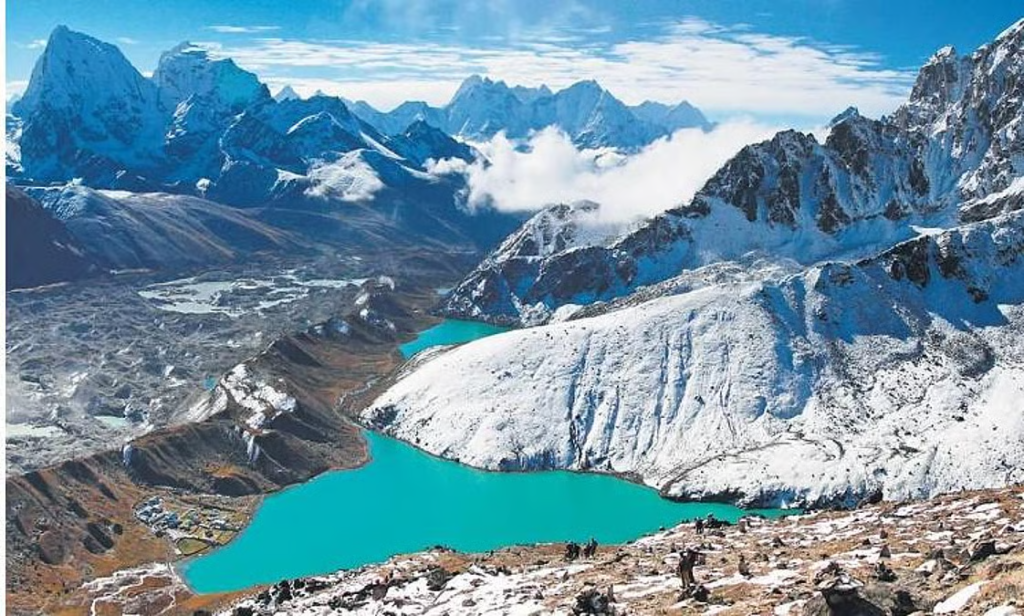
The Hindu Kush Himalayan region contains the largest concentration of ice outside the polar regions. Its snow and glaciers play an important role in river systems serving more than 270 million people in mountain areas and over two billion people downstream.
As glaciers shrink, new risks can emerge.
Melting ice can contribute to the formation and expansion of mountain lakes. Changes in frozen ground can destabilise slopes, while sudden releases of water, rock or ice can threaten settlements, roads and power facilities downstream.
The danger is particularly significant because infrastructure in mountainous areas is often concentrated along narrow river valleys. Hydropower facilities, roads, bridges, villages and trade routes may therefore be exposed to the same hazards.
ICIMOD has called for stronger glacier monitoring, better early-warning systems and greater cooperation between Himalayan countries. Much of the region remains difficult to observe consistently, making it harder for authorities to detect changing risks before disaster strikes.
The issue is also international by nature. Himalayan river systems cross borders, while floods and other mountain hazards can move quickly from one country into another.
That reality was visible on August 26.
A collapse in a remote mountain environment affected communities in Nepal and China, disrupted an international border route, stranded foreign travellers, damaged an electricity system and left families across several countries searching for missing relatives.
What Comes Next After the Nepal Glacial Flood
Nepal’s immediate priorities remain finding the missing, supporting survivors and restoring basic infrastructure.
The longer challenge will be more difficult. Reconstruction will require billions of dollars, but the question is not simply how quickly damaged roads, homes and power plants can be replaced. Authorities will also have to consider whether rebuilding in the same locations and in the same way will leave communities exposed to similar disasters.
That may mean reassessing construction near unstable slopes and rivers, improving monitoring of glaciers and mountain lakes, strengthening evacuation systems and designing critical infrastructure for hazards that may become harder to predict.
The Nepal glacial flood has already transformed thousands of lives. For families still waiting for news, broader debates about climate policy and reconstruction remain secondary to one immediate question: whether the people they are searching for will ever be found.
For Nepal and the wider Himalayan region, however, the disaster also raises a question that will remain long after the search operations end: how to protect communities and essential infrastructure as the mountains around them continue to change.
Don’t forget to follow us on Facebook | Instagram | Twitter | LinkedIn to get the latest updates from Cape Town Tribune