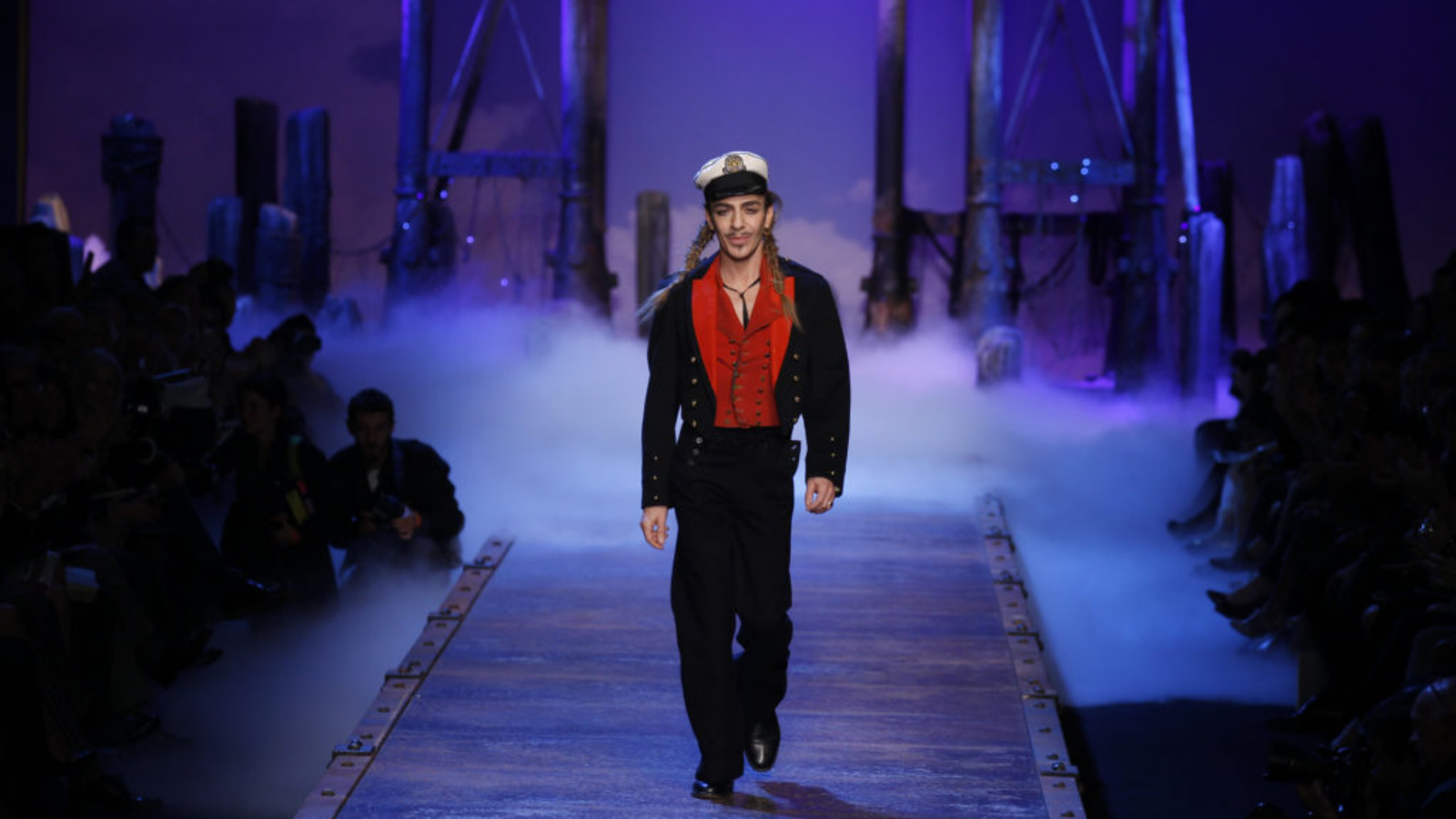
The Metropolitan Museum of Art and John Galliano have abandoned a major 2027 retrospective after criticism over the designer’s antisemitic and racist remarks, reopening a difficult cultural debate over rehabilitation, accountability and what it means when a museum chooses to honour a living artist.
The John Galliano Met exhibition, once positioned as one of the most important fashion retrospectives of 2027, will no longer take place after sustained criticism over the designer’s past antisemitic and racist conduct.
The Metropolitan Museum of Art announced on August 31 that it and Galliano had jointly decided not to proceed with John Galliano: Horizons, which had been scheduled to open in May 2027 as the Costume Institute’s major spring exhibition. The show would also have provided the cultural framework for the 2027 Met Gala. The museum said a replacement exhibition and new details for the gala will be announced later.
The cancellation closes, at least for now, an ambitious attempt by one of the world’s most influential museums to present Galliano’s extraordinary creative legacy alongside the conduct that destroyed his career at Christian Dior in 2011.
It also raises a larger question extending far beyond fashion: when an artist has caused serious public harm, can a cultural institution examine the work without appearing to rehabilitate the person?
Why the John Galliano Met exhibition was cancelled
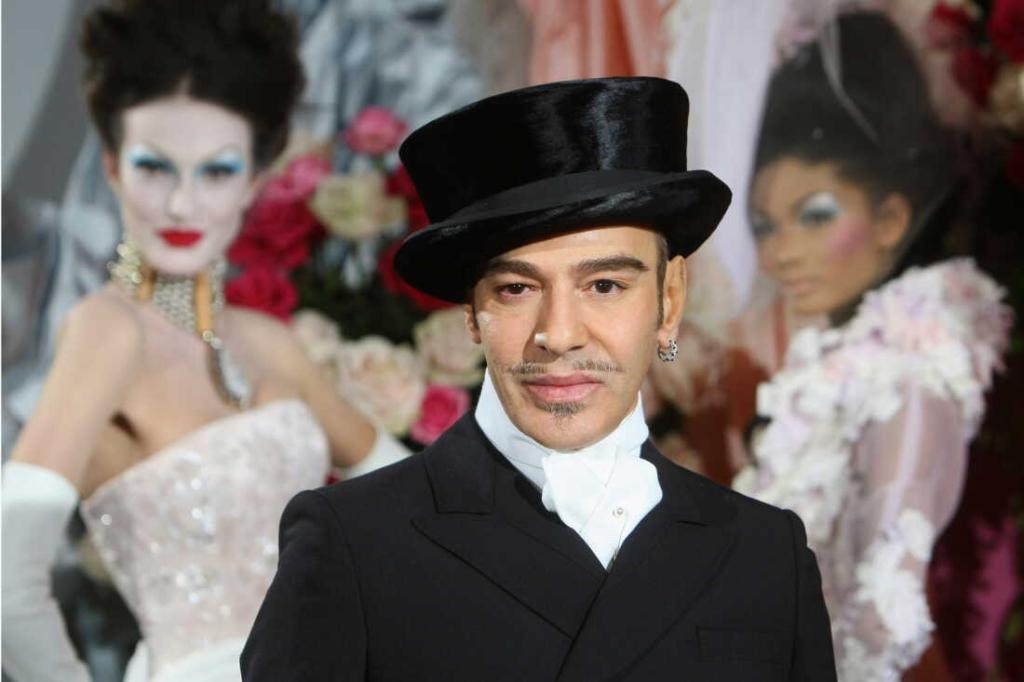
The Met initially announced John Galliano: Horizons at the end of July. The exhibition was intended to examine four decades of Galliano’s work, from his celebrated 1984 Central Saint Martins graduation collection through his own label, Givenchy, Christian Dior and Maison Margiela. Had it gone ahead, Galliano would have become only the third living designer to receive a solo Costume Institute retrospective, following Yves Saint Laurent in 1983 and Rei Kawakubo in 2017.
But the announcement quickly drew opposition.
Critics argued that whatever curatorial context the museum planned to provide, a major solo exhibition at the Met still carried the weight of institutional recognition. That concern became especially sensitive because the Met Gala traditionally takes place on the first Monday in May. In 2027, that date falls on May 3, the beginning of Yom HaShoah, or Holocaust Remembrance Day.
New York City Council Speaker Julie Menin, the daughter of a Holocaust survivor, was among those who publicly opposed the exhibition. She said she had met with museum officials several times to express concerns and described the proposed show as deeply painful at a time of heightened concern about antisemitism.
Jonathan Greenblatt, chief executive of the Anti-Defamation League, also criticised the decision to stage the retrospective at this moment. The organisation had previously acknowledged Galliano’s efforts to apologise and repair some of the damage caused by his conduct, but Greenblatt argued that giving him such a prominent institutional platform was the wrong decision in the current climate.
Galliano says he remains accountable for the harm he caused
In the joint announcement, Galliano said he had concluded that the exhibition should not proceed after discussions with the Met and others involved in the project.
He acknowledged the continuing pain caused by his past behaviour and said he remained accountable particularly for the harm done to Jewish and Asian communities. Galliano also said that meaningful atonement could not be achieved through an exhibition or a single act of institutional recognition, but required continuing responsibility over time.
Met director and chief executive Max Hollein said the decision followed extensive discussions with the designer. Costume Institute curator Andrew Bolton also supported cancelling the show, saying museums have a responsibility to confront difficult histories while recognising the pain and concern the proposed exhibition had caused.
Anna Wintour, a Met trustee and the longtime figure overseeing the Met Gala, called Galliano’s decision to withdraw from the exhibition courageous and said both he and the museum had her support.
The language of those statements is significant. Rather than arguing that the original curatorial concept was indefensible, the museum appears to have concluded that the cultural meaning of mounting the exhibition had become inseparable from the controversy surrounding it.
The scandal that ended John Galliano’s career at Dior
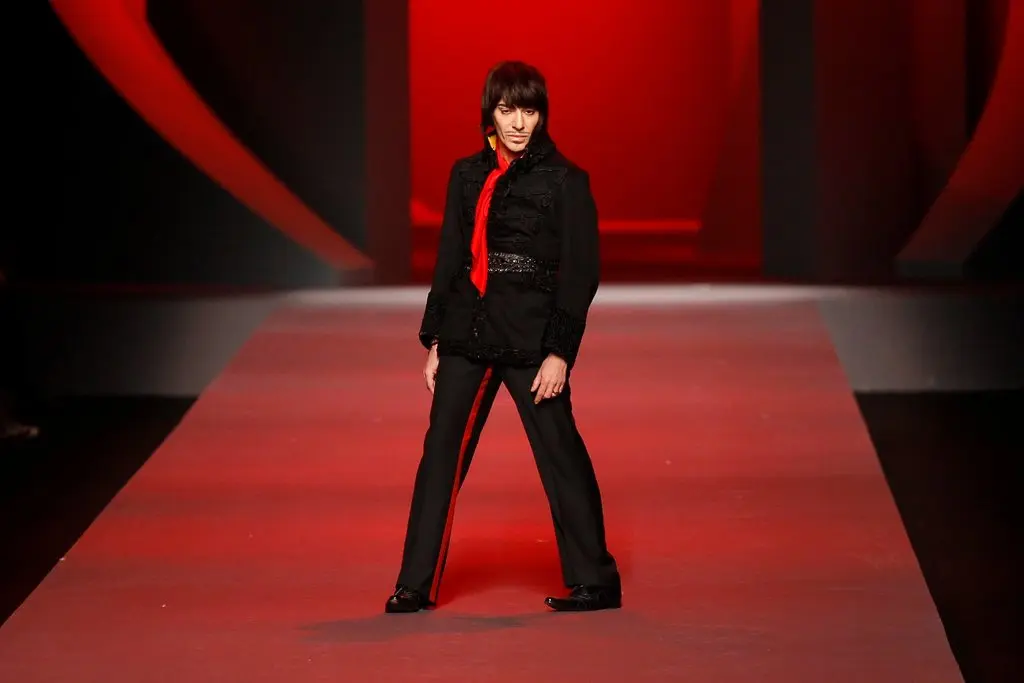
Any discussion of the cancelled exhibition begins with the events that transformed Galliano from one of fashion’s most celebrated designers into one of its most controversial figures.
Galliano was creative director of Christian Dior when videos and reports emerged in 2011 showing him making antisemitic and racist remarks during incidents in Paris. Dior dismissed him, and a French court later found him guilty of public insults based on race, religion, ethnicity, or origin.
One widely circulated video showed Galliano praising Hitler and making deeply offensive comments about Jewish people. Other reported remarks targeted Asian individuals. The episodes abruptly ended his position at Dior and severely damaged the reputation he had built over decades.
Galliano subsequently apologised, entered treatment and spent several years largely removed from the highest levels of fashion.
His professional rehabilitation began in earnest in 2014 when he was appointed creative director of Maison Margiela. He remained at the house for a decade, eventually producing some of the most critically acclaimed work of his later career before leaving in 2024.
That comeback is precisely what made the proposed Met retrospective culturally complicated.
Galliano’s return to fashion demonstrated that an industry can restore professional standing after scandal. A major museum retrospective, however, carries a different kind of authority.
What the Met had planned to do with ‘John Galliano: Horizons’
The Met had not intended to ignore Galliano’s past. Its original curatorial plan explicitly stated that the exhibition would examine both his creative achievements and the conduct that changed the course of his career.
The proposed show was divided into three sections. The first would have directly confronted Galliano’s antisemitic, racist and anti-Asian conduct and the consequences that followed. Other sections would have examined his inspirations, historical references, craftsmanship, experimentation and technical innovation.
The exhibition was also expected to draw heavily from the Costume Institute’s collection of Galliano material, which the museum describes as the largest of its kind. Planned objects included garments, sketches, toiles, research books and archival material spanning his career from Central Saint Martins to Dior and Maison Margiela.
The curatorial proposition was therefore more complicated than a straightforward celebration.
The Met wanted to ask whether an artist’s creative achievements could be studied alongside serious ethical failures, rather than separating one from the other.
In its initial announcement, the museum described the exhibition as an attempt to examine how artistic achievement should be understood alongside ethical accountability.
The problem was that critics did not necessarily object to studying Galliano.
They objected to the difference between studying a controversial figure and honouring one.
When does a retrospective become an honour?
That distinction lies at the centre of the cultural dispute. Museums routinely display work created by people whose lives, politics or behaviour are troubling. Historical collections would become nearly impossible to interpret if institutions excluded every artist whose actions violated modern ethical standards.
But a retrospective devoted to a living designer works differently.
It is not simply the presence of an object in a permanent collection. It is an institution deciding that one person’s career deserves sustained attention, scholarship, gallery space, publicity and, in this case, association with one of the most visible cultural events in the world.
That symbolic power becomes even greater at the Costume Institute. The Met Gala is no longer merely a museum fundraiser.
It is a global celebrity event whose red carpet generates enormous attention for the exhibition it launches. To become the subject of the spring Costume Institute show is therefore to receive not only scholarly examination but extraordinary cultural amplification.
Galliano would have joined an exceptionally small group of living designers to receive that treatment.
For opponents of the exhibition, that distinction weakened the museum’s argument that difficult history could simply be incorporated into the show.
Why Galliano remains so important to fashion history
The controversy is particularly difficult because Galliano’s influence on modern fashion is substantial.
From his Central Saint Martins graduate collection in 1984 through his work at Givenchy, Dior and Maison Margiela, he became known for transforming historical research into theatrical fashion narratives.
His shows frequently drew on literature, painting, cinema, historical dress and elaborate fictional characters. At Dior, he helped define the era when superstar designers became public personalities capable of shaping the identity of global luxury houses.
At Maison Margiela, Galliano developed another chapter of his career by working within a house associated with deconstruction and anonymity. His final Artisanal collection for the label in 2024 received widespread critical attention and reinforced his standing among designers, editors and fashion historians.
His influence is one reason the Met originally considered the retrospective worthy of its galleries. It is also why the cancellation does not settle the underlying question.
Galliano’s work will continue to exist in museum collections, fashion archives and the work of designers influenced by him. What has changed is whether a major institution should centre that legacy in a celebratory cultural moment while the designer himself is still alive.
The cancellation reflects a changing role for museums
The debate surrounding the John Galliano Met exhibition also reflects changing expectations of museums.
Cultural institutions are increasingly being asked not only what they exhibit, but how they frame it, who receives institutional prestige and whose experiences are considered when those decisions are made.
That pressure has affected museums across debates involving colonial collections, restitution, controversial donors, political histories and artists accused or convicted of serious wrongdoing.
The Galliano dispute belongs to the same broader conversation.
Museums traditionally present themselves as places capable of creating intellectual distance around difficult subjects. But audiences increasingly recognise that exhibition-making is itself an act of cultural power.
Selecting a subject, securing loans, publishing scholarship, staging a gala and putting an institution’s name behind an exhibition all shape how that person enters cultural history.
In that sense, the controversy was never simply about whether Galliano’s dresses should be displayed. It was about what the display meant.
Can cultural rehabilitation ever be complete?
Galliano’s case also complicates the language of redemption. There is considerable evidence that his fashion career has already undergone a form of professional rehabilitation.
He returned to a major design role, spent 10 years at Maison Margiela, and has continued to receive recognition for his creative influence. In 2026, he also entered a new creative partnership with Zara.
At the same time, rehabilitation is not necessarily the same as absolution.
An apology can be accepted by some people and rejected by others. Professional success can return without erasing the original harm. Institutions can acknowledge personal change while still deciding that a particular form of recognition is inappropriate.
Galliano appeared to recognise that distinction in withdrawing from the exhibition, saying that atonement was an ongoing responsibility rather than something achieved through institutional approval.
That may become the most consequential part of the episode. The cancellation suggests that cultural rehabilitation is not a single threshold that, once crossed, restores every form of recognition that existed before a scandal.
Different institutions may draw that boundary in different places.
What happens to the 2027 Met Gala now?
For the Costume Institute, there is also an immediate practical problem.
John Galliano: Horizons had been scheduled to run from May 2027 into January 2028, with the Met Gala serving as the high-profile launch for the spring exhibition.
The museum now has to replace a show that had already been extensively researched and developed, while also creating a new concept for a global event whose theme influences everything from celebrity dressing to sponsorship, exhibition design and international media coverage.
The Met has not yet revealed the replacement exhibition. Its August 31 statement said information about the new spring 2027 Costume Institute show and the 2027 Met Gala would be announced at a later date.
The cancellation therefore leaves one of fashion’s most closely watched annual events temporarily without its planned centrepiece.
A controversy bigger than fashion
The disappearance of John Galliano: Horizons from the Met calendar does not resolve the questions the exhibition was designed to explore.
If anything, it makes them harder to ignore.
Galliano remains an influential designer whose work belongs to the history of contemporary fashion. He is also a public figure whose antisemitic and racist conduct caused lasting harm and became inseparable from that history.
The Met originally hoped to put both realities inside the same galleries.
The backlash demonstrated that for many critics, the problem was not whether those realities could be examined together. It was whether examination needed to come in the form of a prestigious solo retrospective attached to the Met Gala.
That tension is unlikely to disappear with the exhibition.
For museums, universities, publishers, film institutions and other cultural gatekeepers, the same question keeps returning in different forms: what is the difference between documenting cultural importance and conferring cultural honour?
The Met has now drawn that line, at least in this case.
The John Galliano Met exhibition will not open in 2027. The debate it provoked about art, accountability and institutional recognition is likely to last much longer.
Don’t forget to follow us on Facebook | Instagram | Twitter | LinkedIn to get the latest updates from Cape Town Tribune