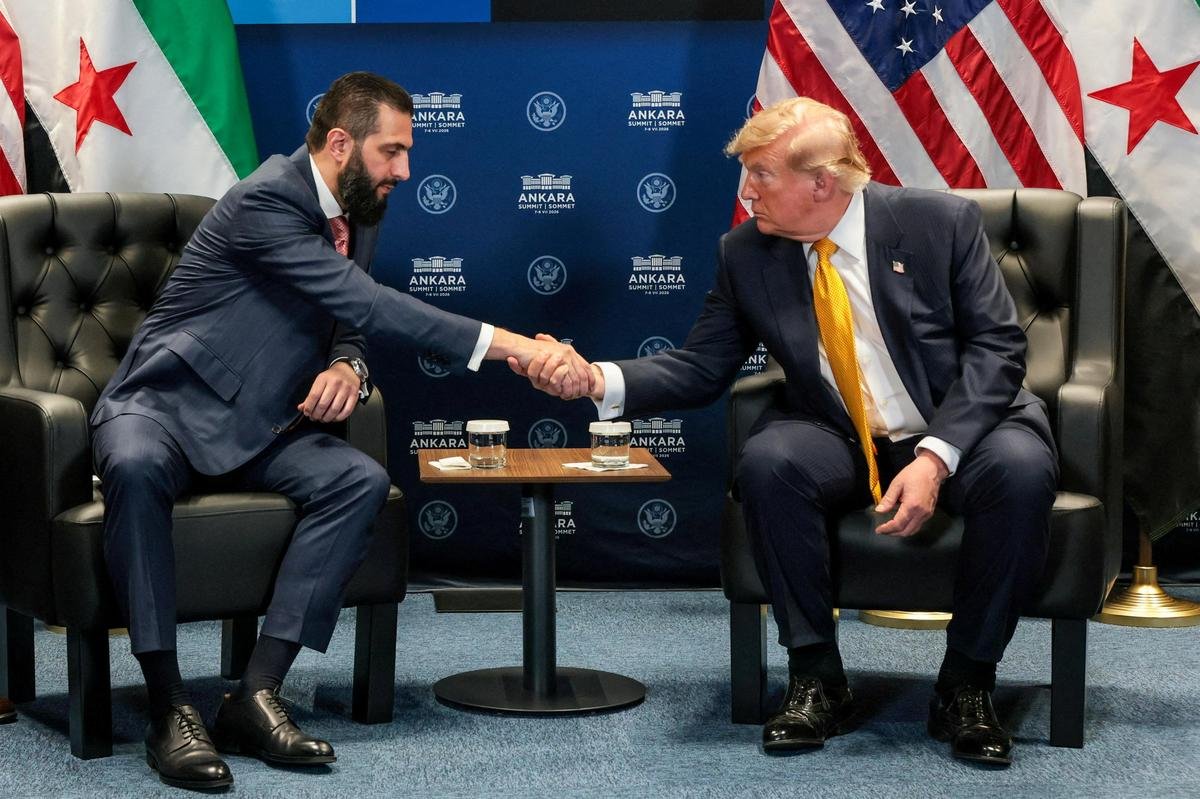

Washington has formally removed Syria from the US State Sponsors of Terrorism list after nearly 47 years, eliminating one of the most consequential legal and financial barriers still separating the war-damaged country from international investment and the global banking system.
US Secretary of State Marco Rubio authorised the rescission on August 24, 2026, after a mandatory 45-day congressional notification period expired. President Donald Trump had formally notified Congress of the administration’s intention to remove Syria’s designation on July 8.
The decision marks a dramatic shift in US-Syria relations following the fall of Bashar al-Assad in December 2024 and the rise of President Ahmed al-Sharaa’s government.
Syria has carried the State Sponsor of Terrorism designation since December 1979, making it one of the longest-standing countries on the US list. Cuba, Iran, and North Korea are now the only three countries that remain designated.
For Syria, however, the immediate significance is economic. The removal could make it substantially easier for international banks, payment companies, and investors to consider participating in a reconstruction effort that the World Bank estimates could cost around $216 billion.
Why the US Removed Syria From the Terrorism List
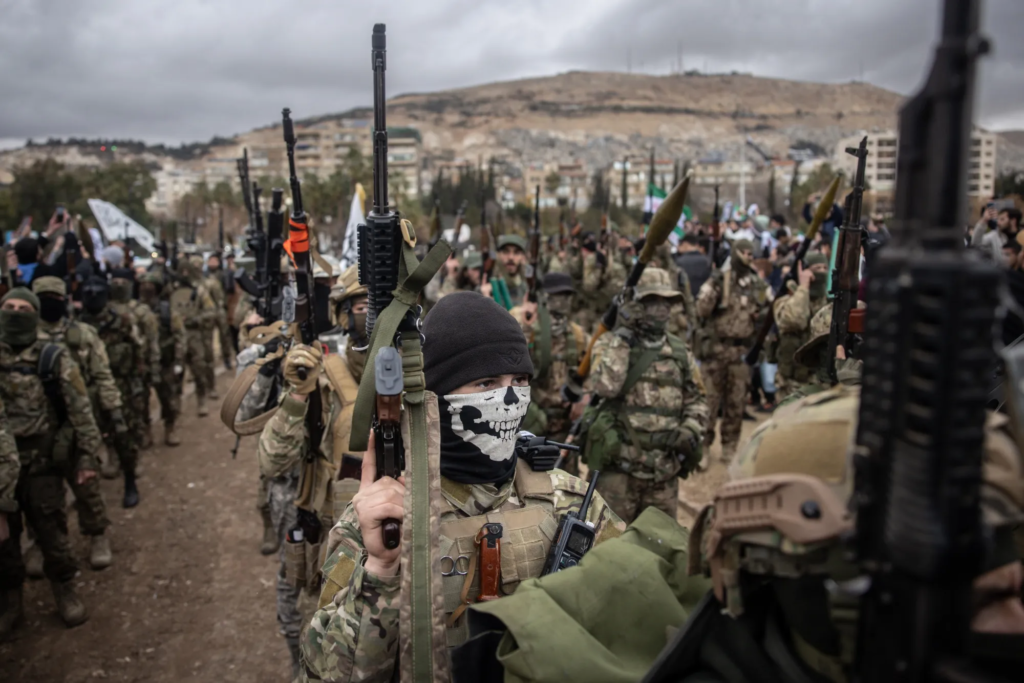
Rubio said the decision reflected changes undertaken by Syria’s new government and commitments made by President al-Sharaa to distance the country from international terrorism.
The State Department said the al-Sharaa government has taken steps against ISIS, al-Qaeda, Hezbollah and Iran-aligned groups and formally joined the Global Coalition to Defeat ISIS in November 2025.
The legal process was not instantaneous. Under US law, the administration had to certify that Syria’s government had not provided support for acts of international terrorism during the preceding six months and had provided assurances that it would not do so in the future.
Congress then had a 45-day review period before the rescission could take effect. The Congressional Research Service outlined those requirements in July, citing provisions of the Foreign Assistance Act, Arms Export Control Act, and Export Control Reform Act.
That period has now concluded. The administration also removed Hay’at Tahrir al-Sham’s designation as a Specially Designated Global Terrorist entity. HTS, formerly associated with the Nusra Front, played the leading role in the rebel coalition that removed Assad from power.
Al-Sharaa himself previously led the Nusra Front before breaking ties with al-Qaeda in 2016. His transformation from militant commander to Syrian president has been one of the most striking elements of the country’s post-Assad political transition.
What Syria’s State Sponsor of Terrorism Designation Actually Meant
The Syria State Sponsor of Terrorism designation carried consequences far beyond diplomatic symbolism.
Countries on the US list can face restrictions covering:
- US foreign assistance
- defence exports and arms sales
- exports of certain dual-use technology
- financial transactions
- additional compliance requirements for banks and businesses
For multinational companies, this created another problem: risk.
Even when a particular transaction was legally possible, banks and corporations could decide that operating in Syria created too much regulatory, sanctions, or reputational uncertainty.
That reluctance became especially important after Washington had already dismantled much of its broader Syria sanctions architecture.
The terrorism designation, therefore, remained what Syrian officials described as one of the country’s last major obstacles to rebuilding normal international commercial relationships.
The US Had Already Lifted Most Broad Syria Sanctions
The latest decision should not be confused with the beginning of US sanctions relief.
Washington had already undertaken a series of major changes.
In June 2025, Trump signed an executive order terminating the comprehensive US Syria sanctions programme. The order took effect on July 1, 2025.
The US Treasury subsequently removed 518 individuals and entities sanctioned solely under the previous Syria programme from its Specially Designated Nationals list.
Congress later repealed the Caesar Syria Civilian Protection Act in December 2025, according to the Congressional Research Service. That law had been particularly important for foreign investors because it created the possibility of sanctions against third parties involved in key sectors of the Syrian economy.
By June 2026, the US government said it no longer maintained a comprehensive sanctions programme against Syria.
The August 2026 terrorism delisting therefore completes another major part of a much wider dismantling of the restrictions imposed during the Assad era.
Sanctions Have Not Completely Disappeared
The removal does not mean Syria has suddenly become free of all US sanctions restrictions.
Washington continues to maintain targeted measures against individuals and organisations, including Bashar al-Assad and his associates, human-rights abusers, Captagon traffickers, people linked to Syria’s former weapons-proliferation activities, ISIS and al-Qaeda affiliates, and Iranian proxies.
This distinction matters for businesses considering entering the Syrian market.
Banks will still need to conduct sanctions screening and ensure payments do not involve prohibited individuals or entities.
The US Treasury has said American financial institutions can provide services involving Syria, process payments through Syrian banks and establish correspondent banking relationships, provided sanctioned parties are not involved.
So while a major regulatory wall has come down, compliance requirements remain.
Why Syria Needs Foreign Investment
The scale of Syria’s economic reconstruction challenge helps explain why Damascus pushed so hard for the terrorism designation to be removed.
More than a decade of conflict devastated housing, transportation networks, electricity systems, businesses, and public infrastructure.
A World Bank assessment published in October 2025 estimated Syria’s reconstruction needs at $216 billion.
The bank estimated direct physical damage at roughly $108 billion, including:
- $52 billion in infrastructure damage
- $33 billion in residential buildings
- $23 billion in non-residential buildings
Nearly one-third of Syria’s pre-war capital stock had been damaged, according to the assessment.
The economic destruction has been equally severe. The World Bank estimates that Syria’s real GDP declined by nearly 53% between 2010 and 2022, while nominal GDP fell from about $67.5 billion in 2011 to an estimated $21.4 billion in 2024.
Those figures explain why sanctions relief alone cannot rebuild Syria.
Damascus needs capital, functioning banks, trade finance, payment infrastructure, foreign companies, and confidence that investments can operate without unexpectedly falling foul of US restrictions.
Global Banks and Payment Companies Are Already Watching Syria
Signs of renewed commercial interest were visible even before the final Syria terrorism designation was removed.
Reuters reported that Syrian Finance Minister Mohammad Yisr Barnieh recently held discussions with Bank of America executives concerning possible cooperation and Syria’s reintegration into the international financial system.
Syrian officials said representatives of the US bank expressed interest in continuing discussions and potentially visiting the country. That should not be interpreted as a confirmed investment, but it illustrates the changing commercial environment.
Mastercard has moved further. The payments company announced in May that it was working with QNB Group and the Central Bank of Syria on preparations for international card-payment infrastructure.
Connecting Syrian businesses and consumers to international payment networks would be an important part of normalising the country’s financial system after years of isolation.
Syria Wants Back Into the Global Financial System
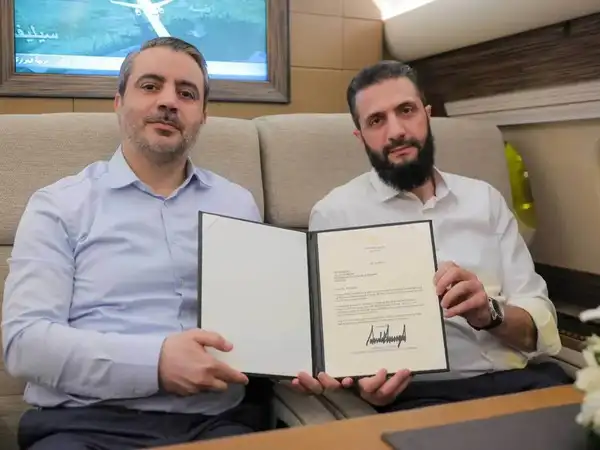
Syrian Foreign Minister Asaad al-Shibani described the terrorism designation as the country’s “last obstacle” to greater international economic integration.
Speaking to Reuters before the formal decision, he said Damascus hoped its removal would reconnect Syria with international financial and economic networks and help revive investment.
That is likely to be tested quickly. Removing a US designation can eliminate legal restrictions, but it does not automatically persuade international banks to reopen relationships.
Financial institutions will still assess Syria’s political stability, security situation, governance, legal institutions, and exposure to sanctioned individuals.
Many international lenders also have years of compliance policies built around avoiding Syria altogether. Reversing those policies may take time.
Washington and Damascus Have Been Moving Closer
The removal also reflects a broader geopolitical realignment. Relations between Washington and Damascus have changed dramatically since the end of Assad’s rule.
Trump has increasingly engaged with al-Sharaa, including direct meetings between the two leaders.
Reuters reported that the terrorism delisting followed months of negotiations involving both Syria’s security policies and its foreign relationships.
As part of those discussions, Damascus agreed to drastically reduce imports of Russian oil, according to three sources familiar with the negotiations cited by Reuters earlier in August.
That development points to a wider strategic calculation. Washington’s engagement with the new Syrian government is not solely about sanctions. It also provides the United States with an opportunity to reduce Russian and Iranian influence in a country where both powers maintained deep ties under Assad.
The Bigger Test Is What Investors Do Next
The removal of Syria from the US State Sponsors of Terrorism list represents one of the most important changes to the country’s international economic position in decades. But legal permission and actual investment are two different things.
Syria still faces enormous challenges: damaged infrastructure, weak institutions, an underdeveloped banking sector, internal security risks and continued humanitarian needs.
The Congressional Research Service estimated in July that around 15.6 million Syrians, roughly two-thirds of the population, required humanitarian or protection assistance as of May 2026. Millions more remained displaced internally or as refugees in neighbouring countries.
Investors will therefore be watching whether the government can maintain security, protect minorities, strengthen institutions, and continue cooperating against extremist organisations.
Washington has made clear that targeted sanctions remain available if destabilising actors threaten Syria’s peace, security or territorial integrity.
For Damascus, however, the immediate message is unmistakable.
After nearly 47 years on Washington’s terrorism blacklist, one of the most persistent barriers between Syria and the international financial system has been removed.
Whether that produces the scale of investment required for Syria’s estimated $216 billion reconstruction challenge will now depend less on the existence of a blanket US designation and more on whether investors believe the country’s political and economic transition can endure.
Don’t forget to follow us on Facebook | Instagram | Twitter | LinkedIn to get the latest updates from Cape Town Tribune