
An Ebola outbreak sweeping through the Democratic Republic of the Congo has now infected more than 5,500 people, with the death toll climbing above 2,600 as health authorities struggle to slow the spread of the virus.
Latest government figures put the number of confirmed cases at 5,515 and deaths at 2,642, meaning nearly half of those recorded as infected have died.
The worsening crisis has already become the deadliest Ebola epidemic in Congo’s history and is placing mounting pressure on health workers operating in regions affected by conflict, displacement and limited medical infrastructure.
The scale of the emergency has also prompted Pope Leo to appeal for greater international support, while health agencies continue to call for more funding, stronger surveillance and greater community involvement.
Ebola Death Toll Approaches 2,650
The latest figures underline how quickly the outbreak has expanded since it was declared earlier this year.
With 2,642 deaths among 5,515 confirmed cases, the reported case-fatality rate is approaching 48%.
Health authorities have continued to detect new infections in some of the areas hardest hit by the epidemic, particularly in eastern and northeastern parts of the country.
The numbers have risen rapidly despite extensive contact tracing and other containment measures.
The World Health Organization has described the epidemic as the fastest-growing Ebola outbreak recorded in Congo, with the pace of transmission exceeding that seen during several previous emergencies.
Officials have stressed, however, that case totals can differ slightly between government and international health agency reports because data is published at different cut-off times.
Congo Faces Its Deadliest Ebola Crisis
The current epidemic has now surpassed the country’s previous record outbreak, which ran from 2018 to 2020.
That crisis resulted in more than 3,300 infections and over 2,200 deaths.
The latest outbreak has already exceeded both figures.
Congo has dealt with repeated Ebola emergencies since the virus was first identified near the Ebola River in 1976, giving the country some of the world’s most experienced response teams.
But familiarity with the disease has not made the present crisis easy to control.
The virus is spreading across areas where armed groups remain active, health systems are under severe strain, and large numbers of people regularly move between communities.
Those conditions can make identifying patients, tracing contacts, and isolating suspected cases significantly more difficult.
Why This Ebola Outbreak Is Different
One of the most important differences in the current crisis is the strain of Ebola responsible for it.
The epidemic is being driven by the Bundibugyo Ebola virus, rather than the Zaire strain responsible for several of the world’s best-known outbreaks.
That distinction matters because vaccines and treatments developed for one Ebola species do not automatically provide the same level of protection against another.
There is currently no licensed vaccine specifically approved for preventing Bundibugyo Ebola.
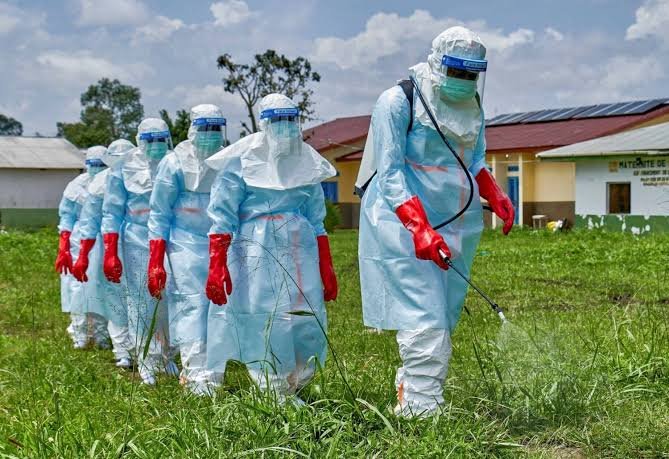
Health authorities are therefore relying heavily on the public-health measures that have historically been critical to controlling the disease: identifying infected people quickly, tracing everyone they have been in contact with, isolating suspected cases and ensuring safe treatment and burial practices.
Those measures become far harder to carry out when insecurity prevents response teams from reaching communities.
Conflict Is Making the Response More Difficult
Much of the Ebola outbreak is concentrated in eastern Congo, a region that has endured years of armed conflict and mass displacement.
Violence has disrupted hospitals, displaced communities, and made it difficult for health workers to maintain consistent surveillance.
Medical teams have themselves faced attacks.
Health workers are particularly vulnerable because caring for Ebola patients can bring them into direct contact with infected blood and other bodily fluids.
Dozens of medical personnel have died during the current epidemic, while many more have been infected.
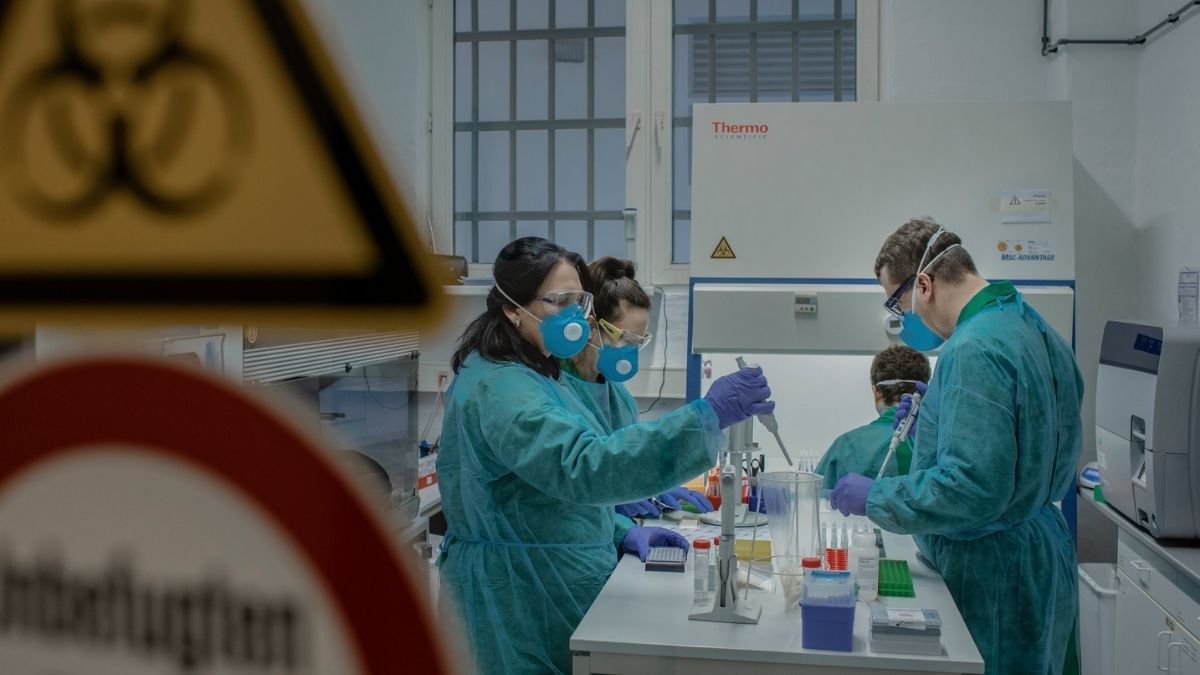
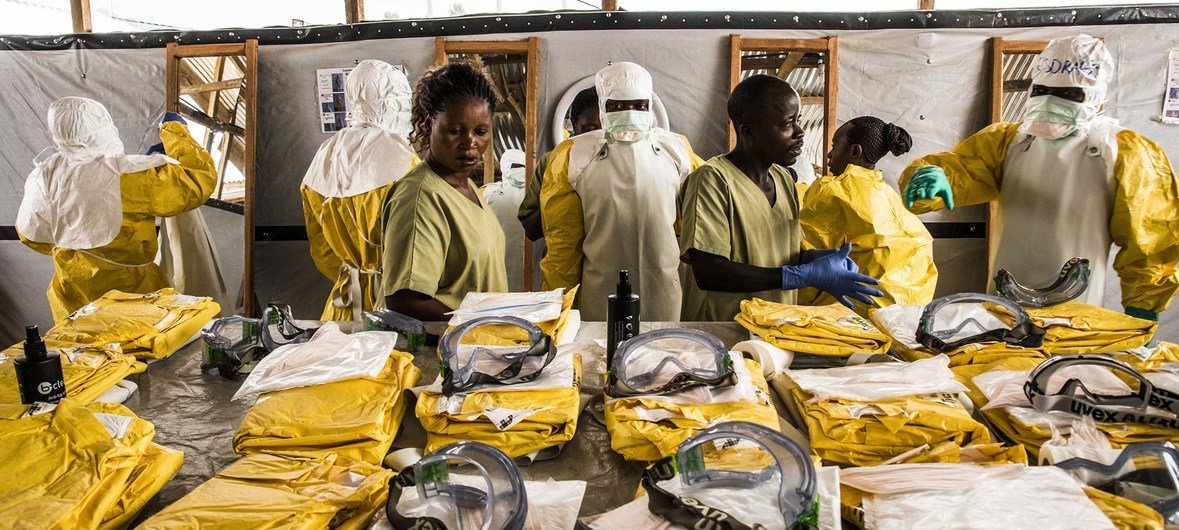
Protecting doctors, nurses, laboratory workers, and community responders has therefore become one of the central challenges of the international response.
The loss of medical staff also creates problems beyond Ebola by weakening already stretched health services that communities depend on for everyday care.
How Ebola Spreads
Ebola does not normally spread through casual airborne transmission in the way diseases such as influenza or COVID-19 can.
The virus is primarily transmitted through direct contact with the blood or bodily fluids of an infected person, particularly once symptoms have developed.
People can also become infected through contaminated objects or contact with the bodies of people who have died from the disease.
Early symptoms may include fever, extreme tiredness, muscle pain, headache, and sore throat. Patients can later develop vomiting, diarrhoea, rashes and, in severe cases, internal or external bleeding.
Fast diagnosis and supportive medical treatment can improve a patient’s chances of survival.
That makes early detection especially important in remote areas where people may have to travel considerable distances before reaching a properly equipped treatment centre.
Vaccine Effort Expands as Scientists Search for Protection
Health agencies are also exploring whether existing Ebola vaccines can help reduce transmission.
Tens of thousands of vaccine doses have been allocated to Congo, including supplies intended for frontline workers and clinical research.
One focus is determining whether vaccines originally developed against the Zaire strain can provide useful protection against the Bundibugyo virus responsible for the current epidemic.
The research could have implications well beyond the present emergency.
If scientists can establish effective protection against additional Ebola species, health authorities will have more options during future outbreaks.
For now, however, vaccination remains only one part of a much broader response.
Contact tracing, rapid testing, access to treatment, and cooperation from affected communities remain essential.
Pope Leo Calls for Greater International Support
The growing death toll has drawn attention well beyond Central Africa.
Pope Leo has appealed to the international community to support efforts to contain the disease while ensuring local communities are closely involved in the response.
That involvement is particularly important with Ebola.
Previous outbreaks have shown that mistrust, misinformation, and fear can discourage patients from reporting symptoms or cooperating with health teams.
Public-health officials therefore increasingly work with local leaders, religious figures and community organisations to explain how Ebola spreads and why measures such as isolation and contact tracing are necessary.
Winning that trust can be as important as supplying medicines or protective equipment.
Funding Remains a Major Challenge
International health agencies have repeatedly warned that the response requires substantially more money.
Funding is needed to operate treatment centres, transport medical teams, run laboratories, provide protective equipment, and trace thousands of people who may have been exposed to infected patients.
Shortfalls can quickly translate into slower testing, delayed isolation of cases, and reduced ability to reach remote communities.
Those delays give the virus additional opportunities to spread.
The situation is particularly challenging in a country as geographically large as the Democratic Republic of the Congo, where transport links between many communities remain limited.
Is the Ebola Outbreak a Global Threat?
Despite the severity of the crisis inside Congo, international health authorities currently consider the global risk from the Ebola outbreak to be low.
That assessment does not mean the epidemic is being treated lightly.
Movement across provincial and national borders means authorities in neighbouring countries must remain alert for possible imported cases.
Health agencies have strengthened surveillance around affected areas and continue working with neighbouring governments on preparedness.
There are also reasons for cautious optimism.
Previous Ebola outbreaks have repeatedly shown that transmission can be stopped when cases are identified quickly, contacts are monitored, and communities cooperate with health teams.
Several areas affected during the present epidemic have already demonstrated that those methods can interrupt local transmission.
The challenge now is achieving the same result across all remaining hotspots.
With cases above 5,500 and deaths exceeding 2,600, Congo is facing an Ebola emergency on a scale it has never experienced before.
Health officials maintain that the epidemic can still be contained, but doing so will depend on whether response teams receive the resources, access, and community support needed to break the remaining chains of transmission.
Don’t forget to follow us on Facebook | Instagram | Twitter | LinkedIn to get the latest updates from Cape Town Tribune