
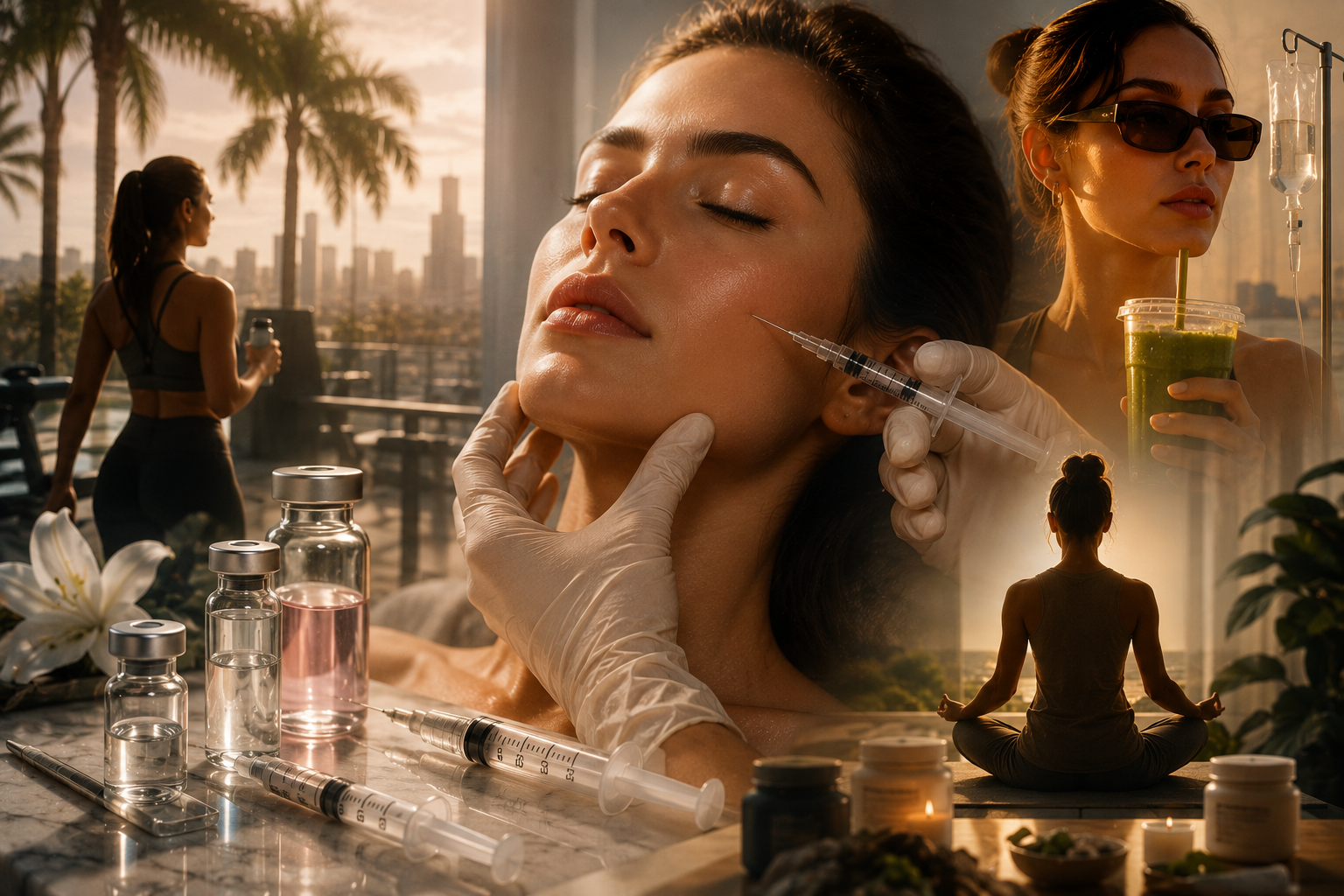

There was a time when getting a shot meant a flu jab at the pharmacy or a dreaded trip to the doctor’s office. But these days, walk into a med spa, a longevity clinic, or even a friend’s kitchen these days, and you’re just as likely to find a mini-fridge stocked with vials as you are to find a bowl of fruit. Weight-loss shots, “Botox in a bottle,” IV drips, tissue-repair peptides: America has quietly turned the needle into its favorite wellness tool. Doctors, researchers, and cultural critics have started calling it what it is: Needle Nation.
This isn’t a niche subculture anymore. It’s a full-blown consumer movement, and it’s reshaping how Americans think about weight loss, aging, energy, and even status. Here’s what’s actually driving the injectable wellness explosion and why experts are urging people to slow down before they roll up their sleeves.
How GLP-1s Made Injections Mainstream
The story of Needle Nation really begins with GLP-1 drugs. Semaglutide and tirzepatide, sold under brand names like Ozempic, Wegovy, and Zepbound, were originally developed for type 2 diabetes. Once their dramatic weight-loss effects became public knowledge, they became a cultural phenomenon almost overnight, with combined market valuations for their manufacturers topping $900 billion. Industry analysts now expect the global GLP-1 market to surpass $150 billion by 2030, as these drugs expand beyond weight management into heart health and other chronic conditions.
What GLP-1s did that no cosmetic trend had managed before was normalize the idea of a weekly, at-home self-injection as routine self-care. Once millions of people got comfortable pinching skin and pressing a pen, the psychological barrier to other injectable treatments started to dissolve. Suddenly, the leap from a weight-loss shot to a collagen-boosting peptide or an IV vitamin drip felt a lot smaller.
The Peptide Boom: A Fridge Full of Vials
If GLP-1s cracked the door open, peptides kicked it down. These short chains of amino acids are being marketed for everything from muscle recovery and tissue repair to sleep, skin quality, and longevity. In wellness circles, having a personal “stack” and a curated combination of peptides has become something of a badge of honor. One New York physician, nicknamed the city’s “Peptide Princess” for her devoted clientele, has built a practice around personalized peptide regimens; she describes hearing daily testimonials from patients who credit the shots with transforming their lives.
The appeal extends well beyond medical offices. In parts of Silicon Valley, tech workers reportedly trade tips on peptide “stacks” the way previous generations traded stock picks, and some startups have even offered peptide injections as an employee perk. Estimates put the U.S. retail peptide therapeutics market at roughly $56.7 billion in 2024, on track to approach $77.5 billion by 2030, fueled largely by GLP-1 demand but increasingly spilling into adjacent categories like copper peptides for skin and NAD+ analogs pitched as anti-aging tools.
The catch: most of these consumer-facing peptides have nowhere near the research backing that GLP-1 drugs do. Physicians interviewed by the American Medical Association have cautioned that, unlike insulin and approved GLP-1 medications, many trending peptides haven’t gone through rigorous clinical trials, and dosing guidance is often based on anecdote rather than evidence.
Aesthetic Injectables: Botox Goes Bigger Than Ever
Cosmetic injectables were the original gateway drug for Needle Nation, and they show no signs of slowing. Botox remains the single most popular non-surgical cosmetic procedure in the country, with nearly 9.5 million procedures performed in the U.S. in the most recent tracked year alone. The broader U.S. aesthetic injectables market was valued at roughly $4.1 billion in 2024 and is projected to grow at over 11% annually through 2030, while the global facial injectables market is expected to climb from around $26.7 billion in 2025 toward nearly $97 billion by 2034.
What’s changed isn’t just the volume. It’s who’s getting treated and why. “Preventive Botox” among people in their twenties is now a well-established trend; dermal filler options have multiplied, and med spas have overtaken traditional dermatology clinics as the dominant setting for treatment. Interestingly, researchers have also identified a feedback loop between GLP-1 use and aesthetic procedures: as rapid weight loss changes people’s faces, many are turning to fillers and combination therapies to address volume loss, a trend McKinsey’s own provider surveys have flagged as a major growth area for the industry.
IV Drips, Wellness Clinics, and the Normalization of the Needle
Alongside peptides and GLP-1s, IV therapy clinics have exploded across American cities, offering vitamin cocktails, hydration boosts, and “hangover cures” delivered straight into a vein. Industry observers note that these clinics have played a quiet but significant role in Needle Nation’s rise: an hour spent hooked up to a drip bag is often someone’s first real exposure to injectable wellness, easing them into intramuscular shots and, eventually, at-home self-injection routines.
Together, GLP-1 telehealth platforms, peptide clinics, and IV bars have built an entire infrastructure that makes injecting yourself feel less like a medical procedure and more like a lifestyle choice as ordinary as a spin class or a green juice.
The Gray Market Nobody’s Talking About Enough
Here’s where the story gets darker. Because many trending peptides sit in a regulatory gray zone, not quite drugs, not quite supplements, a black market has sprung up on platforms like TikTok, Telegram, and WhatsApp, where people buy raw compounds sourced overseas and reconstitute them at home. For a fraction of what a licensed provider or med spa would charge, buyers can access unregulated versions of GLP-1s, Botox-like neuromodulators, and dermal fillers.
Doctors and researchers are increasingly alarmed. Experts have pointed out that some of the most hyped peptides, including BPC-157 and TB-500, are actually banned by international sports authorities as doping agents and have never been approved for human use, with most of their supporting evidence coming from animal studies rather than human trials. The risks associated with home-brewed, unregulated injectables range from infection and allergic reaction to far more serious complications, and the FDA has issued a growing number of warning letters to clinics and sellers over the past year.
Even physicians who are personally comfortable with well-studied treatments draw a hard line at the experimental fringe. Longevity researchers who use FDA-approved GLP-1 drugs, precisely because of their scientific backing and manufacturing oversight, say they’d never touch the untested compounds circulating in gray-market circles.
Why This Is Happening Now
Several forces have converged to make this moment possible. Pandemic-era distrust of institutions pushed many Americans toward influencers and alternative health communities instead of traditional doctors. Telehealth made prescription access dramatically easier, letting people obtain weight-loss drugs and other treatments without ever visiting a clinic in person. Social media turned before-and-after transformations into viral content, while celebrities and tech elites openly discussing their “stacks” gave injectable wellness an aspirational, almost luxury-brand appeal. And crucially, insurance rarely covers any of it, pushing cost-conscious consumers toward cheaper, unregulated alternatives when premium options feel out of reach.
The Bottom Line
Needle Nation isn’t a passing fad but it’s a structural shift in how Americans approach their bodies, blending pharmaceutical innovation, beauty culture, and a growing appetite for at-home biohacking. The FDA-approved side of this story, mainly GLP-1 drugs and established cosmetic injectables, rests on genuine, well-documented science and is reshaping entire industries, from pharma to hospitality to insurance. But the parallel rise of unregulated peptides and DIY injectables is a genuine public-health concern, one that regulators, physicians, and consumers are still racing to catch up with.
If you’re intrigued by any of these treatments, the throughline from every expert is the same: talk to a licensed medical professional first, ask pointed questions about the evidence behind a specific product, and be skeptical of anything sold to you through a Telegram chat rather than a clinic. The needle might be the defining wellness symbol of this decade, but not every syringe is created equal.
Don’t forget to follow us on Facebook | Instagram | Twitter | LinkedIn to get the latest updates from Cape Town Tribune