
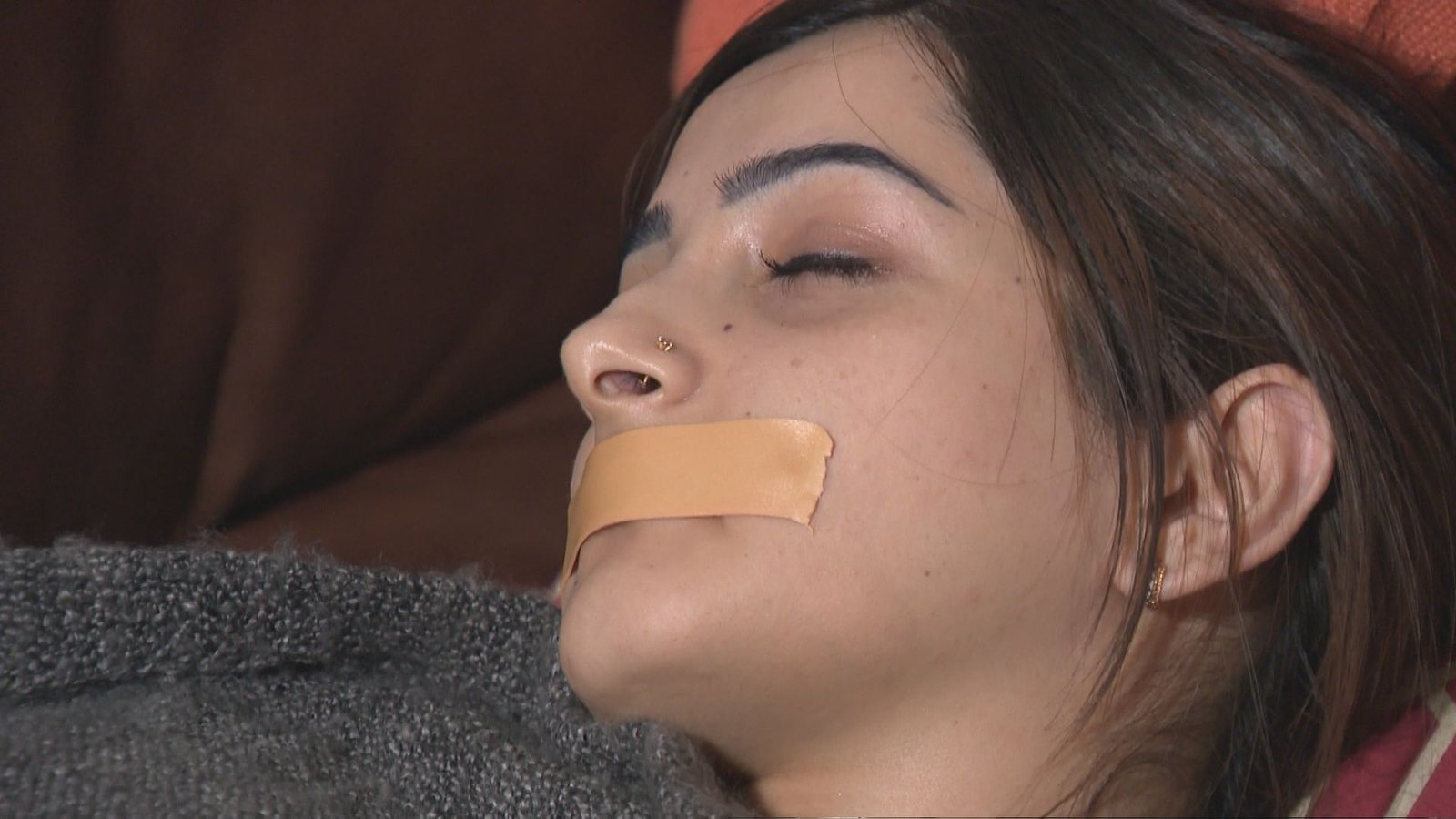

Mouth Taping for Sleep: Does It Actually Work?
Mouth taping for sleep is everywhere right now. Open TikTok or Instagram and you’ll find someone waking up with a strip of tape across their lips, insisting it changed their sleep overnight. Unlike most viral wellness fads that spike and vanish, this one has grown slowly and steadily for months, with no single viral moment driving it.
So does mouth taping for sleep actually work? Short answer: the evidence is thin, mixed, and in some cases genuinely risky. Below, we break down what the research actually says, who might reasonably benefit, and who should avoid the practice entirely.
What Is Mouth Taping for Sleep?
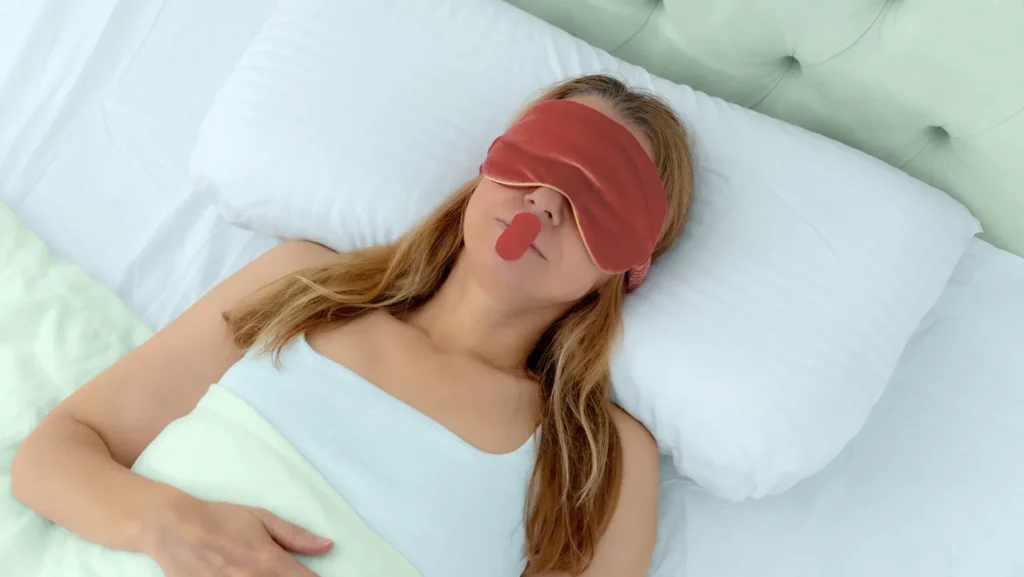
Mouth taping for sleep involves placing a strip of tape, usually a “breathable” or porous tape designed for skin, over the lips before bed. The idea is simple: prevent your mouth from falling open during the night so you’re forced to breathe through your nose instead.
The theory isn’t baseless. Nasal breathing filters, warms, and humidifies incoming air, and it’s associated with lower airway resistance than mouth breathing. This is why proponents claim the practice can:
- Reduce snoring
- Prevent dry mouth and bad breath
- Improve sleep quality and next-day energy
- Support better oral and dental health
- “Define” your jawline (a claim we’ll debunk shortly)
That’s a long list of benefits for a $10 roll of tape. Let’s see how many of these claims actually survive contact with the research.
Does Mouth Taping Work? What the Research Says
This is the part most influencer content skips entirely, so let’s slow down and look at the science.
The 2025 Systematic Review
The most rigorous look at mouth taping for sleep to date is a 2025 systematic review published in PLOS ONE, led by researchers at Western University in Ontario. The team screened 120 studies down to 10 that met their inclusion criteria, covering a combined 213 patients. Their conclusion was blunt: current evidence does not support the practice as a safe or effective treatment for sleep-disordered breathing or obstructive sleep apnea (OSA).
Key findings from the review:
- Only two of the ten studies found a statistically significant improvement in a standard sleep apnea severity measure (the apnea-hypopnea index), and only in people with mild OSA.
- Every one of the 10 studies was rated poor quality on a standard research-quality scale.
- Four of the ten studies flagged a serious risk of asphyxiation for people whose mouth breathing is caused by a blocked or restricted nasal airway, such as chronic allergies, a deviated septum, sinus disease, or enlarged tonsils.
That asphyxiation risk matters more than any snoring statistic. If your body defaults to mouth breathing at night because your nose is physically obstructed, taping your mouth shut doesn’t fix the underlying problem. It just removes your backup airway.
The “Mouth Puffing” Problem
One study in the review also documented a phenomenon researchers now call “mouth puffing,” where taped participants still ended up breathing through small gaps around the tape. In other words, mouth taping for sleep didn’t reliably force nasal breathing in every participant; it just made mouth breathing more awkward.
Where the Evidence Shows Some Promise
The practice isn’t entirely without merit. The most credible, narrow use cases are:
- Mild snoring linked to open-mouth breathing. A small 2022 pilot study of 30 patients with mild OSA found reduced snoring intensity and frequency, along with some self-reported improvement in alertness. There was no control group, so treat this as a lead rather than proof.
- CPAP mouth-leak reduction. For people already using CPAP therapy, some evidence suggests taping the mouth shut can reduce air leaking during treatment, improving how well the CPAP machine performs. This is a clinical, supervised use case, not a DIY wellness hack.
Outside of those two scenarios, sleep physicians are consistent: the evidence is largely anecdotal, and the American Academy of Sleep Medicine does not recommend mouth taping for sleep as a treatment.
Is Mouth Taping Safe? The Real Risks
This is the most important section here, and it’s the one most viral posts leave out entirely.
Avoid mouth taping for sleep if you have any of the following:
- Undiagnosed or untreated sleep apnea. Your airway may already be collapsing repeatedly during sleep. Removing your mouth as a backup route can worsen oxygen drops instead of improving them.
- Nasal obstruction. A deviated septum, chronic congestion, sinus disease, or seasonal allergies. If your nose can’t reliably move air, this practice poses a genuine asphyxiation risk, according to the systematic review.
- Reflux (GERD) or a tendency to vomit at night. A taped mouth makes it harder to expel stomach contents if you throw up, raising the risk of aspiration, a medical emergency.
- Anxiety or claustrophobia. Some people report real distress from the sensation of a sealed mouth, which can itself disrupt rest.
- Alcohol use before bed. Alcohol relaxes the airway and increases vomiting risk, a dangerous combination with a taped mouth.
Milder but common side effects reported anecdotally include skin irritation from the adhesive, difficulty removing the tape, and general discomfort during the adjustment period.
Jawline Claims: Debunked
A large share of mouth taping for sleep’s popularity comes from claims that it “defines your jawline,” tightens facial muscles, or delivers anti-aging benefits. This is where a good service journalism piece earns its keep: there is no scientific evidence supporting these claims.
Jawline appearance is shaped by genetics, body fat percentage, bone structure, and age, not by whether your lips were taped shut for eight hours. In children, nasal breathing does play a documented role in healthy facial and dental development, which is likely where this myth originated. It doesn’t translate to adults reshaping bone structure through overnight tape.
Who Might Reasonably Try It?
If you’re still considering mouth taping for sleep despite the thin evidence, sleep physicians generally agree it should only be attempted if all of the following are true:
- You can comfortably breathe through your nose during the day with no congestion or blockage
- You’ve been evaluated by a doctor and ruled out sleep apnea or another underlying sleep-breathing disorder
- You’re using a gentle, vented or porous tape designed specifically for this purpose (not household or heavy-duty medical tape)
- You’re treating it as a low-stakes personal experiment, not a treatment for a diagnosed condition
If any of these don’t apply to you, mouth taping for sleep isn’t a shortcut. It’s a risk without a clear reward.
Mouth Tape vs. Chin Strap: Which Is Safer?
If taping your mouth feels too risky, a chin strap is a gentler alternative worth considering. Unlike mouth taping for sleep, a chin strap supports the jaw and encourages the mouth to stay closed without physically sealing the airway shut, which makes it easier to open your mouth if you need to breathe, cough, or feel unwell during the night. It’s a reasonable middle ground for people who want the potential benefits without the higher-risk mechanism.
Mouth Taping and the “Sleepmaxxing” Trend
Mouth taping for sleep is often lumped into the broader “sleepmaxxing” movement, a catch-all term for optimizing every variable of sleep, from magnesium supplements to blackout curtains to wearable trackers. Within that trend, this practice is one of the more physically invasive tactics being promoted, which is exactly why it deserves more scrutiny than a supplement or a bedtime routine change.
What to Do Instead
If your actual goal is less snoring, less dry mouth, or genuinely better sleep, there are options with far more evidence behind them:
- Get evaluated for sleep apnea if you snore loudly, gasp for air, or feel exhausted despite a full night’s sleep. A home sleep test or in-lab study can rule this out before you try anything else.
- Treat nasal congestion at the source. Allergy management, saline rinses, or an ENT consult for structural issues like a deviated septum address the root cause that taping only works around.
- Try a chin strap as a gentler, less restrictive alternative.
- Improve sleep hygiene fundamentals. Consistent sleep and wake times, reducing alcohol close to bedtime, and optimizing your bedroom temperature tend to move the needle more reliably than any single hack.
- Ask about CPAP or an oral appliance if you’ve been diagnosed with sleep apnea. These remain the treatments with the strongest evidence base by far.
The Bottom Line on Mouth Taping for Sleep
Mouth taping for sleep is built on a reasonable idea (that nasal breathing is generally healthier than mouth breathing) stretched into promises the current research can’t fully support. The best available evidence, a 2025 systematic review of 213 patients across 10 studies, found weak, poor-quality support for a narrow group of people with mild sleep apnea, alongside a real, documented risk of harm for anyone with an underlying airway obstruction.
If you snore, wake up exhausted, or suspect you have sleep apnea, the answer isn’t a roll of tape. It’s a conversation with a sleep specialist. That’s less “aesthetic” than a viral video, but it’s the version actually backed by evidence.
FAQ: Mouth Taping for Sleep
Does mouth taping for sleep actually stop snoring? It may help with mild snoring caused specifically by open-mouth breathing, based on one small, uncontrolled 2022 study. It hasn’t been shown to reliably reduce snoring linked to sleep apnea or structural airway causes.
Is mouth taping safe if I have sleep apnea? No. Sleep physicians and the 2025 systematic review specifically warn against mouth taping for sleep for anyone with undiagnosed or untreated sleep apnea, since it removes the mouth as a backup airway during breathing interruptions.
Can mouth taping improve your jawline? No. There’s no scientific evidence that mouth taping for sleep reshapes adult jaw structure. Jawline appearance is determined by genetics, body fat, and bone structure, not overnight tape.
What tape should I use for mouth taping? If you choose to try it after ruling out nasal obstruction and sleep apnea with a doctor, use a gentle, vented, hypoallergenic tape designed specifically for this purpose, not household tape or heavy-duty medical tape.
Who should never try mouth taping for sleep? Anyone with nasal congestion or obstruction, diagnosed or suspected sleep apnea, acid reflux, a tendency toward nighttime vomiting, or anxiety and claustrophobia around restricted breathing should avoid the practice.
Don’t forget to follow us on Facebook | Instagram | Twitter | LinkedIn to get the latest updates from Cape Town Tribune