
The Iran-Hormuz crisis deepened on Wednesday as diplomatic efforts between Washington and Tehran remained stalled, commercial shipping through one of the world’s most important energy corridors slowed sharply, and oil markets priced in the risk of a longer disruption.
U.S. President Donald Trump said no talks with Iran were taking place and none were scheduled, contradicting expectations that recent mediation efforts might reopen a path toward negotiations. Iran, meanwhile, said the Strait of Hormuz would remain closed until Washington fulfilled commitments Tehran says were contained in an interim agreement reached in June.
The disagreement is no longer confined to diplomatic language. Shipowners continue to avoid the strait, maritime security incidents are adding to the risk of transit, and Brent crude rose to a three-week high above $91 a barrel on August 19. The combination has turned the Iran-Hormuz crisis into a direct test of global energy resilience as well as a confrontation over regional power.
Iran Hormuz Crisis Deepens as Diplomacy Stalls
The immediate diplomatic picture is unusually stark. Trump said on Tuesday that no negotiations were underway with Tehran and that none had been scheduled. At the same time, he maintained that the Strait of Hormuz was open and operating. Iran offered a sharply different account, saying the waterway would remain closed until the United States met its obligations.
Iran’s top negotiator, Mohammad Baqer Qalibaf, said Tehran’s conditions include lifting the U.S. blockade of Iranian ports, removing oil sanctions, releasing frozen Iranian assets, and ending military threats and operations. Those demands go well beyond the technical question of maritime access and underline how closely the Iran-Hormuz crisis has become linked to the wider U.S.-Iran confrontation.
This is why reopening the strait cannot be treated simply as a shipping negotiation. Washington and Tehran are attaching broader strategic demands to access through the waterway, leaving commercial shipping exposed to the consequences of an unresolved political dispute.
The stalemate also limits the room available to regional mediators. Oman has continued efforts to find a formula for managing shipping and creating conditions for renewed diplomacy, but the distance between the U.S. and Iranian positions remains considerable.
Shipping Through the Strait of Hormuz Slows Again
The commercial reality in the strait is much less reassuring than the political claim that the route is open.
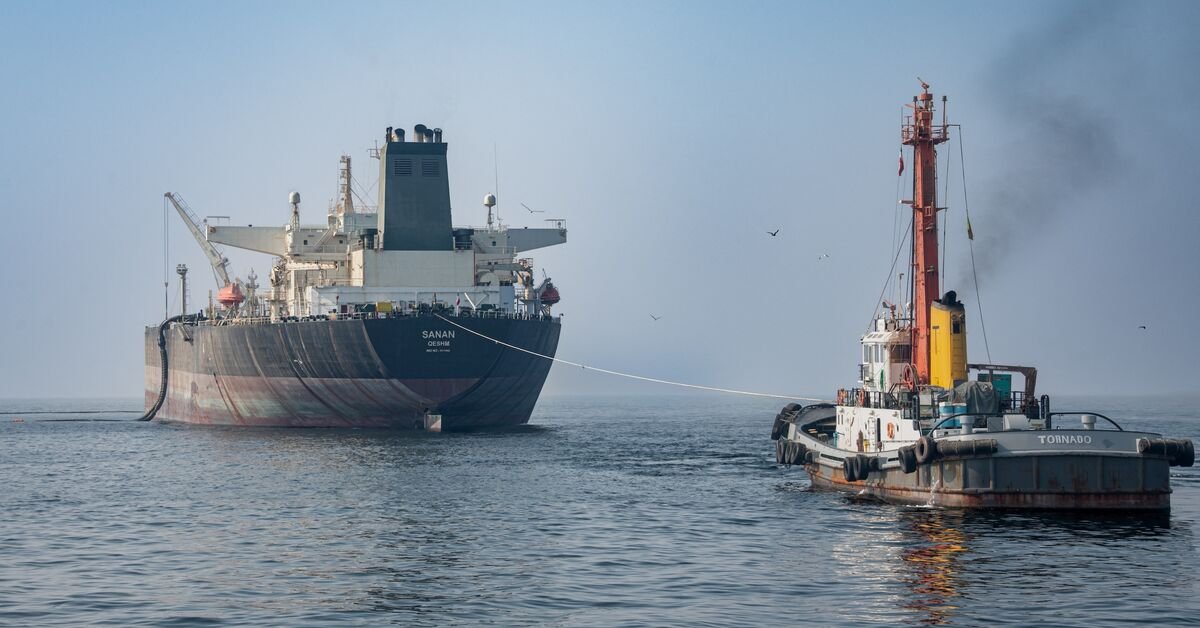
Kpler data cited by Reuters showed that only six commodity vessels passed through the Strait of Hormuz on Tuesday, down from nine the previous day and below the recent average of around 11 daily crossings. Three ships entered, and three exited, including a very large crude carrier approaching from the Omani side.
The figures illustrate the practical effect of the Iran-Hormuz crisis. A shipping channel does not need to be physically sealed to become commercially impaired. If shipowners, insurers, and cargo operators conclude that the probability of attack is too high, traffic can collapse even when navigation remains technically possible.
That is essentially what is happening. Major shipping companies have become increasingly cautious, particularly after repeated attacks and warnings in the region. Two large Chinese state shipping groups that previously carried around half of China’s Middle Eastern oil imports have avoided both Hormuz and the Bab al-Mandeb chokepoint since late July, according to Reuters.
The resulting disruption has forced companies to rely on offshore transfers, alternative loading points, and longer routes. Those workarounds can keep some crude moving, but they increase costs and reduce the efficiency of global tanker fleets.
Vessel Attack Adds to Maritime Risk
Security concerns intensified further after a vessel transiting outbound through the Strait of Hormuz was struck by an unidentified projectile on August 18.
The United Kingdom Maritime Trade Operations said the incident damaged the vessel’s engine room and caused a crew casualty. The remaining crew received assistance from the Omani Coast Guard. Authorities were investigating the incident.
The attack matters because commercial decisions are shaped as much by perceived risk as by formal government statements. A single incident can lead insurers to reassess premiums, shipowners to delay voyages, and cargo buyers to seek alternatives.
Within the Iran-Hormuz crisis, this makes maritime security one of the most immediate economic pressure points. Even if political leaders describe the route as accessible, each additional attack makes normal commercial operations harder to restore.
Brent Crude Rises Above $91
Energy markets are already reflecting that uncertainty.
Brent crude rose to about $91.47 a barrel on August 19, while U.S. West Texas Intermediate climbed to roughly $85.39. Both benchmarks reached their highest levels since late July as traders assessed the likelihood that disruption through Hormuz would continue.
Oil prices had already closed at a three-week high in the previous session, with fading expectations of a U.S.-Iran agreement keeping a geopolitical risk premium embedded in crude markets.
The Iran-Hormuz crisis has therefore become an important variable not only for physical oil supply but also for inflation expectations and financial markets. Higher crude prices can raise transport, manufacturing, and consumer costs even in economies far removed from the Middle East.
The longer shipping remains constrained, the greater the possibility that temporary risk premiums become embedded in contracts, freight rates, and inventory strategies.
Why the Strait of Hormuz Matters So Much
The importance of the strait is difficult to overstate without understanding the volume of energy that historically moved through it.
U.S. Energy Information Administration data show that oil flows through the Strait of Hormuz averaged about 20.9 million barrels per day in the first half of 2025, equivalent to roughly 20% of global petroleum liquids consumption. Around one-fifth of global liquefied natural gas trade also passed through the waterway, primarily from Qatar.
Those numbers have fallen sharply since the conflict began. The EIA estimates that crude oil and petroleum liquids moving through Hormuz averaged only 4.9 million barrels per day in the second quarter of 2026, compared with 21.6 million barrels per day in the fourth quarter of 2025.
That reduction illustrates why the Iran-Hormuz crisis has consequences well beyond Iran and the United States. The strait is not merely an Iranian export route. It is a conduit for energy supplies from several Gulf producers whose customers span Asia, Europe, and other regions.
Asia Has the Greatest Direct Exposure
Asian economies have historically been the largest recipients of energy shipped through Hormuz.
EIA data show that 84% of crude oil and condensate moving through the strait in 2024 went to Asian markets. China, India, Japan, and South Korea together accounted for 69% of those crude and condensate flows. Around 83% of LNG passing through the strait also went to Asia.
This means the Iran-Hormuz crisis has particular significance for Asian refiners, utilities and governments managing energy security.
China’s shipping response provides one example. Major Chinese state-controlled carriers have been avoiding the region’s most dangerous chokepoints and relying on alternative arrangements to obtain Middle Eastern crude. Freight costs have risen sharply as vessels spend more time on longer routes and ship-to-ship transfers.
India, Japan, and South Korea also remain exposed to any prolonged disruption because of their reliance on imported energy. Even countries with diversified suppliers can face higher benchmark prices when a major source of global supply becomes difficult to move.
Alternative Routes Cannot Fully Replace Hormuz
Saudi Arabia and the United Arab Emirates have pipelines that can bypass the Strait of Hormuz, but their capacity is limited compared with the volume that normally passes through the waterway.
The EIA estimates that roughly 2.6 million barrels per day of spare pipeline capacity could be available through Saudi and UAE systems to bypass Hormuz during a disruption. Saudi Arabia’s East-West pipeline moves crude toward the Red Sea, while the UAE operates a pipeline connecting inland fields with the port of Fujairah on the Gulf of Oman.
These routes provide valuable flexibility, but they do not offer a complete substitute for normal tanker movements through the strait.
The Iran Hormuz crisis is also occurring alongside insecurity around the Bab al-Mandeb, another strategically important route used by ships travelling between the Arabian Sea and the Red Sea. That reduces the usefulness of some of the alternatives that producers might otherwise rely upon.
The result is a global energy network operating with fewer comfortable options.
UAE Suspends Trade and Financial Dealings With Iran
The regional confrontation widened further when the United Arab Emirates suspended trade, commercial exchanges, and financial transactions with Iran until further notice.
The UAE announced the measure after saying its defence systems detected two ballistic missiles launched from Iran toward its territory. Emirati authorities said the missiles appeared to have targeted maritime traffic, with one landing outside UAE territorial waters and another inside them. Iran denied responsibility and called the allegation baseless.
The development adds another layer to the Iran Hormuz crisis because the UAE has historically been an important commercial and financial link between Iran and the wider global economy.
The UAE had previously pursued efforts at de-escalation with Tehran during the conflict, making the suspension of trade particularly notable. The decision signals how quickly Gulf states can be drawn more deeply into a confrontation even when they have tried to preserve channels with both Washington and Tehran.
The Conflict Is Reaching Financial Markets
The economic impact is increasingly visible outside the oil market.
UAE stocks fell on August 19 following the missile scare and the suspension of economic dealings with Iran. Abu Dhabi’s main index declined about 0.9%, while Dubai’s market fell around 0.2%.
The moves are modest compared with the volatility that can occur during a full-scale financial crisis, but they are relevant because they demonstrate how the Iran Hormuz crisis is beginning to affect regional investor sentiment.
For international markets, the main transmission mechanism remains energy. Sustained oil prices above recent averages can complicate central bank decisions, keep inflation elevated and weaken consumer spending in energy-importing economies.
The danger is not simply a one-day spike in Brent crude. It is the possibility that uncertainty persists long enough to alter business assumptions about transport costs, supply chains and inventories.
Washington and Tehran Disagree Even on Whether the Strait Is Open
One of the more unusual features of the Iran Hormuz crisis is the absence of agreement over the basic status of the waterway itself.
Trump says the Strait of Hormuz is open. Tehran says it remains closed until Washington meets Iranian conditions. Shipping data show that vessels continue to transit, but at a fraction of normal activity.
All three statements can describe different aspects of the same reality.
The channel is not physically empty, so some vessels are clearly able to pass. Yet commercial traffic is so restricted that describing conditions as normal would be misleading. Iran, meanwhile, is using the language of closure as part of its political and military pressure campaign.
For global businesses, the semantic dispute matters less than the operational result. If only a handful of cargo vessels are willing to cross each day, the commercial effect resembles a severe blockade even without complete physical closure.
What Could Push Oil Toward $100 Again?
The next direction for crude will depend largely on whether maritime traffic begins recovering and whether Washington and Tehran restart negotiations.
Reuters reported that analysts see the continuing uncertainty around Hormuz as a significant risk premium in the oil market, with Brent again approaching levels where a move toward $100 becomes plausible if the confrontation worsens.
Several developments could increase that risk. A major attack on an oil tanker, further restrictions on Gulf exports, new military strikes involving regional states or a prolonged collapse in negotiations would all make a sustained disruption more likely.
Conversely, a credible framework for reopening commercial shipping could remove some of the premium quickly.
The Iran Hormuz crisis has produced large oil-price swings throughout 2026, which means markets are likely to react rapidly to any verified diplomatic progress.
What Happens Next
Three issues will determine whether the Iran Hormuz crisis enters another escalation cycle or moves back toward negotiation.
The first is diplomacy. Trump’s statement that no U.S.-Iran talks are planned removes an immediate avenue for de-escalation, but Oman and other regional actors continue to have an interest in preventing further conflict.
The second is maritime security. Shipping companies will need evidence that vessels can transit without being attacked before traffic returns anywhere close to pre-conflict levels. The August 18 projectile strike works in the opposite direction.
The third is Iran’s economic demands. Tehran has linked reopening the strait to oil sanctions, frozen assets, access to ports and an end to U.S. military pressure. Washington would need either to negotiate over those issues or find another means of restoring commercial confidence.
Without movement on at least one of those fronts, shipping disruption is likely to remain part of the energy market’s calculations.
Why the Iran Hormuz Crisis Is a Global Economic Story
The Iran Hormuz crisis may be centred on a narrow stretch of water between Iran and Oman, but its economic geography is global.
Oil traders in London and New York watch it because of supply risk. Asian refiners depend on cargoes that historically crossed it. European governments monitor LNG availability and prices. Gulf producers must decide how much crude can be rerouted. Shipping companies calculate insurance, security, and voyage costs each day.
That interconnected exposure is why the latest rise above $91 in Brent should not be viewed in isolation.
The more important indicator is the persistence of disruption. EIA forecasts assume Hormuz flows will remain severely constrained through August and gradually recover from September, but the agency also warns that its outlook depends heavily on assumptions about conflict duration and reopening patterns.
If those assumptions prove too optimistic, the economic consequences could extend well beyond the energy sector.
What Comes Next in the Iran Hormuz Crisis
The Iran Hormuz crisis has entered another difficult phase. Washington says no negotiations with Iran are scheduled. Tehran says it will not reopen the waterway on U.S. terms. Shipping traffic has fallen to a handful of commodity vessels a day; a vessel has been struck in the strait; the UAE has suspended economic dealings with Iran and Brent crude has moved back above $91.
None of those developments by itself establishes that a wider regional war is inevitable. Together, however, they show that the fragile progress toward restoring normal commercial traffic has stalled.
For the global economy, the question is no longer whether Hormuz matters. The volume of energy historically routed through the strait already answers that.
The question is how long markets, producers, and shipping companies will have to operate without reliable access to it.
Frequently Asked Questions
What is the Iran Hormuz crisis?
The Iran Hormuz crisis refers to the conflict and diplomatic confrontation surrounding Iran, the United States, and shipping access through the Strait of Hormuz. The dispute has sharply reduced vessel traffic and disrupted global oil and LNG flows.
Is the Strait of Hormuz currently closed?
The situation is disputed. Iran says the strait remains closed until the United States meets its conditions, while Trump says it is open. Shipping data show that some vessels continue to pass, but traffic remains severely restricted.
Why is the Strait of Hormuz important for oil?
Historically, about 20% of global petroleum liquids consumption and roughly one-fifth of global LNG trade have moved through the Strait of Hormuz. It is therefore one of the world’s most important energy chokepoints.
What is the current Brent crude oil price?
Reuters reported Brent crude at about $91.47 a barrel on August 19, 2026, its highest level in roughly three weeks. Oil prices can change continuously during market trading.
What does Iran want before reopening Hormuz?
Iran says its conditions include lifting U.S. oil sanctions, ending the blockade of Iranian ports, releasing frozen Iranian assets, and ending military threats and operations.
Has the UAE stopped trade with Iran?
Yes. The UAE announced that it had suspended trade, commercial exchanges, and financial transactions with Iran until further notice following heightened regional tensions. Iran denied Emirati allegations that it launched missiles toward the UAE.
Don’t forget to follow us on Facebook | Instagram | Twitter | LinkedIn to get the latest updates from Cape Town Tribune