
North Korea could possess as many as 120 nuclear warheads, according to an estimate cited by South Korea’s defence minister, reigniting debate over the true scale of North Korea nuclear weapons at a sensitive moment for security and diplomacy on the Korean Peninsula.
South Korean Defence Minister Ahn Gyu-back told lawmakers on August 20 that private research organisations generally estimate Pyongyang may possess between 80 and 120 nuclear warheads. The upper end of that range is more than twice the 57 nuclear weapons recently cited by U.S. President Donald Trump.
The headline figure demands an important qualification. Ahn later clarified that the range did not represent an officially verified assessment by South Korea’s military. Instead, it reflected estimates produced by private research organisations attempting to determine how far the North Korea nuclear programme has expanded.
That distinction is essential because no government or independent organisation outside North Korea can state with certainty how many completed and deployable weapons Kim Jong Un currently controls.
Even so, the debate over the North Korea nuclear arsenal is far more than a disagreement over numbers. It comes as Trump says he expects to meet Kim Jong Un later this year and as Washington adjusts military exercises with South Korea in an attempt to create conditions for renewed diplomacy with Pyongyang.
If North Korea’s stockpile is substantially larger than many public estimates suggest, the consequences would reach far beyond the Korean Peninsula. A larger arsenal would influence U.S. deterrence strategy, South Korea’s defence planning, Japan’s security calculations and the prospects of persuading Kim to surrender weapons that his government has spent years developing.
How Large Could the North Korea Nuclear Arsenal Really Be?
Determining the actual size of the North Korea nuclear arsenal has challenged intelligence agencies and independent nuclear experts for years.
Unlike recognised nuclear powers that provide at least some public information about their strategic forces, North Korea operates one of the world’s most secretive weapons programmes. Outside analysts therefore rely on satellite imagery, nuclear facility activity, missile testing, estimates of fissile material production and occasional statements from North Korean officials.
Ahn’s reference to an estimated 80 to 120 North Korea nuclear warheads attracted particular attention because the range sits above several widely cited independent assessments.
He subsequently made clear that South Korea’s military was not officially confirming that Pyongyang has assembled 120 weapons.
That caveat changes how the figure should be understood.
There is an important difference between estimating how many completed nuclear warheads North Korea possesses and calculating how many weapons the country could potentially manufacture using available plutonium and highly enriched uranium.
North Korea could possess enough fissile material for considerably more weapons than it has actually assembled.
That uncertainty partly explains why estimates of North Korea nuclear weapons can vary substantially without one assessment necessarily proving another wrong.
Why Trump’s Figure of 57 Nuclear Weapons Matters
Trump brought renewed attention to the issue when he said North Korea possessed 57 powerful nuclear weapons while discussing his relationship with Kim Jong Un and the possibility of another meeting.
The unusually precise figure immediately raised questions because Washington does not routinely publish an official count of the North Korea nuclear arsenal.
Ahn was subsequently asked by South Korean lawmakers about the difference between Trump’s figure and the considerably higher estimates circulating among private researchers.
The South Korean defence minister acknowledged the discrepancy while making clear that Seoul could not provide a definitive number.
If North Korea possesses roughly 60 assembled weapons, Trump’s figure would actually sit relatively close to estimates produced by some respected independent nuclear organisations.
If the true Kim Jong Un nuclear arsenal is closer to 100 or even 120 completed warheads, however, the strategic picture becomes significantly more serious.
The difference would affect calculations about how many weapons North Korea could preserve for retaliation, how many targets it could threaten simultaneously and how difficult its nuclear force would be to neutralise during a conflict.
What Independent Experts Say About North Korea Nuclear Weapons
Independent nuclear research organisations generally agree on one important point: the North Korea nuclear arsenal is expanding, although considerable uncertainty remains over its exact size.
The Stockholm International Peace Research Institute estimated in its 2026 assessment that North Korea may have assembled approximately 60 nuclear warheads while possessing enough fissile material to produce at least 30 more.
The Federation of American Scientists has produced a broadly comparable estimate, suggesting that Pyongyang may have around 60 assembled weapons while possessing enough material for a larger potential stockpile.
Those figures illustrate why the claim that North Korea could possess 120 warheads should be treated carefully.
There is currently no independently verified evidence showing that Pyongyang has exactly 120 operational weapons ready for deployment.
At the same time, experts have repeatedly warned that the North Korea nuclear programme continues to produce the materials and technology required for further expansion.
The disagreement therefore concerns the size and pace of that expansion rather than whether it is occurring.
Why Kim Jong Un Keeps Expanding North Korea’s Nuclear Arsenal
Kim Jong Un has repeatedly made clear that nuclear weapons occupy a central place in North Korea’s national security strategy.
Pyongyang views its arsenal as the ultimate guarantee against foreign military intervention and regime change. North Korean officials regularly point to the country’s hostile relationship with the United States and the presence of U.S. forces in South Korea as justification for retaining and expanding nuclear capabilities.
Kim has also called for a dramatic increase in the country’s nuclear forces.
That policy has been accompanied by continued activity at nuclear facilities and investment in uranium enrichment, missile development and weapons production.
The North Korea nuclear arsenal is therefore not simply an inherited stockpile that has remained static while diplomacy stalled. It is a military capability that Pyongyang has continued developing.
This distinction becomes especially important when comparing the present situation with Trump’s earlier diplomacy with Kim in 2018 and 2019.
North Korea has had years to manufacture additional fissile material, improve delivery systems and refine nuclear doctrine since those negotiations broke down.
A future Trump-Kim summit would consequently begin with a much more mature North Korea nuclear weapons programme than the one discussed during their previous meetings.
Nuclear Warheads Are Only One Part of the Threat
Counting North Korea nuclear warheads provides only a partial picture of Pyongyang’s military capability.
For a nuclear weapon to have strategic value, North Korea must also possess reliable systems capable of delivering it to a target.
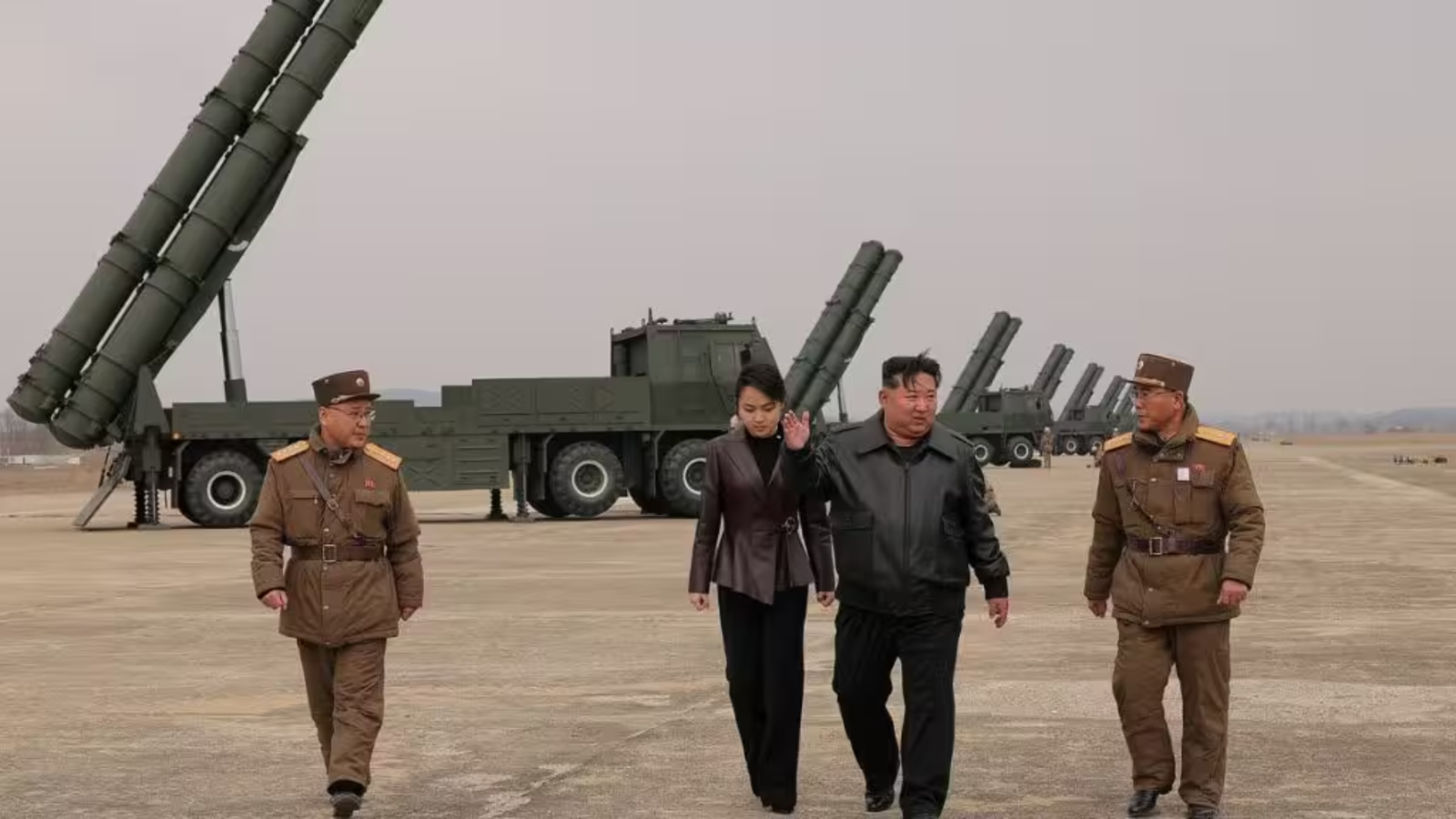
The country has invested heavily in ballistic missiles with varying ranges, including weapons designed to threaten South Korea and Japan as well as intercontinental ballistic missiles intended to place parts of the United States within reach.
Pyongyang has also developed systems that could give commanders more options for deploying nuclear weapons during a regional conflict.
This means military planners must evaluate several factors beyond the raw number of warheads.
They must consider the reliability of North Korean missiles, the survivability of launch systems, the ability to conceal weapons, the sophistication of command structures and the possibility of launching enough missiles to overwhelm defensive systems.
A larger North Korea nuclear arsenal would give Kim greater flexibility across all of these scenarios.
Instead of preserving a small number of weapons exclusively for retaliation against major strategic targets, a larger stockpile could potentially allow North Korea to assign weapons to a wider range of military missions.
Why the Timing Matters for Trump and Kim Jong Un
The latest debate over North Korea nuclear weapons arrives as Trump attempts to reopen a diplomatic channel that has remained largely frozen for years.
Trump said he expects to meet Kim Jong Un later in 2026, potentially reviving one of the most unconventional diplomatic relationships of his political career.
The two leaders met several times during Trump’s earlier presidency, beginning with their landmark Singapore summit in 2018.
Those meetings produced historic images and temporarily lowered tensions, but they failed to achieve a lasting agreement dismantling the North Korea nuclear programme.
The central disagreement revolved around sanctions and denuclearisation.
North Korea wanted substantial economic relief, while Washington demanded more extensive and verifiable steps toward dismantling Pyongyang’s nuclear capabilities.
Any new negotiations would face the same fundamental dispute, except Kim may now possess substantially more nuclear material, weapons and delivery systems than he did when the previous talks collapsed.
The expanding Kim Jong Un nuclear arsenal could therefore strengthen Pyongyang’s bargaining position.
Could a Larger Arsenal Make Denuclearisation Harder?
Every additional weapon makes comprehensive denuclearisation more complicated.
If the North Korea nuclear arsenal contains dozens more warheads than Washington believed during previous negotiations, any agreement would have to account for a much larger network of weapons, nuclear materials and production facilities.
Inspectors would first need to establish an accurate baseline.
That is difficult when experts cannot even agree publicly on how many North Korea nuclear warheads currently exist.
Verification would then require North Korea to disclose facilities, weapons and fissile-material stockpiles that it has spent decades concealing from foreign intelligence agencies.
Even after such declarations, international inspectors would have to determine whether Pyongyang had revealed everything.
The problem becomes increasingly complex as the stockpile grows.
A smaller arsenal of a few weapons might theoretically be dismantled under tightly controlled international supervision. An arsenal numbering several dozen or potentially more than 100 weapons would represent a fundamentally different disarmament challenge.
This is one reason some security analysts increasingly debate whether future talks should initially focus on limiting or freezing the North Korea nuclear arsenal rather than expecting immediate and complete denuclearisation.
Trump’s Military Exercise Decision Adds Another Layer
Trump’s attempt to revive diplomacy has already affected U.S.-South Korean military planning.
He recently ordered a reduction in joint military exercises with Seoul as part of an effort to reduce tensions and create space for negotiations.
North Korea has long condemned these exercises as rehearsals for invasion, while Washington and Seoul maintain that they are defensive and necessary for military readiness.
The decision to scale back drills appears intended to signal that Washington remains open to dialogue.
Pyongyang, however, has not responded with obvious enthusiasm.
Kim Yo Jong, Kim Jong Un’s influential sister, criticised the exercises despite their reduced scale and maintained North Korea’s longstanding argument that U.S. military activity remains threatening.
The reaction demonstrates why progress on the North Korea nuclear programme remains so difficult.
Washington can modify exercises, offer talks and pursue personal diplomacy, but North Korea has increasingly framed its nuclear weapons as a permanent element of national defence rather than a temporary bargaining chip.
Why South Korea Will Not Officially Recognise North Korea as a Nuclear State
South Korea faces an uncomfortable political and strategic dilemma.
Its government must prepare for the reality that North Korea nuclear weapons exist and could be used during a conflict, while avoiding language that formally legitimises Pyongyang as an accepted nuclear weapons state.
Ahn maintained that distinction when questioned by lawmakers.
South Korea continues to support the denuclearisation of the Korean Peninsula and does not formally recognise North Korea as a legitimate nuclear weapons state.
That position has important diplomatic consequences.
Officially accepting the North Korea nuclear arsenal as permanent could be interpreted as conceding that decades of international sanctions and negotiations aimed at denuclearisation have failed.
It could also reshape future talks.
Instead of negotiations centred on dismantling Pyongyang’s weapons, North Korea could demand discussions similar to traditional arms-control talks between established nuclear powers.
Kim has strong reasons to seek precisely that kind of recognition because it would fundamentally alter his bargaining relationship with Washington.
What a Larger North Korea Nuclear Arsenal Means for South Korea
For Seoul, the debate over whether Pyongyang possesses 57, 60, 80 or 120 weapons has immediate national security implications.
South Korea does not possess an independent nuclear arsenal and instead relies on the United States’ extended deterrence commitment.
Under that arrangement, Washington pledges to defend South Korea using the full range of American military capabilities, including nuclear forces if necessary.
Ahn reaffirmed Seoul’s reliance on that strategy and rejected suggestions that South Korea should develop its own nuclear weapons.
Nevertheless, continued growth in the North Korea nuclear arsenal could intensify an existing domestic debate over whether South Korea needs a more independent deterrent.
The concern is straightforward.
As North Korea improves missiles capable of reaching American territory, some South Koreans question whether a future U.S. president would risk a nuclear attack on an American city in order to defend Seoul.
Washington has repeatedly sought to reassure South Korea that its security commitment remains firm.
The larger the Kim Jong Un nuclear arsenal becomes, however, the more important those assurances are likely to become.
Japan Is Watching the Same Numbers Closely
The debate also carries major consequences for Japan.
North Korea has repeatedly tested ballistic missiles capable of threatening Japanese territory, while some missiles have flown over or near Japan during past testing campaigns.
Tokyo therefore has a direct interest in both the size of the North Korea nuclear arsenal and the development of missile systems capable of delivering those weapons.
A substantially larger stockpile could reinforce Japan’s push to strengthen missile defence, improve counterstrike capabilities and deepen security cooperation with Washington and Seoul.
North Korea’s weapons programme has consequently become one of the forces pushing the United States, South Korea and Japan toward closer defence coordination.
Any diplomatic initiative involving Trump and Kim will therefore be watched closely in Tokyo as well as Seoul.
Does It Really Matter Whether North Korea Has 60 or 120 Warheads?
Even the lower estimates of North Korea nuclear weapons describe a formidable military threat.
A country possessing approximately 60 nuclear warheads and missiles capable of reaching regional capitals or potentially the continental United States already has a powerful deterrent.
A stockpile closer to 120 warheads would nevertheless provide significant additional military flexibility.
A larger North Korea nuclear arsenal could allow Pyongyang to reserve more weapons for retaliation, threaten a larger number of targets and potentially use multiple warheads in an attempt to overwhelm missile defences.
It could also make any future disarmament agreement more difficult to verify.
The distinction therefore matters, even if analysts should resist treating a single unverified estimate as established fact.
The strategic reality is that North Korea has accumulated enough nuclear capability to make complete disarmament far more difficult than it was when international negotiations began decades ago.
The Biggest Problem May Be What Nobody Knows
One of the most troubling features of the North Korea nuclear arsenal is the uncertainty surrounding it.
Effective arms-control agreements require governments to know what they are attempting to control.
Negotiators need credible information about the number of warheads, quantities of fissile material, production facilities and missile systems involved.
North Korea provides very little of that information voluntarily.
This creates a basic problem for any future agreement.
If Washington believes Pyongyang has 60 weapons while North Korea actually possesses considerably more, inspectors could verify the destruction of dozens of warheads without knowing whether additional weapons remained hidden.
For that reason, transparency and verification would become central issues in any renewed negotiations over North Korea nuclear weapons.
Before diplomats can negotiate how many weapons should disappear, they must establish how many exist.
Could Trump and Kim Jong Un Actually Reach a Deal?
The prospect of another summit will inevitably revive memories of Trump’s earlier meetings with Kim.
Those encounters demonstrated that direct diplomacy can reduce tensions and create political momentum, but they also showed that personal relationships between leaders cannot by themselves resolve deeply entrenched strategic disagreements.
Kim views the North Korea nuclear arsenal as essential to regime survival.
Washington has traditionally demanded denuclearisation because accepting a permanently nuclear-armed North Korea could weaken global non-proliferation efforts and encourage regional arms races.
Bridging those positions would require far more than another high-profile summit.
One possible approach would involve phased negotiations in which Pyongyang agrees to freeze fissile-material production, limit missile development or dismantle certain facilities in exchange for carefully calibrated sanctions relief.
Such an arrangement would fall short of immediate denuclearisation, but supporters could argue that preventing further growth in the North Korea nuclear programme is preferable to allowing the stockpile to expand indefinitely.
Whether either side is prepared to accept that compromise remains uncertain.
The Bottom Line
The suggestion that the North Korea nuclear arsenal may contain between 80 and 120 warheads is significant, but it should not be presented as a newly confirmed military intelligence assessment.
South Korean Defence Minister Ahn Gyu-back clarified that the range came from private research organisations and has not been officially verified by Seoul’s military.
Leading independent assessments have generally placed the number of assembled North Korea nuclear warheads closer to 60 while warning that Pyongyang possesses enough fissile material to manufacture additional weapons.
That distinction should remain central to any responsible interpretation of the latest headlines.
The more important strategic development is that almost every credible assessment points in the same direction. North Korea’s nuclear capability has continued to grow while diplomacy has remained stalled.
Trump’s figure of 57 weapons may align reasonably closely with some independent estimates, while the possibility of a substantially larger Kim Jong Un nuclear arsenal highlights how uncertain the intelligence picture remains.
If Trump and Kim meet later this year, they will therefore confront a very different nuclear landscape from the one that existed during their previous summits.
North Korea has had years to improve its missiles, produce additional nuclear material and strengthen the role of nuclear weapons in its military strategy.
The critical question is not simply whether the correct number is 57, 60, 80 or 120.
The far more consequential question is whether renewed diplomacy can prevent the North Korea nuclear arsenal from becoming even larger.
Don’t forget to follow us on Facebook | Instagram | Twitter | LinkedIn to get the latest updates from Cape Town Tribune