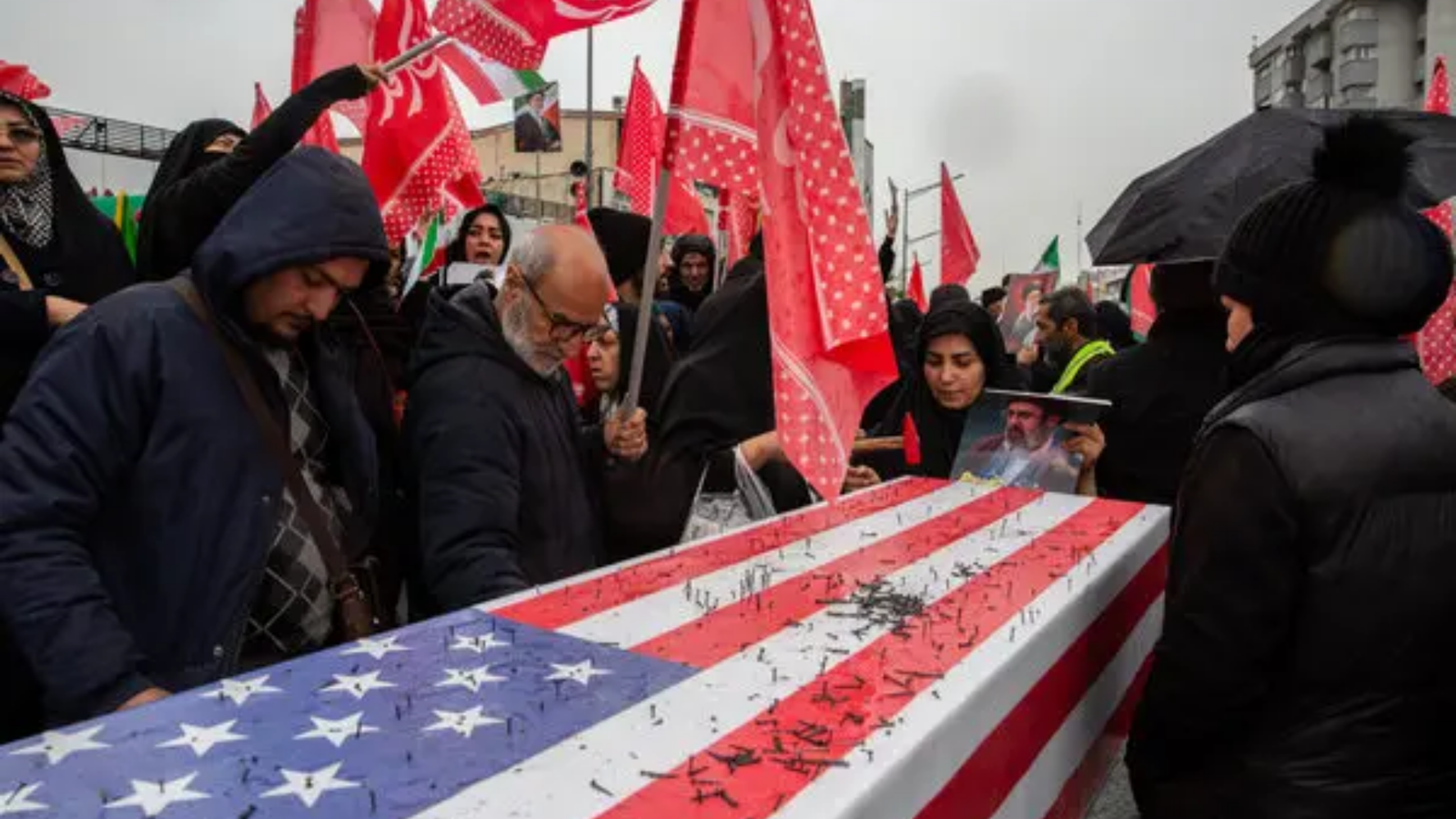
The US Iran conflict has entered another dangerous phase after American forces struck Iranian military launchers on Larak Island and Tehran retaliated with ballistic missile attacks targeting sites used by U.S. forces in Jordan, renewing fears of a wider confrontation around the Strait of Hormuz.
The U.S. strike on Sunday, August 30, targeted two Iranian launchers on Larak Island, which sits in the strategically vital Strait of Hormuz. A U.S. official said Iranian Revolutionary Guard Corps personnel had been preparing to use sea mines when the launchers were attacked. The operation marked the first known U.S. strike on Iranian territory since late July.
Iran responded by announcing ballistic missile attacks against the King Hussein and Al Azraq military sites in Jordan, saying the operation was retaliation for the Larak Island strike. The escalation quickly spread beyond Iran and Jordan after Tehran also claimed to have targeted Al Minhad Air Base in the United Arab Emirates. UAE authorities rejected that claim and said reports that the base had been targeted were false.
The renewed fighting has once again placed the Strait of Hormuz at the centre of the US Iran conflict, with energy markets reacting immediately to the possibility of further disruption to one of the world’s most important oil and gas routes.
Brent crude climbed above $90 a barrel on Monday as investors assessed the risk of a prolonged military escalation and further restrictions on commercial shipping through the Gulf.
Uncertainty increased further after U.S. President Donald Trump posted an AI-generated video that appeared to show Iran’s Kharg Island under attack and claimed that the country’s crucial oil-export hub was being destroyed. Reuters reported that there was no evidence at the time to support the claim of a new attack on Kharg, while Iranian authorities dismissed the footage as fabricated and said the island remained operational.
Together, the developments have brought military confrontation, disputed claims, energy security and the future of the Strait of Hormuz back into sharp focus.
US Iran Conflict Escalates With Strike on Larak Island
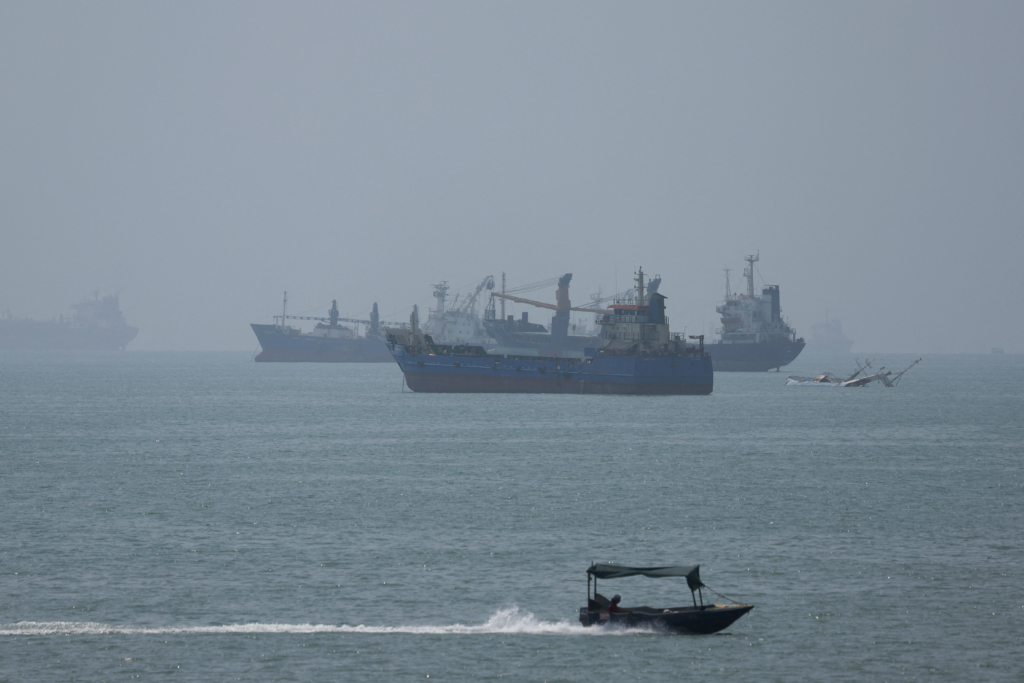
The latest round of fighting began with the American operation against two Iranian launchers on Larak Island.
Located near the entrance to the Persian Gulf, Larak occupies an exceptionally sensitive position close to shipping lanes used by tankers transporting oil and liquefied natural gas from some of the world’s largest energy-producing countries.
A U.S. official said the targets were associated with Iranian Revolutionary Guard Corps personnel who were preparing rockets carrying sea mines. Washington has repeatedly warned Tehran against placing mines in the Strait of Hormuz because of the threat they pose to commercial shipping and international trade.
Iran’s Revolutionary Guards said the American operation resulted in deaths and injuries among Iranian fighters and civilians, although the group did not initially provide a detailed casualty figure. It vowed to respond to the attack.
The strike was particularly significant because direct American military attacks on Iranian territory had largely paused since late July.
That relative lull had not ended the wider US Iran conflict, but it had raised hopes that military activity might remain contained while Washington increased economic pressure and regional negotiations continued.
The Larak operation changed that calculation.
By directly attacking Iranian military positions in the Strait of Hormuz, Washington returned to a battlefield that has enormous consequences for international energy markets as well as regional security.
Iran Retaliates Against U.S. Military Sites in Jordan
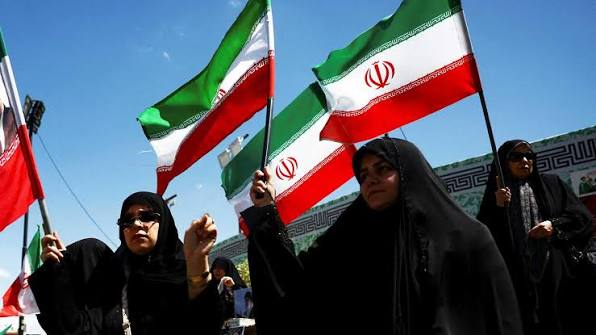
Iran’s response came within hours. The Islamic Revolutionary Guard Corps said it had launched ballistic missiles at the King Hussein and Al Azraq sites in Jordan, describing the attack as retaliation for the U.S. strike on Larak Island.
Jordan has been repeatedly drawn into the regional security crisis because of its geographical position and military relationship with the United States.
Iran has previously targeted the Azraq military site during periods of heightened confrontation. In July, Tehran said it had fired 10 ballistic missiles towards the base. Jordan reported intercepting eight missiles during that earlier attack and said there were no casualties or significant damage.
The latest attack therefore represents more than an isolated exchange between Washington and Tehran.
It illustrates how quickly the US Iran conflict can spread into neighbouring countries that host American forces or military infrastructure.
For Jordan and other Gulf states, the danger is particularly acute. Governments across the region have sought to avoid becoming direct participants in the confrontation while simultaneously maintaining security partnerships with Washington.
Every Iranian attack on a site associated with U.S. forces makes that balancing act more difficult.
UAE Rejects Iran’s Claim Over Al Minhad Air Base
Iran also claimed that its forces had attacked Al Minhad Air Base in the United Arab Emirates, another important facility associated with Western military operations in the Gulf.
The UAE, however, directly disputed Tehran’s account.
The Emirati defence ministry said reports that Al Minhad Air Base had been targeted were false.
That denial is an important distinction in a fast-moving conflict in which governments and military organisations frequently issue competing accounts before independent verification becomes possible.
Iran’s claim should therefore not be treated as confirmation that the air base was successfully attacked.
The episode also highlights one of the wider challenges surrounding the current crisis. Military developments are being accompanied by a parallel information battle in which governments are attempting to shape public understanding of attacks, interceptions, battlefield success and economic damage.
That problem became even more visible several hours later when Trump turned attention towards Kharg Island.
Trump’s Kharg Island Video Adds Uncertainty to US Iran Conflict
President Donald Trump intensified speculation about the scale of the fighting when he posted a dramatic video on social media that appeared to show explosions across Iran’s Kharg Island.
Trump claimed that Kharg was being destroyed, but he did not explain who was carrying out the alleged attack or provide details about the operation.
The footage itself quickly became part of the story.
Reuters reported that the video was most likely generated using artificial intelligence and found no evidence at the time that Kharg Island was undergoing the large-scale attack depicted in the footage. Iranian authorities subsequently dismissed the claim and said the island remained intact and operational.
The distinction matters because Kharg Island is one of the most economically important locations in Iran.
The island has historically handled the overwhelming majority of Iran’s crude oil exports. Any sustained attack on its terminals could severely restrict Tehran’s ability to sell oil internationally and could have immediate consequences for global crude markets.
Trump’s post therefore touched one of the most sensitive pressure points in the entire US Iran conflict.
A genuine large-scale assault on Kharg’s oil infrastructure would represent a considerably more serious economic escalation than a strike on individual military launchers.
For the moment, however, the reported destruction shown in the video should not be treated as an established fact.
Strait of Hormuz Crisis Pushes Oil Above $90
Financial markets reacted quickly to the confirmed military exchanges.
Brent crude rose by roughly 2% on Monday and traded above $90 a barrel after the United States struck Larak Island and Iran retaliated.
Asian equities also came under pressure as investors responded to the renewed fighting and higher energy prices. Reuters reported Brent futures climbing to around $90.51 a barrel during Monday trading.
The market reaction reflects the extraordinary importance of the Strait of Hormuz.
The narrow waterway between Iran and Oman connects the Persian Gulf with the Gulf of Oman and the Arabian Sea. Before the current conflict severely disrupted traffic, it was one of the world’s most important routes for crude oil and liquefied natural gas exports.
Saudi Arabia, the United Arab Emirates, Kuwait, Iraq, Qatar and Iran all depend heavily on Gulf export routes, although some producers have limited alternative pipeline capacity.
That means even relatively small military incidents near the strait can produce consequences far beyond the Middle East.
A sustained disruption could increase energy prices, raise transportation costs and intensify inflationary pressures in major importing economies across Asia and Europe.
Shipping Through the Strait of Hormuz Remains Under Pressure
The latest escalation comes after months of disruption to commercial shipping.
Traffic through the strait has already fallen sharply from normal levels as tanker companies and insurers assess the risks associated with missiles, drones, mines and other potential attacks.
Iran has increasingly used control over maritime access as a source of leverage during the conflict, while Washington has repeatedly insisted that international vessels must retain freedom of navigation through the route.
The two sides remain fundamentally divided over that issue.
Negotiations involving Iran and Oman had raised hopes earlier in August that an agreement on the Strait of Hormuz could help create the conditions for a broader settlement. Reuters reported at the time that an understanding over control of the waterway was considered crucial to attempts to end the conflict.
Those diplomatic efforts have not yet produced a durable reopening of the route.
The latest fighting on Larak Island demonstrates how quickly military developments can undermine progress towards a settlement.
Why the US Iran Conflict Matters to the Global Economy
The economic consequences of the US Iran conflict extend well beyond oil prices.
Six months of war and disruption have altered global energy flows, affected shipping routes and forced importing countries to seek alternative sources of fuel.
Africa, for example, has increasingly turned towards Asian diesel suppliers as Middle Eastern exports have been disrupted. Reuters reported that Asian diesel exports to Africa rose to their highest level in four and a half years in August as supplies from the Middle East declined.
The conflict has also weakened the ability of traditional oil-market mechanisms to stabilise prices quickly because physical supply disruptions are increasingly shaped by security conditions rather than simply production levels.
The Strait of Hormuz is central to that uncertainty.
A reduction in the number of vessels using the route can tighten supply even when oil-producing countries have sufficient crude available for export.
Insurers may raise premiums, tanker operators may demand higher freight rates and some companies may delay shipments altogether when the security environment becomes too uncertain.
Those costs eventually move through the global economy.
For consumers, the consequences can appear in fuel prices, transportation costs and the prices of goods that depend on international shipping.
Washington Is Increasing Economic Pressure on Iran
Military action is only one element of Washington’s strategy.
The Trump administration is also preparing to intensify sanctions aimed at Iran’s financial system and the international networks that facilitate Iranian trade.
U.S. Treasury Secretary Scott Bessent has indicated that Washington intends to introduce new secondary sanctions on a regular basis, with banks and financial institutions expected to be among the first targets.
Secondary sanctions are particularly powerful because they can affect companies outside Iran.
Foreign banks or businesses that conduct certain transactions with sanctioned Iranian institutions can risk losing access to the U.S. financial system.
That gives Washington a mechanism to increase pressure on Tehran without relying entirely on military strikes.
Iran has condemned the sanctions campaign and argues that American economic measures amount to coercion designed to weaken the country while military pressure continues.
The combination of military operations and economic restrictions means the US Iran conflict is now unfolding simultaneously across several fronts.
Six Months of Conflict Have Failed to Produce a Lasting Settlement
The current war began with U.S. and Israeli strikes against Iran on February 28 and has since developed into a prolonged regional confrontation.
Periods of intense fighting have repeatedly been followed by temporary pauses, sanctions, negotiations and renewed attacks.
Iran has used missiles, drones and pressure on Gulf shipping as instruments of retaliation, while the United States has relied on air strikes, naval power and economic sanctions.
Neither approach has yet produced a durable political settlement.
Iran continues to view control over the Strait of Hormuz as one of its most important sources of strategic leverage. Washington, by contrast, considers freedom of navigation through the waterway essential to both international commerce and regional security.
Those positions remain difficult to reconcile.
As long as the fundamental disagreement over the strait remains unresolved, even a relatively limited incident can trigger a much larger sequence of retaliation.
The latest exchange demonstrates precisely that danger.
A U.S. attack on two Iranian launchers was followed by Iranian ballistic missile strikes towards Jordan, a disputed claim involving an air base in the UAE, rising global oil prices and renewed speculation over the security of Iran’s most important oil-export hub.
What Happens Next in the US Iran Conflict?
The immediate question is whether Washington and Tehran will allow the latest exchange to remain limited or whether it will develop into another sustained cycle of attacks.
There are reasons for both governments to avoid uncontrolled escalation.
A broader American campaign against Iranian energy infrastructure could sharply increase oil prices and expose U.S. bases and allies throughout the Middle East to retaliation.
Iran, meanwhile, faces significant economic pressure and risks drawing additional regional governments into direct confrontation if its attacks increasingly threaten neighbouring states.
Yet the structure of the conflict makes restraint difficult.
The United States says it will act when Iranian forces threaten international shipping or American personnel. Iran says it will retaliate when its territory or military forces are attacked.
Those positions create a cycle in which each side presents its actions as a response to the other.
For now, the confirmed developments are already significant. American forces have returned to direct strikes on Iranian territory, Iran has responded with ballistic missiles towards sites associated with U.S. forces in Jordan, and energy markets are again pricing in the possibility of disruption around the Strait of Hormuz.
Claims surrounding Al Minhad Air Base remain disputed, while Trump’s dramatic depiction of an attack on Kharg Island has not been supported by evidence.
What is clear is that the US Iran conflict has moved back into a more dangerous military phase at precisely the point where the world’s energy markets remain heavily exposed to instability in the Gulf.
Whether the latest confrontation ends with these attacks or becomes the beginning of another major escalation will determine far more than the military balance between Washington and Tehran.
The consequences could once again be felt across global shipping routes, energy markets and economies thousands of kilometres from the Strait of Hormuz.
Don’t forget to follow us on Facebook | Instagram | Twitter | LinkedIn to get the latest updates from Cape Town Tribune